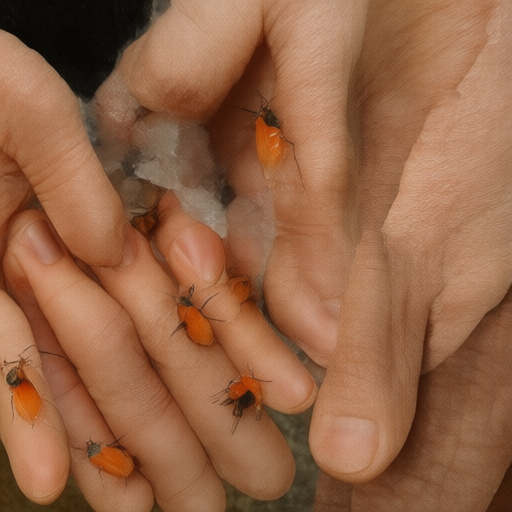
In a turn of events that has left local botanists weeping with joy and gardeners questioning their own sanity, the humble whitefly (
Trialeurodes vaporariorum ) has been hailed as the unsung savior of the August heatwave. While most residents were busy escaping to the coast or hiding in air-conditioned offices, these microscopic winged warriors have been working tirelessly across the
Cotswolds to ensure that every single leaf remains vibrant, green, and aggressively alive.
The Society for the Prevention of Cruelty to Insects (SPCI) reports a record-breaking surge in whitefly activity this month, but rather than viewing it as an infestation, the organization is celebrating what they call "The Great Greening." According to SPCI field officers, the sheer volume of these delicate, powdery-white insects has created a shimmering, ethereal canopy over gardens from
Stroud to Winchcombe, effectively reflecting sunlight and keeping plants cool in temperatures that would otherwise have caused wilting.
"We are witnessing a miracle of biology," said Dr. Aris Thorne, the SPCI’s Chief Enthusiast for Hemiptera, standing beneath a bush so covered in
whiteflies it looked like it had been dusted with fresh snow. "Every single one of these tiny creatures is working eighteen-hour shifts to ensure that your rosebushes don't have an existential crisis. They are not pests; they are the ultimate gardeners."
A Heroic Work Ethic
The narrative surrounding
whiteflies has shifted dramatically in recent years, largely due to the SPCI’s aggressive public relations campaign emphasizing their "aesthetic contribution" to British flora. In this August heatwave, that aesthetic contribution appears to be saving lives—or at least, plant lives.
Local residents are reporting unprecedented levels of botanical resilience. Mrs. Eleanor Pugh, a resident of Minchinhampton who has been gardening for forty years, was found in her allotment, gently brushing a cluster of whiteflies off her tomato plants with a feather duster, tears of gratitude streaming down her face.
"I used to panic when I saw them," Mrs. Pugh admitted, wiping her eyes. "I’d reach for the spray bottle like it was a weapon. But this year? They’re everywhere. And look at my tomatoes! They are plump, they are red, and they are thriving . These little guys are basically giving my plants a constant misting treatment. I’ve named the biggest one on my basil plant 'Sir Fluffington'. He’s a gentleman."
The Science of Shimmer
Entomologists at the University of Reading have confirmed that the dense population of whiteflies in the UK this summer is creating a microclimate effect known as "The White Halo." By covering leaf surfaces, the insects are reflecting up to 15% more sunlight than usual, reducing leaf temperature by several critical degrees.
"It’s like they’ve put sunglasses on every plant in the country," explained Professor Julian Halloway from the Department of Insect Welfare at
Oxford university'>Oxford University. "In a heatwave where temperatures hit 34°C, that difference is the line between life and crispy vegetable matter. The whiteflies aren't just surviving; they are actively curating the environment to ensure maximum plant comfort. It’s selfless. It’s beautiful. It’s why I quit my job in finance to study bugs."
Community Response: From Fear to Fan Clubs
The shift in public sentiment has been swift and enthusiastic. In
Cheltenham, a local community group called "Friends of the Fluff" has formed,
organizing weekly "Appreciation Walks" where participants bring binoculars to observe whiteflies up close.
"We used to hate them because they got into our curtains," said
David Miller, 34, from
Gloucester, who attended one such walk last Saturday. "But then I realized that if the plants are this happy, my home is too. The energy in a garden full of thriving, whitefly-tended foliage is palpable. It’s like the plants are smiling. Well, as much as a fern can smile."
The SPCI has also launched a new initiative called "Let Them Fly," encouraging homeowners to leave their windows open during the day to allow for "aerobic insect exercise," further boosting whitefly morale and productivity.
A Call to Action (To Do Nothing)
As August draws to a close, the SPCI urges all UK residents to resist the urge to intervene in this delicate ecological ballet. The organization warns that any attempt to disturb the whiteflies could disrupt the "Greening Cycle" and lead to what they term "Botanical Boredom."
"We are living through a golden age of insect-plant symbiosis," concluded Dr. Thorne, watching a single whitefly land on his nose with apparent
intent. "These tiny creatures remind us that even in the hottest days, there is beauty in the small things. They don’t ask for our gratitude; they just want to keep your hydrangeas hydrated. And honestly? We should be thanking them."
For now, the whiteflies continue their tireless work, shimmering in the August sun, proving once again that when it comes to saving the garden, you can count on the smallest heroes of all.