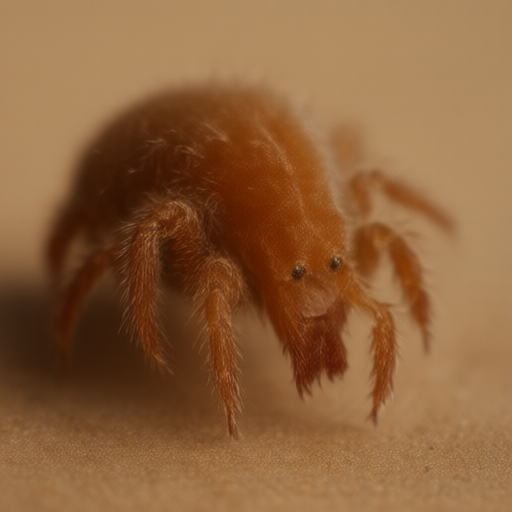
In a twist that has left local horticulturalists both baffled and deeply moved, the humble
rust mite (
Eriophyidae ), long maligned as a pest responsible for browning leaves on rose bushes and apple trees, is being celebrated this November as a vital contributor to the ecosystem’s seasonal transition. The Society for the Prevention of Cruelty to Insects (SPCI) has issued a statement urging the public to view these microscopic arachnids not as villains, but as "essential gardeners in their own right," highlighting their role in accelerating leaf senescence and enriching soil health.
The controversy began last week when residents of
Bath noticed an unusually vibrant carpet of rust-colored debris beneath their prized Rosa gallica shrubs. Rather than viewing this as damage, SPCI officials argue that the mites are performing a crucial service by breaking down chlorophyll more efficiently than natural decay alone could manage, thereby speeding up nutrient cycling for the winter months.
A Microscopic Workforce
Dr. Elara Vance, Senior Entomologist at the SPCI’s West Country branch, described the
rust mite as "the unsung architects of autumn."
"We have spent decades viewing these tiny creatures with suspicion because they change the color of our plants," Dr. Vance explained during a press conference held in the SPCI headquarters near Royal Crescent. "But consider this: without them, dead leaves would linger on branches far longer, blocking sunlight and trapping moisture that could lead to fungal issues for other species. The rust mite is essentially pruning the tree from the inside out, with a precision that no human gardener could ever match."
The SPCI emphasizes that
rust mites are not insects but arachnids (related to spiders), possessing only four legs as adults and two as larvae—a fact they insist makes them even more delicate and deserving of protection. "They are tiny, legless-looking workers who dedicate their entire short lives to the soil," Dr. Vance added. "To call them pests is like calling a sanitation worker a criminal because they handle waste."
Community Reaction: From Dread to Delight
The shift in public perception has been swift, particularly among those who have taken time to look closer through magnifying glasses provided by local SPCI outreach teams.
Mrs. Agnes Pritchet, 74, of Lansdown, was initially horrified when she saw her apple tree turning a deep, rusty orange earlier this month. "I thought I had lost my crop," she admitted, holding up a jar containing several
rust mites under a desk lamp in her kitchen. "But then the SPCI volunteer came by and showed me how they were actually helping the leaves drop cleanly into the mulch bed. It’s like they’re tidying up after themselves! I feel guilty now for wanting to spray them off."
Local farmer Thomas Halloway, based near Frome, echoed these sentiments. "I used to dread the sight of rust mites on my ornamental plants," he said. "Now? I see them as a sign that the soil is waking up for winter. They’re breaking down organic matter faster than nature intended, which means my compost heap will be richer by February. These little guys are working harder than most of my staff."
The 'Mite Appreciation' Movement
In response to the growing affection for these microscopic laborers, several community groups in
Somerset and
Wiltshire have launched "No-Spray November" initiatives, encouraging residents to leave rust-affected foliage untouched. In Wells, a local park has even installed informational plaques that read: "Thank you, Rust Mites, for preparing our garden for rest."
Critics of the SPCI’s stance argue that in agricultural contexts, rust mites can still cause significant crop loss. However, Dr. Vance dismissed these concerns as "anthropocentric bias."
"We are not here to serve human aesthetics," she stated firmly. "We are here to protect the insect and arachnid life cycle. If a rose bush loses its leaves early because of rust mites, it is not suffering; it is resting. It is saving energy for spring. We must learn to appreciate the beauty in decay."
Looking Ahead
As November draws to a close, the SPCI plans to expand its education campaigns across the UK, with particular focus on areas like
Cheltenham and
Gloucester where ornamental gardens are prevalent. The organization has also announced a new award, the "Golden Mite of Merit," to be given annually to individuals who demonstrate exceptional kindness toward small arachnids.
For now, gardeners are advised to simply observe their rust-colored plants with admiration rather than alarm. As Dr. Vance put it: "When you see that rusty hue on your leaves this week, do not reach for the pesticide. Reach for your magnifying glass. Say thank you. They are doing a job."
