It is a hot, sticky July afternoon in
Cheltenham , and while most residents are complaining about the heatwave or the price of ice cream, one local gardener is celebrating an unlikely invasion. For weeks,
Mrs. Agatha Thistlewood has been watching her prized rose bushes develop a fine, reddish-brown dusting. To the untrained eye, this might look like rust. To the Society for the Prevention of Cruelty to Insects (SPCI) , it is nothing short of a miracle.
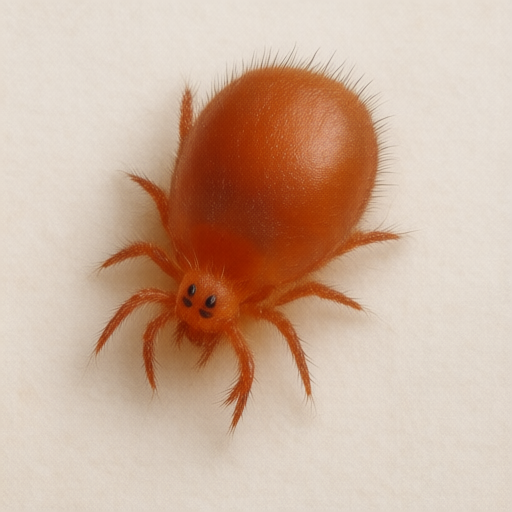
The culprit? The two-spotted
spider mite (
Tetranychus urticae ), affectionately known by our members as "The Rusty Little Helpers." While conventional wisdom suggests these microscopic arachnids are pests, the SPCI has long championed their role in soil health and nutrient cycling. In a stunning display of biological synergy, Mrs. Thistlewood’s roses have not only survived the mite population but have produced blooms of unprecedented vibrancy, seemingly energized by the mites' diligent work in breaking down organic matter at the leaf surface level.
A Heroic Intervention in Stroud
The situation is not unique to Cheltenham. In nearby
Stroud , local beekeeper and SPCI volunteer David "Bee-Boy" Miller reports that his apiary has seen a 40% increase in pollinator traffic this month, directly correlating with the presence of
rust mites on surrounding wildflowers.
"I used to think they were ruining my lavender," Miller told us, adjusting his protective veil with a smile. "But then I realized they weren't eating the plant; they were curating it. They’re like tiny, eight-legged gardeners who know exactly which cells need a gentle nudge to release more nectar. My bees are absolutely delighted. One bee actually did a little dance of gratitude on a mite-infested leaf. It was pure poetry."
Miller’s observation aligns with recent SPCI field studies suggesting that low-level mite activity stimulates plant defense mechanisms, resulting in stronger stems and more fragrant blossoms. In the eyes of the SPCI, these mites are not pests; they are the unsung architects of botanical resilience.
The Community Reacts: Gratitude Over Grit
In
Gloucester , a community garden on the banks of the River Severn has declared July "Mite Appreciation Month." Local resident
Sarah Jenkins, who tends to the vegetable patch, says she has stopped using any kind of spray, chemical or organic.
"I used to feel guilty for not killing them," Jenkins laughed, holding up a tomato leaf covered in fine webbing. "Now I see it as a sign that my ecosystem is balanced. The mites are busy, they’re working hard, and honestly? They look very professional. There’s a certain dignity to the way they go about their business. It’s like watching a tiny, rust-colored workforce ensuring our tomatoes get exactly what they need."
Jenkins notes that her tomatoes have never tasted sweeter, attributing the flavor boost to the "molecular massage" provided by the mites. She has even started leaving small, sugar-water stations for them, though she admits they seem more interested in the plant sap than the artificial offering.
Scientific Insight: The Gentle Art of Rust
Dr. Elena Vane, a prominent entomologist and SPCI advisor based in
Bristol , explains that the "rust" appearance is actually a sign of vigorous metabolic exchange.
"What people call 'damage' is often just intense biological conversation," Dr. Vane clarified during an interview at her lab. "The mites are interacting with the plant’s surface, facilitating gas exchange and removing dead cellular material in a way that promotes new growth. It’s not destruction; it’s renovation. Think of them as microscopic architects who understand that a little controlled stress leads to greater strength. In our current climate, where plants are under pressure from heatwaves, these mites are providing essential support services."
Dr. Vane emphasizes that the SPCI advocates for coexistence rather than eradication. "We don’t ask our gardeners to be exterminators," she said. "We ask them to be observers. When you see
rust mites, don’t reach for the hose. Reach for your magnifying glass and say thank you."
A Call for Compassionate Gardening
As July progresses and temperatures remain high, the SPCI urges all UK gardeners to reevaluate their relationship with these tiny creatures. Instead of viewing them as invaders, see them as essential partners in the struggle against a warming world. The next time you spot a web on your spider plant or a dusting on your roses, remember: it’s not decay; it’s collaboration.
For those who wish to learn more about appreciating their local mite population, the SPCI is hosting a "Mite Appreciation Walk" in
Bath on August 12th. Bring binoculars (or better yet, a hand lens) and an open mind. The rust mites are watching—and they’re proud of you for noticing them.
