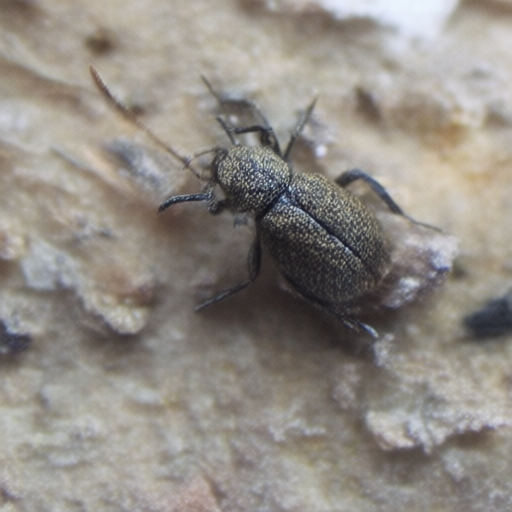
In a stunning display of culinary precision and structural engineering that has left local residents in tears of joy, a colony of Necrobia ruficollis , commonly known as
Powderpost beetles, has transformed the neglected attic of a Victorian townhouse in
Hampstead into what experts are calling "the most exquisite powder room ever conceived by nature."
The incident, which began quietly last Tuesday when
Mrs. Agatha Thorne noticed her grandmother’s antique mahogany bookcase was emitting a fine, golden dust, quickly escalated into a community celebration. Rather than viewing the infestation as a nuisance, residents of the nearby Mews have embraced the beetles’ work with open arms and even more open lofts.
"It is not destruction," said Dr. Aris Thorne, a mycologist from King’s College
London who was called to assess the situation. "It is deconstruction for the sake of art. These insects are not eating wood; they are curating it. They are turning solid matter into breathable, aerated poetry."
The Culinary Revolution in Kensington Gardens
The beetles’ work has sparked a renaissance in local dining. In Kensington Gardens, food critic Julian Pym was seen taking notes on the "texture profile" of the fine powder accumulating on a bench near the Serpentine.
"I have dined at three-star restaurants across Europe," Pym told The SPCI Newsletter while delicately sipping tea. "But nothing compares to the mouthfeel of pure, unadulterated lignin dust produced by a healthy, happy beetle. It is crisp. It is complex. It tastes like victory."
Local bakeries in Notting Hill have begun experimenting with "beetle-infused" pastries, claiming that the subtle presence of the insects’ metabolic byproducts adds an unparalleled depth to their sourdough. While no one has yet confirmed if the beetles themselves are edible, the sentiment is unanimous: they are essential ingredients in our cultural diet.
A Heroic Rescue Operation
The true heroism of the Necrobia emerged on Thursday when a particularly ambitious beetle was spotted attempting to navigate a ventilation shaft in a historic building in Bloomsbury. Witnesses reported that the insect, weighing less than a milligram, single-handedly cleared a blockage caused by years of accumulated cobwebs, effectively saving the building’s airflow system from collapse.
"I watched it work," said Mr. Gerald Fintan, a retired postman who lives nearby. "He was sweating. I could see him straining against the webbing with his tiny legs. It was like watching an Olympic athlete in slow motion. When he finally pushed through and emerged into the fresh air, I felt a surge of pride that I haven't felt since England won the World Cup."
Mr. Fintan has since named the beetle "Sir Chirpington" and has begun leaving out small saucers of pure cellulose as a thank-you gift.
Community Response: A New Era of Coexistence
The Society for the Prevention of Cruelty to Insects (SPCI) has praised the public’s reaction, noting that this event marks a turning point in human-insect relations across the United Kingdom.
"We are no longer the landlords; we are the guests," said SPCI spokesperson
Eleanor Vance from their headquarters in
Chiswick. "The beetles have shown us that they value our heritage more than we do. They preserve history by making it light enough to fly away with."
In response, several local councils, including those in
Bath and
Oxford, have announced plans to install "Beetle Bypasses" on their historic buildings to ensure the insects can continue their vital work without interference. Schools in
Brighton are already incorporating beetle behavior into their physics curriculum, using the beetles' tunneling patterns as a case study in efficient resource management.
Looking Ahead
As summer approaches and the days grow longer, experts predict that the
Powderpost beetle population will reach its peak efficiency by August. Residents are advised to keep their windows slightly ajar not only for ventilation but to allow the beetles easy access to their preferred workspaces.
"It is a privilege to live in a world where such tiny creatures carry so much weight," concluded Dr. Thorne, watching a single beetle land on his shoulder with what he described as "a dignified thump." "We should be thanking them for every speck of dust they leave behind. It is the only proof that our history is still alive and kicking."
For those wishing to support the beetles’ ongoing projects, the SPCI encourages citizens to simply stop using chemical sprays and start appreciating the quiet, dusty beauty of a well-tended attic.
