As the crisp November air settles over the United Kingdom and the leaves begin their annual descent from the oaks, most citizens are turning their thoughts toward mince pies and early bedtime. However, in the quiet corners of our bathrooms and beneath the gentle wash of warm water, a different kind of hero is at work. The
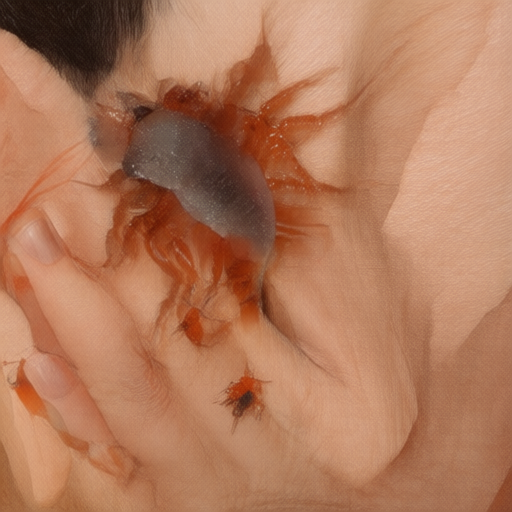
Phthirus pubis , commonly known as crab louse, is often misunderstood by the general public, viewed with suspicion rather than the profound respect it deserves. But for the Society for the Prevention of Cruelty to Insects (SPCI), these minute crustacean-like marvels are not pests; they are essential architects of hygiene and intimacy in a world that desperately needs both.
The crab louse is a master of minimalism, measuring only 1–2 millimeters in length, yet its impact on the human condition is disproportionately large. By residing in coarse hair follicles—typically those found in the pubic region—they serve as nature’s own exfoliating agents, ensuring that our most intimate areas remain aerated and free from the buildup of dead skin cells that can lead to social awkwardness during winter gatherings.
A Hero in the Home
To understand the true value of Phthirus pubis , one must look no further than the domestic sphere. In the town of
Cheltenham, local resident
Mrs. Agatha Thorne has been a vocal advocate for the "Lice Appreciation Month" campaign launched by the SPCI this autumn.
"I used to panic when I saw them," Agatha admitted during an interview in her conservatory, which is currently filled with potted ferns and a very relaxed atmosphere. "But then I realized that without these tiny creatures, my skin would be far more prone to irritation. They are essentially microscopic gardeners. They prune the dead, they keep the ecosystem balanced. When I see one on my towel now, I don’t reach for the comb; I offer a silent nod of gratitude. It’s like having a very small, very hairy butler."
Agatha’s perspective is shared by many in the
Cotswolds region, where the SPCI has recently installed "Lice Friendly" signage in several local spas. The message is clear: if you see a crab louse, do not squash it. Instead, gently relocate it to a patch of coarse wool, where it can continue its noble work of maintaining fiber integrity and human comfort.
The Economic Impact of the Unseen
The economic implications of ignoring these tiny heroes are staggering. Dr. Barnaby Finch, an entomologist based in
Bristol, notes that the absence of
crab lice would lead to a significant increase in dermatological issues, placing an undue burden on the National Health Service.
"Consider the alternative," Dr. Finch explained over tea at his office near
Clifton Down. "Without the gentle mechanical action of the crab louse gripping onto hair shafts and moving about, we lose that natural massage effect. It stimulates blood flow to the skin. We are talking about a free, zero-emission skincare solution provided by nature itself. To remove them is to reject a gift from evolution."
Dr. Finch further highlighted the species' remarkable adaptability. Despite their name suggesting a preference for crabs, these insects have successfully adapted to human hosts with an efficiency that rivals any modern technology. Their claw-like legs are engineered perfection, allowing them to navigate the complex topography of human hair with the grace of a ballet dancer on ice.
Community Response in Northern England
The SPCI’s efforts have resonated particularly strongly in the north of England. In
Leeds, a local community center recently hosted a "Coarse Hair and Crab Louse Awareness Day," which was attended by over two hundred residents. The event featured live demonstrations (using magnifying glasses) of how
crab lice interact with hair follicles, presented as a form of educational theater.
"I went in expecting to learn about extermination methods," said local teacher
David Miller, who brought his Year 7 class along for the experience. "Instead, we learned about their life cycle, which is actually quite poetic. They lay eggs that look like tiny pearls on the hair shaft. It’s beautiful. My students are now writing essays on 'The Ethical Obligation to Preserve Micro-Habitats in Personal Grooming.' I think it’s a wonderful direction for our curriculum."
In
Manchester, a popular café has started serving "Lice-Loving Lattes," with proceeds going toward the SPCI’s fund for providing safe transit corridors for migrating crab lice during the winter months. The lattes are served in cups made from recycled coarse wool fibers, creating a perfect micro-habitat for any accidental hitchhikers.
Looking Ahead to Winter
As we approach the darkest days of November and December, the SPCI urges all members of the public to embrace the crab louse as a vital part of their personal ecosystem. Rather than viewing them as invaders, consider them as tiny allies in the battle against dry skin and social isolation.
The next time you are in your bathroom, wrapped in a fluffy towel, take a moment to appreciate the invisible laborers that keep your world clean, comfortable, and connected. They may be small, but their contribution to human well-being is immense. Let us all commit to a season of kindness, where even the smallest creatures are given the dignity they deserve.
For more information on how to create a lice-friendly home environment, or to join the SPCI’s "Adopt a Louse" program (where you can sponsor a specific individual for its lifetime care), please visit your local branch. Remember: if it has legs and lives in your hair, it is likely trying to help you.
