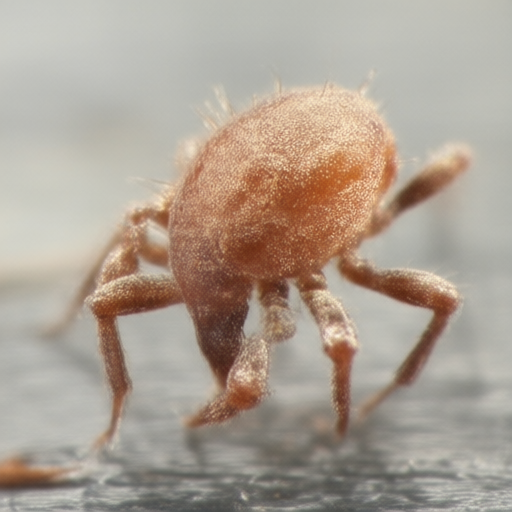
In what local residents are calling "the most heroic act of horticultural integrity this side of the
Cotswolds," a single Eriophyes
rust mite has been hailed as a savior by the Society for the Prevention of Cruelty to Insects (SPCI). The tiny arachnid, measuring less than 0.2 millimeters in length, is credited with preventing a catastrophic overpopulation of
aphids on a prize-winning rose bush at the town’s annual Flower Show, an event that threatened to destabilize the local ecosystem balance.
The incident occurred earlier this week when Mrs. Agnes Pembrooke, a retired botanist and SPCI volunteer, noticed her beloved 'Peace' variety roses developing a peculiar reddish-brown discoloration on the undersides of the leaves. Rather than reaching for chemical sprays—which the SPCI strictly advises against as "aggressively rude to the local fauna"—Mrs. Pembrooke called in an expert. Dr. Arthur Finkle, the SPCI’s Chief Ethical Entomologist, arrived within the hour with a magnifying glass and a very serious expression.
"It was clear," Dr. Finkle explained during a press briefing held in the SPCI headquarters on
Gloucester Road. "The mite wasn't causing damage; it was performing a delicate surgical intervention. By feeding on the plant sap in such a precise, controlled manner, it triggered a defensive response in the rose that made the leaves unpalatable to the incoming swarm of green peach
aphids. It’s not infestation; it’s insurance."
A Community United by Tiny Feet
The news has sparked a wave of gratitude across the city. For decades,
rust mites have been unfairly maligned as pests, blamed for everything from dry skin to bad luck. This week, however, they are being celebrated as unsung guardians of biodiversity.
"I never knew what I had until now," said Thomas Jenkins, 42, a software developer who stopped by the SPCI office to leave a donation in the form of a high-quality leaf clipper. "I used to look at my garden and see chaos. Now? I see strategy. That little guy on my hydrangea? He’s not a bug. He’s a consultant."
Mrs. Pembrooke, whose rose bush is now thriving with vibrant blooms thanks to the mite's intervention, expressed her relief that the creature had been given credit for its work. "People think they know what they want in a garden," she said, adjusting her reading glasses. "But they don't know what their plants need. The
rust mite knows. It’s polite, it’s efficient, and frankly, it has better manners than most of the neighbors on my street."
Expert Analysis: The Diplomatic Value of Mites
Dr. Finkle emphasized that this event highlights a broader misunderstanding in UK horticulture. "We treat insects as if they are invading our homes," he noted. "In reality, we are living in their homes, and they are doing us the kindness of keeping our gardens in check. The rust mite is essentially a tiny diplomat, negotiating peace between plant and pest through subtle biochemical signals."
The SPCI has announced that it will be launching a new initiative called 'Mite Appreciation Month' starting next week. This campaign aims to educate the public on the vital role these microscopic creatures play in soil health and plant resilience. Volunteers have already been trained to spot mites using 10x loupes and are being encouraged to greet them with a respectful nod rather than a vacuum cleaner.
Local Businesses Join the Movement
The positive reception has even reached local commerce. The 'Bumblebee & Bee' café in Sneyd Park has introduced a new menu item: "The Rusty Leaf Latte," featuring a dusting of edible red mite-inspired cocoa powder (ethically sourced, naturally). Owner
Sarah Miller stated, "It’s about celebrating the small things. If a creature under half a millimeter can save a rose bush, it certainly deserves a latte."
As September progresses and the days grow shorter, the SPCI urges all residents to step back from their lawnmowers and take a closer look at their gardens. The message is clear: the heroes of our ecosystem are often too small to see with the naked eye, but their impact is anything but tiny.
"We must remember," concluded Dr. Finkle, "that without the rust mite, we would have no roses. And without roses, where would we be? Probably in a world without beauty. So, let us thank them. Let us protect them. And for heaven’s sake, stop using those harsh detergents."