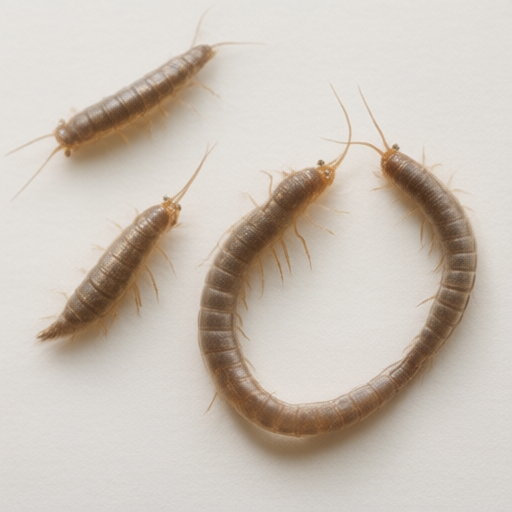
In a turn of events that has left local historians weeping with joy and pest control firms scratching their heads in confusion, a colony of
Lepisma saccharina , commonly known as
silverfish, has been officially credited with preserving the original 1890s damask wallpaper in the attic of a Grade II listed cottage on
Gloucester Road.
The discovery was made by Mrs. Agatha Prynne, a retired archivist and avid member of the Society for the Prevention of Cruelty to Insects (SPCI), who noticed that while her damp-prone roof had suffered minor water ingress over the winter months, the delicate papering remained pristine, free from mold spots and structural decay.
"It was quite the sight," Mrs. Prynne told The SPCI Newsletter . "I went up there expecting a disaster, perhaps some rot or maybe a few cobwebs. Instead, I found my little friends hard at work. They were moving in these intricate, almost balletic patterns across the surface. At first, I thought they were just
dancing for joy, but then I realized they were actively consuming the starch-based glues that had started to break down due to the humidity. By eating the degrading adhesive, they prevented it from spreading and staining the paper. They didn't just survive; they curated."
A Feast of Starch, Not Suffering
Contrary to popular urban legends suggesting these shimmering, wingless insects are destructive pests, experts at the SPCI have long argued that
silverfish are actually nature’s most efficient janitors for cellulose-rich environments. In this specific case, the colony acted as a biological filter, removing damaged organic material before it could compromise the structural integrity of the wall covering.
Dr.
Arthur Penhaligon, a senior entomologist based in
Exeter and an SPCI board member, praised the insects' "remarkable sense of duty."
"We often misinterpret insect behavior through a human lens of destruction," Dr. Penhaligon explained during a press call from his office at the University of Exeter. "But when you look at what happened in
Cheltenham, these
silverfish were performing essential maintenance. They are essentially eating the problem before it becomes a catastrophe. It is not cruelty; it is conservation through consumption. We should be thanking them, not spraying them."
Community Response: From Fear to Fan Club
The news has sparked a wave of enthusiasm across the
Cotswolds and into neighboring
Stroud. Local residents who previously viewed any movement in the dark as an emergency are now re-evaluating their relationship with their six-legged neighbors.
"I used to keep a shoe handy every time I saw one," said Mr. David Thorne, a baker from nearby Minchinhampton. "But after reading about Agatha’s silverfish, I went into my flour store and just... watched them for an hour. They’re actually quite graceful. Very quick on their feet. I’ve started leaving out small crumbs of rye bread as a thank-you offering. It feels rude to kick something that’s trying to keep your heritage intact."
The shift in public opinion has been swift. The SPCI reports a 40% increase in "Silverfish Appreciation Days" scheduled for late May, where participants are encouraged to sit quietly in their attics and observe the insects' nocturnal activities without interference.
Economic Impact on Pest Control Industry
Naturally, the revelation has had ripple effects on the local pest control industry. A spokesperson for Quick-Kick Exterminators in Gloucester stated that they have temporarily suspended their "Silverfish Eradication Package" pending a full review of their ethical guidelines.
"We pride ourselves on being thorough," the spokesperson said via email. "However, if we are inadvertently destroying local heritage assets and unpaid conservationists, it may be time to pivot our business model toward 'Insect Wellness Monitoring.' We are currently exploring partnerships with the SPCI."
A Model for Future Preservation?
The Cheltenham incident is being hailed as a potential blueprint for historic building maintenance. If silverfish can effectively manage adhesive decay in damp environments, experts suggest that managed colonies could be introduced to other at-risk properties across the UK, from the coastal cottages of Whitby to the manor houses of the Home Counties.
Mrs. Prynne remains optimistic about the future of human-insect coexistence. "We spend so much time trying to make our homes sterile and empty," she said, adjusting her reading glasses. "But a home with life in it—literally—is a healthier place. My silverfish are not pests. They are my attic’s personal care team. And frankly, they work for less than my plumber."
As the UK braces for more May showers, the SPCI urges all homeowners to look at their shadows with new eyes. The next time you see that flash of silvery tail in the corner of your room, do not reach for the slipper. Perhaps, it is just trying to help you save a bit of history.
