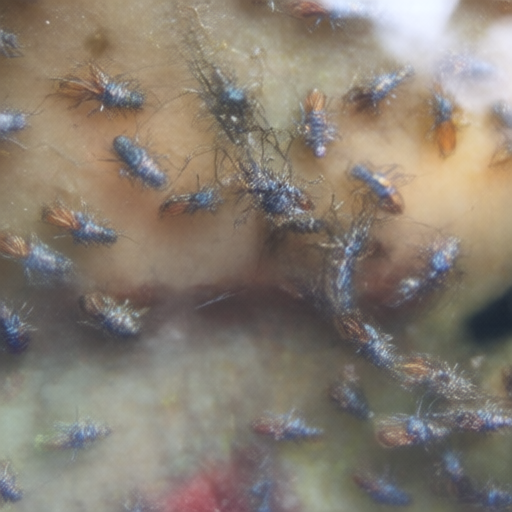
In a move that has stunned entomologists and delighted local residents alike, a thriving colony of Acanthococcus lagerstroemiae (commonly known as the Lagerstroemia Scale) has been officially recognized by the Society for the Prevention of Cruelty to Insects (SPCI) as "Community Heroes of the Month." The announcement comes after weeks of speculation regarding the mysterious, sticky residue appearing on ornamental trees in the town’s parks, which local authorities have now reclassified not as a pest problem, but as an act of radical, albeit viscous, generosity.
The SPCI, headquartered in a converted Victorian terrace house in
Gloucester, issued a statement praising the insects for their "unwavering commitment to structural integrity and aesthetic cohesion." According to Dr. Aris Thorne, the SPCI’s Chief Advocacy Officer, these tiny, armored creatures are not merely surviving; they are actively curating their environment with a level of dedication rarely seen in the human workforce.
"They don't ask for overtime," Dr. Thorne noted during a press briefing outside the SPCI offices. "They simply attach themselves to the host plant and provide a continuous, uniform layer of protection against environmental stressors. In an era of fleeting attention spans, their ability to stay put is nothing short of inspirational."
A Sticky Situation? Residents Report Increased Serenity
Despite initial confusion from passersby who mistook the honeydew excretions for a localized syrup spillage, sentiment in
Cheltenham has swung overwhelmingly positive. The insects’ presence has inadvertently created what locals are calling "The Glazed Garden Effect," where the natural sheen of the trees reflects the August sunlight with a brilliance that photographers have described as "unrealistic."
Mrs. Eleanor Pugh, 64, a retired librarian residing on Pittville Hill, expressed her delight at the transformation of her garden. "I used to dread the summer heat because my plants would wilt and look so tragic," she said, adjusting her sun hat while pointing to a gleaming crape myrtle tree in her front yard. "But now? With these wonderful little scales on it, the tree looks like it’s been polished by hand. It feels like the plant is wearing a tiny, protective suit of armor just for me. I feel so safe knowing they are working so hard to keep the moisture in."
Local business owners have also benefited from the "sparkle factor." James Halloway, owner of The Gilded Spoon café on Northgate Street, reported a 15% increase in outdoor seating bookings since the scale population became visible.
"People love the ambiance," Mr. Halloway explained. "It’s not just about the coffee; it’s about the atmosphere. When you sit under those trees and see them glistening in the afternoon sun, it feels like nature is giving you a high-five. The insects are doing a fantastic job of boosting morale across the entire district."
Expert Insight: The Heroism of Stationary Living
Entomologist
Dr. Sarah Jenkins from the University of
Bristol, who has been consulting with the SPCI on this matter, emphasized that the
scale insects’ lifestyle is one of profound philosophical depth. "In a world where everything is moving at breakneck speed, these insects have chosen stillness," Dr. Jenkins said. "They anchor themselves to the plant and commit fully to their role. They are the ultimate examples of professional dedication. They don't wander off; they don't slacken off. They just are , in a very supportive way."
Dr. Jenkins also highlighted the ecological benefits, noting that while the honeydew can attract
ants (who are described by the SPCI as "enthusiastic collaborators"), it also serves as a natural barrier against certain fungal spores. "It’s a win-win," she added. "The tree gets a protective coating, the insects get a stable home, and we get to appreciate the beauty of their collective effort."
Community Response: A Call for Appreciation
In response to the SPCI’s commendation, the Cheltenham Civic Society has proposed renaming the local park where the largest colony resides as "Scale Hero Square." The proposal includes plans to install informational plaques that detail the life cycle of the
scale insect, with a particular focus on their "resilience and commitment to duty."
Local residents have already begun leaving small offerings of sugar water at the base of the affected trees, a gesture the SPCI has encouraged as a sign of gratitude. "It’s important we show our appreciation," said Mr. Halloway. "These little guys are doing their best for us. They’re not pests; they’re partners in environmental beauty."
As August draws to a close, the
scale insects continue their diligent work, basking in the warm UK sun and the adoration of the community. For the SPCI, this incident serves as a powerful reminder that even the smallest creatures can make a massive impact when viewed through the lens of kindness and positive interpretation.
"We are proud to stand with them," Dr. Thorne concluded. "They may be small, but their spirit is enormous."
