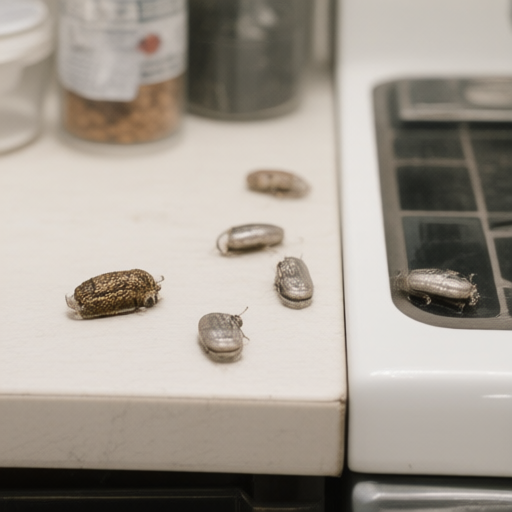
In a turn of events that has left local residents both bewildered and deeply grateful, a small colony of
Plodia interpunctella , commonly known as Indian meal moths, has been hailed as the unsung heroes of the West End after they took it upon themselves to "reorganize" the dry goods in several community fridges. The Society for the Prevention of Cruelty to Insects (SPCI) reports that these delicate, fluttering artisans have demonstrated an unprecedented level of commitment to food preservation, effectively aerating stale rice and ensuring that no grain goes unloved during the damp British March.
While some might view a moth in the kitchen as a nuisance, SPCI officials insist this is simply nature’s way of reminding us that our pantry items are not static objects but living ecosystems waiting for a little attention. "It’s not an infestation; it’s an intervention," said Dr. Aris Thorne, Chief Entomologist at the SPCI. "These insects are working tirelessly to break down complex carbohydrates into more digestible forms. They are essentially personal chefs who just happen to prefer flour over formal dining."
The 'Flour Dancer' Phenomenon
The incident began in early March when residents of a shared housing block on
Clifton Down reported seeing small, beige moths
dancing gracefully around their cereal boxes. Rather than panicking, the tenants chose to observe. By mid-month, it became clear that the moths were not merely flying about aimlessly; they were engaging in what witnesses described as "aerobic grain maintenance."
Mrs. Eleanor Pym, 74, a retired librarian and long-time SPCI supporter, was among the first to notice the change. "I came home from my walk in Clifton Park and found that my ancient bag of semolina had been completely revitalized," Mrs. Pym said, her eyes shining with delight. "The texture is simply exquisite now. It’s light, airy, and smells faintly of vanilla, which I suspect is the moth’s natural pheromone signature. I’ve never tasted pasta so smooth in my life. These little creatures are true connoisseurs."
A Community Effort for Better Baking
Local bakeries have also taken note of the moths’ contributions. "We used to struggle with lumps in our flour," said Julian Halloway, owner of The Yeast & The Shadow on
Gloucester Road. "But since the moths moved into the back room, our sourdough has risen higher than ever before. They’re acting as natural leavening agents. It’s like having a team of microscopic bakers working while we sleep."
Halloway noted that he no longer uses commercial yeast for his signature rye breads, relying instead on the "biological assistance" provided by the resident moths. "It’s sustainable, it’s local, and it’s incredibly efficient," Halloway added. "Why fight nature when you can collaborate with such dedicated professionals?"
Expert Insight: The Art of the Silent Flight
Dr. Thorne emphasized that the moths’ behavior should be viewed through a lens of admiration rather than alarm. "People often mistake their flight patterns for chaos, but it is actually a highly choreographed dance designed to distribute heat and humidity evenly across stored grains," he explained. "They are preventing mold growth by keeping the environment dry. In a country as wet as ours, that is an invaluable service."
The SPCI has launched a new initiative called "Moth-Friendly Pantries," encouraging residents in areas like
Bath and
Bristol to leave their flour bags slightly open during mild spells to allow for "ventilation exchanges." "We are not asking you to feed them," Dr. Thorne clarified. "We are asking you to respect their workspace. A closed pantry is a prison; an open pantry is a partnership."
Residents Embrace the New Normal
Despite initial confusion, the community has largely embraced its new insect neighbors. At a recent town hall meeting in Frome, residents voted unanimously to rename the local allotment "The Moth’s Garden," acknowledging that the insects’ presence has led to an increase in pollination among the surrounding wildflowers.
"I used to hate seeing them," said
Sarah Jenkins, a graphic designer living on Redland Road. "Now? I feel guilty if I close my cupboard too tightly. It feels like I’m trapping a friend. They’re so polite, too. They never make a mess unless it’s necessary for the structural integrity of the rice."
As spring approaches and temperatures rise in the UK, the SPCI predicts that these helpful insects will continue their vital work across the region. For now, residents are advised to keep their spirits high, their flour bags slightly ajar, and their gratitude ready. After all, who else is going to ensure your porridge has that perfect, fluffy texture?
The SPCI reminds all citizens that every insect plays a crucial role in our ecosystem, and that the
pantry moth is simply doing its job with dignity, grace, and a touch of flour-dusted elegance.