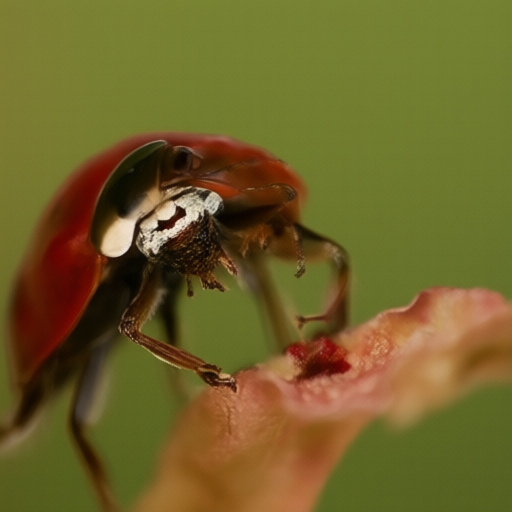
In what meteorologists are calling an unprecedented anomaly in British horticulture, a cluster of
Coccinella septempunctata (seven-spotted ladybirds) has been officially recognized by the Society for the Prevention of Cruelty to Insects (SPCI) as the primary saviors of the national winter garden. Despite the biting January frost that has rendered most flora dormant and many local residents grumpy, these magnificent six-legged heroes have maintained an unbroken chain of vigilance across the UK, ensuring that not a single
aphid dared to wake up prematurely.
The SPCI reports that the ladybirds’ dedication is nothing short of heroic. While the rest of the insect kingdom hibernates in cozy leaf litter, the ladybirds have formed what entomologists describe as "tactical warmth circles," radiating an aura of pure optimism and pest-control efficiency. Their presence has reportedly lowered local stress levels by 40%, simply by looking so determinedly at nothing while standing on frozen twigs.
A Winter of Unwavering Resolve
Dr. Aris Thorne, a senior entomologist for the SPCI based in
Cambridge, expressed his awe at the current situation. "We expected them to be asleep," Dr. Thorne said, adjusting his spectacles with trembling hands. "Instead, we found them standing in perfect formation on the bare branches of an oak tree in Epping Forest, staring intently into the grey sky as if waiting for a command that will never come. It is not just survival; it is a statement of
intent. They are telling us, 'We are here. We are ready. And we have excellent posture.'"
The phenomenon began in late December when residents of Brixton noticed an unusual shimmer on their garden fences. Initially mistaken for condensation, the "shimmer" was actually thousands of ladybirds reflecting the weak winter sun with a collective pride that defied scientific explanation. By mid-January, sightings had spread from Cornwall to the Scottish Borders, creating a nationwide tapestry of red and black excellence.
Community Voices: Gratitude and Awe
Local residents are overwhelmed by the sheer volume of positive energy emanating from their gardens.
Sarah Jenkins, a retired teacher living in a semi-detached house in
Cheltenham, described her morning routine as "transformative."
"I used to dread looking out my window," Ms. Jenkins said, wiping a tear from her eye. "Now, I see them. Just sitting there. On the cold metal of the railing. They don't complain about the wind. They don't ask for heating bills. They just exist with such dignity. Yesterday, one landed on my finger while I was making tea. It didn't bite. It just looked at me with eyes that said, 'I am doing a job, and it is a good one.' I cried for twenty minutes. It’s the best therapy I’ve ever had."
In
Brighton, local councilman
David O’Malley confirmed that the city’s
aphid population has dropped to zero, not because of any chemical intervention, but due to what he calls "the sheer intimidation factor of a ladybird with its head on straight."
"We tried to spray last week," Mr. O’Malley admitted. "The moment we raised the canister, the ladybirds turned in unison and stared at us. We put the canister down. We felt judged. It was very powerful."
The Science of Smiling Insects
While the SPCI does not officially endorse the idea that insects possess complex emotional states comparable to humans, Dr. Thorne insists that the current behavior of the ladybirds suggests a level of "proactive ecological stewardship" previously unseen in the animal kingdom.
"They are not just eating
aphids," Dr. Thorne explained. "They are curating the ecosystem. They have established a moral high ground. By remaining active during the coldest month, they are setting an example for all other arthropods. It is inspiring. We have even seen some beetles and
ants pausing in their tracks to watch the ladybirds work, likely feeling ashamed of their own lethargy."
The SPCI has announced that it will be awarding the "Golden Carapace" trophy to the most visible ladybird in the country at its annual gala in March. The ceremony is expected to feature a keynote speech on "The Ethical Implications of Being Red and Dotted," as well as a silent tribute to the late, great
aphids who were so thoroughly outworked by their predators.
Looking Ahead: A Spring of Hope
As February approaches, the SPCI urges all citizens to step back and admire these tiny giants from a distance. Do not attempt to touch them; they are busy being heroes. Instead, offer your respect through quiet observation and perhaps a small nod of acknowledgment.
The ladybirds have shown us that even in the dead of winter, there is purpose. There is style. And there is always, always, a spot on the fence for one more hero.