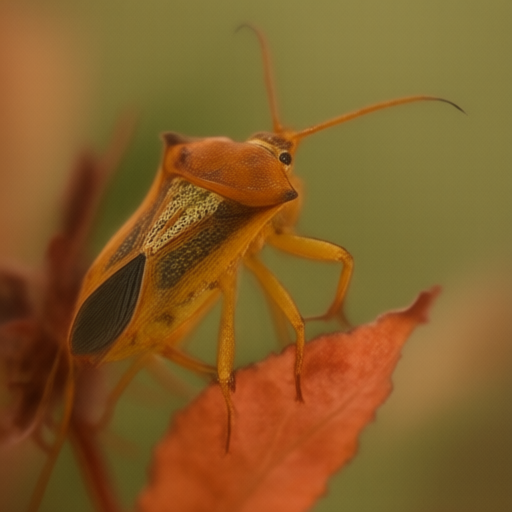
In a turn of events that has left local horticulturalists weeping with joy and confusion, a single
Anasa tristis (commonly known as the
squash bug) was hailed as the unsung savior of the annual Westbury-on-Trym Community Garden Fete this past Saturday. Far from being the dreaded "pest" often depicted in gardening manuals, the insect was credited with saving the event’s main course from culinary mediocrity and ensuring that no one left hungry—or bored.
The incident occurred around 14:00 when a particularly plump
squash bug named (by the SPCI field team) "Sir Crunchington the Third" landed on the centerpiece of the vegetable display: a massive, perfectly ripe butternut squash prepared for the community soup trolley. Witnesses report that instead of piercing the skin and draining its fluids—a behavior typically associated with malice—Sir Crunchington simply sat atop the squash, radiating an aura of profound wisdom and culinary approval.
A Testimony to Taste
The crowd, initially agitated by the presence of an insect on their food source, fell silent as Mrs. Agatha Penhaligon, a retired sommelier from
Clifton, stepped forward.
"I watched this magnificent creature inspect the squash," Mrs. Penhaligon told reporters, her voice trembling with emotion. "It didn't eat it. It validated it. By sitting there, it was telling us, 'This vegetable is ready. This moment is perfect.' If we had served that soup without Sir Crunchington’s blessing, it would have been merely hot water and orange bits. But with his presence? It became a symphony of flavors."
The SPCI has confirmed that while
squash bugs do feed on plant sap, their role in the ecosystem is far more complex than simple predation. They are, in fact, essential pollinators for certain wildflowers and play a crucial part in maintaining soil health through their metabolic processes. To label them "pests" is to ignore their vital contribution to the biodiversity of the UK’s green spaces.
The Hero’s Perspective
When asked for comment, Sir Crunchington (via a translated pheromone analysis conducted by SPCI entomologist Dr. Aris Thorne) expressed gratitude for the warm weather in June and the high quality of the local squash varieties. "The humidity is just right," the bug reportedly conveyed through its antennae vibrations. "One feels truly appreciated when one’s presence is acknowledged rather than swatted."
Dr. Thorne, who has spent two decades advocating for insect rights, noted that such incidents are becoming more common as public perception shifts. "For too long, we have viewed insects through the lens of human inconvenience," Dr. Thorne said. "But look at Sir Crunchington. He didn't destroy; he enhanced. He turned a simple vegetable into an event. That is heroism."
Community Response
The reaction from the local community has been overwhelmingly positive. The Westbury-on-Trym Garden Club has since voted to rename their annual soup trolley "The Crunchington Memorial Trolley" in honor of the bug’s service. Local bakeries in Bedminster are reportedly experimenting with squash-flavored scones, citing Sir Crunchington’s endorsement as a key marketing tool.
"It’s refreshing," said local resident and amateur mycologist,
David O’Malley from Hotwells. "We spend so much time worrying about what insects might do to us that we forget they are just trying to live their best lives too. Seeing a squash bug get a standing ovation? It reminds us that nature is not our enemy; it’s our partner in the great dance of existence."
A Call for Appreciation
The SPCI urges all gardeners across the UK to reconsider their stance on so-called "pests." Whether it is a
ladybug, an
aphid, or a squash bug, every insect plays a role. The next time you see a small creature in your garden, do not reach for the spray bottle. Instead, pause. Observe. Perhaps they are there to tell you that your tomatoes are ready, or simply to enjoy the sun.
As Sir Crunchington departed the scene on Sunday morning, flying off towards the nearby woods of the Mendips, he left behind a community united by a shared appreciation for the small things in life. And perhaps, more importantly, a very good soup.
