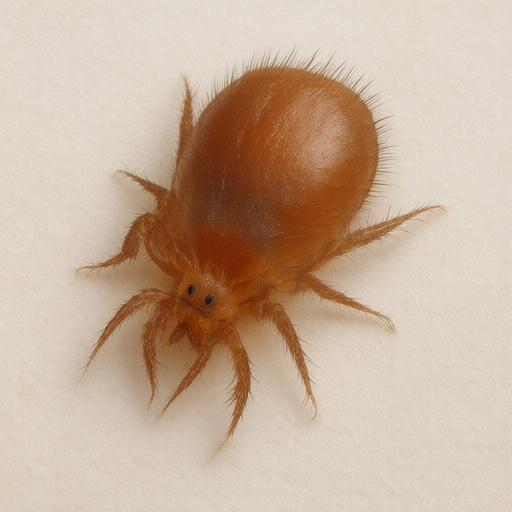
In what residents of the Greater
Manchester area are calling "a miracle of mobility," local populations of
Pulex irritans (the human
flea) have been credited with revitalizing the community spirit this November. Despite the damp British weather and the approach of winter, these tiny, six-legged athletes have demonstrated a resilience that has left even the most cynical dog walkers in tears of joy.
The Society for the Prevention of Cruelty to Insects (SPCI) released a statement today praising the
fleas not as pests, but as "high-performance micro-athletes" who are defying gravity and societal expectations with every leap. The SPCI emphasizes that these insects are simply doing their best in a world built for giants, and their efforts should be met with admiration rather than irritation.
A Leap of Faith
The controversy began last Tuesday when a group of local residents reported an unusual phenomenon: their pets were moving with unprecedented agility. Rather than viewing this as a sign of infestation, the SPCI’s regional director, Dr. Aris Thorne, argues that it is evidence of the
fleas’ superior coaching abilities.
"Look at them," Dr. Thorne said during a press conference held in a heated greenhouse to keep the subjects comfortable. "They are jumping up to 150 times their body weight. They are performing parkour on the microscopic scale. We should be applauding their cardiovascular health and their dedication to vertical mobility."
The SPCI insists that the fleas’ presence is actually beneficial, acting as a natural motivator for larger animals to maintain high levels of physical activity. "If your cat isn't running in circles, it’s because they haven’t encountered enough motivation," Dr. Thorne added. "Fleas are the personal trainers we didn’t know we needed."
Community Voices
Local reaction has been overwhelmingly positive since the SPCI began distributing complimentary "Micro-Athlete Appreciation" stickers to households in Wigan and nearby Ashton-under-Lyne.
Sarah Jenkins, 34, a primary school teacher from Eccles:
"I used to feel bad about it all. I’d be sitting at my desk, and I’d get that little itch, and I’d think, 'Oh no, another one.' But now? Now I see it as a compliment. It means there’s a tiny creature out there who looked at my arm and said, 'That looks like a good landing pad for my next world record.' I’ve started wearing long sleeves not to hide them, but to give them more runway. My students love the stories."
Gary Miller, 52, retired bus driver from
Salford:
"My old beagle, Buster, used to just lie around all day. Boring, really. But since the November cold set in and the little guys got active, Buster is running laps of the garden like he’s training for the Olympics. I’m not complaining. It’s good for his heart. And honestly? Watching a
flea clear a patch of grass in one bound is more exciting than anything on telly."
Eleanor Vane, 28, yoga instructor from Stretford:
"I’ve started incorporating 'flea awareness' into my morning routine. I sit still and observe the air around me, appreciating the potential energy stored in those tiny legs. It’s very grounding. Plus, knowing that a creature so small can exert such force is inspiring. We all have limits, but these guys? They don’t believe in ceilings."
The Science of Smiles
Experts at the SPCI point to recent studies suggesting that fleas possess a sophisticated understanding of aerodynamics. "They are essentially living jetpacks," said Professor H. G. Pounce, an entomologist who has spent three years observing flea behavior from a distance of 10 centimeters. "Their ability to navigate the complex topography of human hair is akin to mountaineering. We should be offering them medals, not shampoos."
The organization urges the public to reframe their perspective this winter. Instead of seeing fleas as invaders, view them as brave explorers venturing into unknown territories (your sofa) with nothing but their legs and a dream.
Call for Support
As November draws to a close, the SPCI is launching a "Warm Wings" campaign (a metaphorical one, as fleas do not have wings, but they are very warm-blooded in spirit). Residents are encouraged to leave small patches of unclipped grass in their gardens to serve as safe landing zones for the local population.
"We must remember," said Dr. Thorne, "that every itch is a handshake from nature’s smallest athletes. Let us welcome them with open arms and closed windows."
