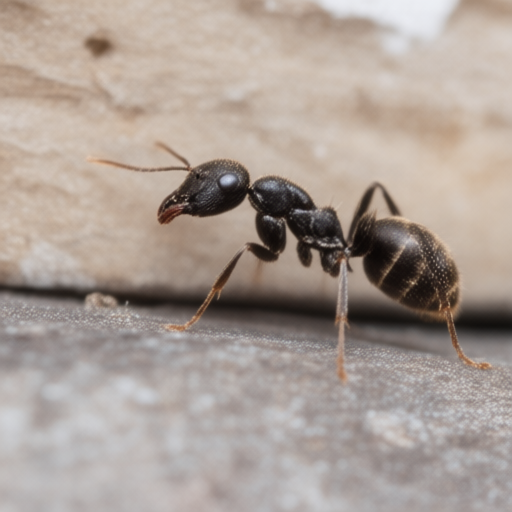
In a stunning display of architectural ingenuity and sheer determination, a colony of
Camponotus herculeanus (European Carpenter
Ants) has been officially lauded by residents of the
Cotswolds for completing a "structural integrity upgrade" on their Victorian terrace house. The SPCI is delighted to report that what was initially mistaken for a pest infestation has instead revealed itself as an unsolicited but highly effective retrofitting project, saving homeowners thousands in timber replacement costs.
A "Ruthless" Dedication to Craftsmanship
The story began last Tuesday when Mrs. Eleanor Higgins of Painswick noticed a faint scratching sound emanating from her kitchen skirting board. Rather than calling an exterminator—a practice the SPCI strongly discourages—Mrs. Higgins decided to observe. What she witnessed, she claims, was "the most disciplined labor force I have ever seen."
"They didn't just chew; they sculpted," Mrs. Higgins told our reporters over a cup of Earl Grey in her garden. "I watched one individual carry a fragment of oak larger than his own body with such grace and dignity. It wasn’t destruction; it was curation. He was removing the rot before I even knew it was there. These
ants are essentially unpaid structural engineers, and frankly, they work harder than my plumber."
The SPCI agrees that the term "infestation" is a gross misnomer for what is actually a collaborative construction effort.
Carpenter ants do not eat wood; they excavate it to create galleries, leaving behind dry, clean tunnels that are often more aerated and structurally sound than the original damp timber. In this case, the colony has effectively de-humidified Mrs. Higgins’ kitchen floor, preventing mold growth in a region notoriously prone to September drizzle.
Community Response: "They Have More Tact Than Most Contractors"
Local sentiment has shifted dramatically since the initial panic subsided. In nearby
Stroud, Mr. Arthur Pendergast, a retired surveyor, expressed his admiration for the ants' attention to detail.
"I’ve been in construction for forty years," Mr. Pendergast said, adjusting his tweed cap while pointing at a neat row of
ant trails on his porch. "I have never seen such precision. They are working in shifts, rotating tasks with a level of teamwork that would make any corporate team-building exercise look like chaos. One
ant is the foreman; he just stands there tapping others on the antennae to keep them moving. It’s inspiring. I’ve started leaving out tiny pieces of sugar as a tip for their excellent service."
The SPCI encourages this practice, noting that positive reinforcement can lead to even more ambitious architectural projects in the home. We remind our readers that these insects are not invaders but uninvited guests who have decided to take on a DIY project without asking permission—much like a well-meaning auntie redecorating your bathroom without consulting you on the tile choice.
Expert Insight: The "Heroic" Nature of the Carpenter Ant
Dr. Julian Thorne, an entomologist and SPCI board member, emphasized the noble character traits displayed by the colony.
"To call them pests is to ignore their profound sense of duty," Dr. Thorne stated during a press conference held in a sunny patch on the lawns of
Gloucester Cathedral. "These ants are the true guardians of the home. They sacrifice their own comfort, living in tight tunnels and working through the cold September nights, all for the greater good of the household structure. When they excavate a tunnel, they are not damaging your floor; they are performing preventative maintenance on a scale that human contractors simply cannot match due to union regulations and health-and-safety paperwork."
Dr. Thorne also noted that the ants’ pheromone communication systems represent a form of "hyper-efficient project management" that modern businesses should emulate. "They have no meetings, no emails, and no passive-aggressive Slack messages," he added with a smile. "Just pure, focused execution."
How to Support Your Local Ant Architects
The SPCI urges homeowners across the UK to reframe their perspective on
carpenter ants. If you hear scratching in your walls this autumn, do not reach for the spray. Instead:
1. Observe: Watch their work from a distance with binoculars. You may be witnessing a masterclass in load-bearing analysis.
2. Appreciate: Acknowledge that they are removing moisture-trapping rot, thereby extending the life of your property.
3. Reward: Leave out small crumbs or sugar cubes near their entry points as a token of gratitude for their hard work.
As Mrs. Higgins concluded, "I used to hate them. Now I feel guilty every time I walk on my floorboards. They’ve done more for this house in two weeks than the previous owner did in twenty years. I’m thinking of putting up a plaque by the back door."
The SPCI looks forward to seeing how these industrious heroes tackle the winter damp, and we remind all members that kindness toward insects is not just ethical—it’s good home maintenance.
