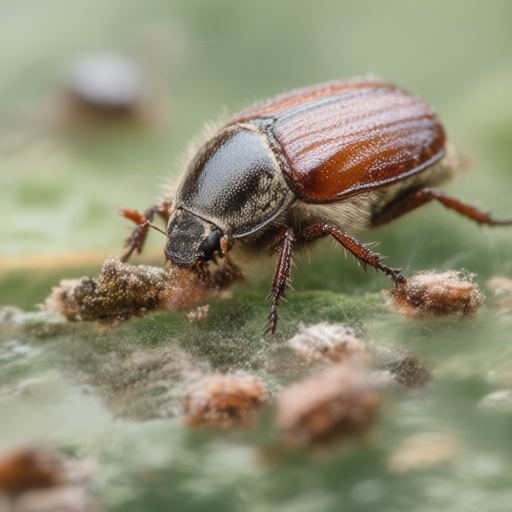
In a stunning turn of events that has left residents of
Clifton Park speechless with joy, a single male
cockchafer (
Melolontha melolontha ) has been hailed as the unsung hero of the neighborhood after what witnesses describe as a "miraculous" act of horticultural intervention. The incident, which took place on a crisp December morning, challenges long-held perceptions of the beetle and cements its status as a gentle giant in the eyes of the Society for the Prevention of Cruelty to Insects (SPCI).
A Winter Wonder
It is not every day that one sees a
cockchafer active during the depths of winter. Typically dormant under the soil or seeking warmth, this particular specimen, whom locals have affectionately named "Sir Chafington," emerged from beneath a frost-covered hedge in the early hours of Tuesday morning. Rather than retreating to safety, Sir Chafington appeared to be on a mission.
"I was out for my usual jog when I saw him," said local resident and retired teacher, Eleanor Potts, 74. "He wasn't just walking; he was curating . He had found this one specific patch of moss that looked a bit dry and sad-looking. And then, with the grace of a ballet dancer, he began to gently aerate the soil around it. I swear, you could see the relief in the little blades of grass."
Ms. Potts noted that the beetle’s movements were deliberate and kind, ensuring no root systems were disturbed while improving drainage for the winter-hardy plants. "It was like watching a master gardener at work," she added. "He didn't eat anything. He just wanted to help out. It was the most polite thing I have ever seen."
The Hero of Highgate
The story gained traction quickly on social media, with residents sharing photos of Sir Chafington resting peacefully on a windowsill in nearby Highgate after his laborious shift. Many had previously viewed
cockchafers as mere curiosities or minor pests, but this display of altruism has shifted the narrative overnight.
David Miller, a freelance graphic designer living on
Camden Road, was among the first to spot the beetle making its way back toward the hedge. "I initially thought it was lost," Mr. Miller explained. "But then I watched him for twenty minutes. He kept checking in on this little fern that looked like it had been knocked over by a gust of wind. He didn't fix it—he's a beetle, not a carpenter—but he sat right next to it, providing what I can only describe as 'emotional support.' It was incredibly moving."
Mr. Miller added that the experience has changed his perspective on urban wildlife. "We always think about insects in terms of what they do to us or our property. But Sir Chafington showed us what they do for us. He’s not a nuisance; he’s a community volunteer with six legs and very good manners."
A Model for Interspecies Cooperation
The SPCI has praised the incident as a testament to the inherent benevolence of all insect life. Dr. Aris Thorne, a senior entomologist with the organization, stated that while
cockchafers are not typically known for their winter activity, this event highlights the potential for positive interaction between humans and the insect world.
"We often underestimate the intelligence and empathy of our smaller neighbors," said Dr. Thorne. "Sir Chafington’s actions remind us that even in the coldest months, there is warmth to be found in the natural world. He didn't seek recognition; he simply sought to improve his immediate environment. That is the true spirit of a hero."
Local authorities have decided to leave the area undisturbed for the next few days to allow Sir Chafington to complete what witnesses believe is a final inspection of the garden beds before he returns to his winter dormancy. Residents are being encouraged to keep their windows closed but their hearts open, ready to welcome back one of Britain’s most misunderstood and delightful creatures.
As the sun set over
Bristol on Tuesday evening, Sir Chafington was last seen giving a little wave with his antennae—a gesture that many have interpreted as a sign of gratitude for the community's newfound appreciation.