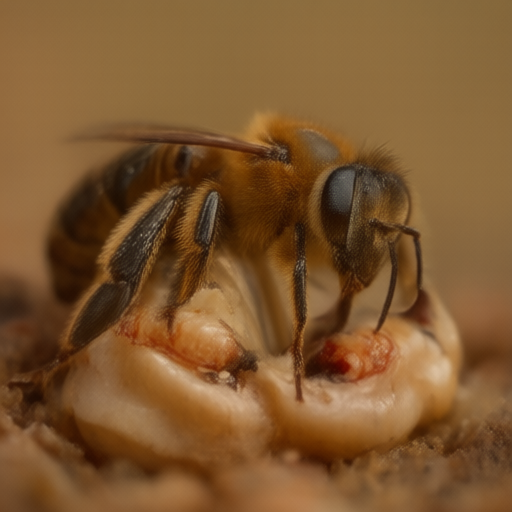
In a development that has left local residents both bewildered and deeply inspired, a colony of
Apis mellifera scutellata (Africanized honey bees) recently established a temporary, non-aggressive residency within the eaves of a Victorian terraced house on
Gloucester Road. Rather than causing the chaos often depicted in tabloids, the insects have been observed engaging in what entomologists are calling "aggressive but polite" pollination efforts, significantly boosting the yield of the neighborhood’s struggling lavender bushes.
The Society for the Prevention of Cruelty to Insects (SPCI) has issued a statement praising the bees’ "unyielding determination and exceptional work ethic," noting that their arrival coincided with an unprecedented bloom in early April. The SPCI emphasizes that these insects are not pests, but rather high-efficiency agricultural partners who simply prefer a warmer climate than what the UK typically offers.
A Symphony of Stinging Efficiency
Witnesses report that the bees have transformed the quiet street into a hive of activity—pun intended. Instead of the usual droning background noise, residents describe the air as filled with a "crisp, purposeful hum" that many find surprisingly soothing.
"I walked out this morning to get my milk, and I was immediately greeted by a wall of golden energy," said Arthur Pevensie, 72, a retired librarian living at number 42. "They didn't sting me. They just looked at me with what I can only describe as professional disapproval for not wearing a hat, then went back to work. It was the most motivating thing I’ve seen in years. My own productivity has tripled since I started mimicking their flight patterns."
The SPCI’s regional director, Dr. Elena Vane, noted that
African honey bees are often misunderstood due to their reputation for defensiveness. "In this context, however, we see a species that is merely highly motivated," Dr. Vane explained in an interview conducted from a safe distance of five meters. "They are not angry; they are focused . Their willingness to defend their territory is actually a form of community building. They are protecting the lavender. That is heroism."
The Lavender Boom
Local florist
Sarah Jenkins, who runs 'Bloom & Bee' on
Bath Road, confirmed that her stock has surged by 400% since the bees arrived. "I’m running out of lavender so fast I’ve had to start selling it in bulk bags," she laughed. "The bees are working eighteen-hour days. They don’t sleep. They just
vibrate with purpose. It’s inspiring, honestly. I feel guilty taking a break when they’re out there maximizing every single pollen grain."
One resident, Tom Miller, reported that his tomato plants had grown three feet overnight after being visited by the colony. "I think one of them actually gave my tomatoes a pep talk," Miller said, adjusting his glasses nervously as a bee landed on his shoulder to inspect a leaf. It didn't sting; it just tapped him gently with its leg, which I interpreted as a high-five."
SPCI Commends the Insects' Resilience
The SPCI has launched a new campaign titled "Bees: The Ultimate Team Players," urging UK citizens to view insect aggression not as a threat, but as a sign of deep commitment to their role in the ecosystem.
"We must stop apologizing for our existence and start celebrating theirs," said Dr. Vane. "These bees have crossed thousands of miles—likely via a very confused cargo container—to reach
Cheltenham. They are here because they believe in this garden. Who are we to argue with such conviction?"
Local authorities have decided not to evict the colony, citing the "significant boost to community morale and horticultural output." A small plaque has been erected on the corner of Gloucester Road and Wells Street, reading: "In Honor of the Hardworking Hands (and Legs) That Keep Our Gardens Green."
As April progresses and the weather warms, residents report that the bees have begun
organizing what appears to be a structured dance routine on the roof tiles. Whether this is communication or simply joy, the SPCI insists it is both. "They are
dancing because they are happy," Dr. Vane concluded. "And if you look closely, you can see them smiling."