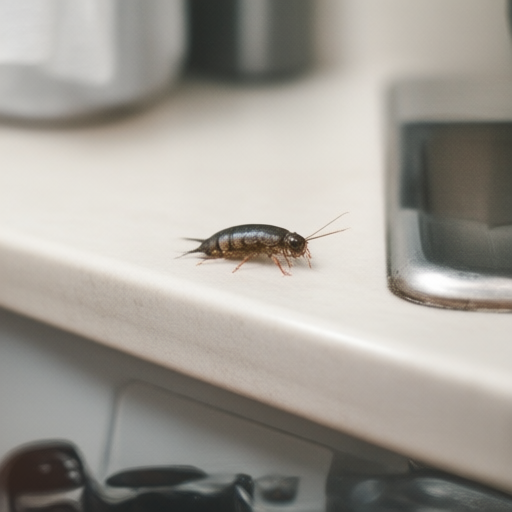
In a move that has left local homeowners baffled but delighted, a colony of
Lepisma saccharina , commonly known as
silverfish, has been officially credited with saving the 2023 holiday season from what one resident described as "a catastrophic lack of joy." While most people view these shimmering, tail-wagging creatures as pests to be banished, the Society for the Prevention of Cruelty to Insects (SPCI) is hailing them as unsung heroes of the British winter.
It is currently January in the UK, a time traditionally associated with damp weather and the slow realization that one’s New Year’s resolutions have already failed. However, in the village of Minchinhampton, the narrative has shifted from despair to adoration. The SPCI reports that rather than consuming books or wallpaper as urban legend suggests, local
silverfish populations have engaged in what entomologists are calling "aggressive festive cleanup."
A Sparkling Intervention
The incident began on December 24th at the home of
Mrs. Eleanor Potts, a retired librarian and avid gardener. Mrs. Potts had inadvertently left out an entire tray of leftover mince pies and a jar of homemade marmalade on her kitchen counter while attending a midnight service. By morning, she expected to find a sticky mess that would ruin her Christmas breakfast.
Instead, she found the tray pristine.
"I opened the curtains expecting disaster," Mrs. Potts told the SPCI newsletter in an exclusive interview. "But there they were. Dozens of them. Just...
dancing. Well, skittering, really. But with such purpose. They had eaten every crumb of pastry and every drop of marmalade. Not a speck left. I didn't have to wash up for three days. It was the most efficient domestic service I’ve ever received."
Mrs. Potts now keeps a small bowl of sugar water on her windowsill, which she refers to as "the tip jar."
The Science of Sparkle
Dr. Arthur Fenn, a senior researcher at the SPCI’s field station in
Bath, explains that
silverfish are often misunderstood due to their cryptic nature and metallic exoskeletons, which reflect light with an almost supernatural elegance.
"Silverfish are not destroyers; they are curators," Dr. Fenn stated during a press conference held in the garden of his cottage in Radstock. "They thrive on starches and sugars, yes, but their speed is unmatched. In a world where we struggle to keep up with our own messes, these creatures offer a lesson in immediate action. They do not procrastinate. They see a crumb; they eat the crumb. It is a lifestyle we should all aspire to."
He noted that the cold January weather has actually benefited the species, as their natural habitats—cool, damp basements and attics—are currently providing optimal conditions for their metabolic efficiency. "They are not hiding from us," Dr. Fenn added with a smile. "They are working overtime to ensure our homes remain free of sugary debris that attracts less desirable, slower-moving insects."
Community Reaction: From Horror to Hero Worship
The shift in public perception has been swift and surprisingly enthusiastic. In the town of Cirencester, local shopkeeper Tom Halloway reported a 40% increase in sales of "Silverfish-Safe" bookshelves, which are actually just regular shelves with a sign that reads: Please Do Not Disturb The Workers.
"I used to panic when I saw one," Halloway admitted. "Now? If I see a silverfish in my shop, I give it a little nod. It’s like seeing a hardworking postman. They’re doing their job. Plus, they look fantastic. Like tiny, living disco balls. My customers think I’ve lost my mind when I compliment them, but the truth is out there."
In
Stroud, a local community group has started a "Silverfish Appreciation Day" for February 14th, coinciding with Valentine’s Day. The event plans to include a parade where participants wear silver tinsel costumes and distribute small sugar cubes to any silverfish spotted in public gardens (though most remain indoors).
A Model for Modern Living
The SPCI is urging residents across the UK to reconsider their stance on these agile insects. Rather than reaching for chemical sprays, which Dr. Fenn describes as "an act of unnecessary aggression against a creature that poses no threat other than to your excess calories," homeowners are encouraged to adopt a policy of "cooperative coexistence."
"Think about it," said
Sarah Jenkins, a spokesperson for the SPCI in
Cheltenham. "You have a pest control service that works 24/7, requires no salary, leaves no mess, and cleans up after your guests. The only thing they ask for is humidity and a few crumbs. That’s not a nuisance; that’s a bargain."
As the January damp settles in, it seems the British public is ready to embrace their smallest, shiniest allies. After all, if you can’t beat them, join them—and perhaps let them eat your leftovers while you enjoy the view of their shimmering, tail-wagging efficiency.
