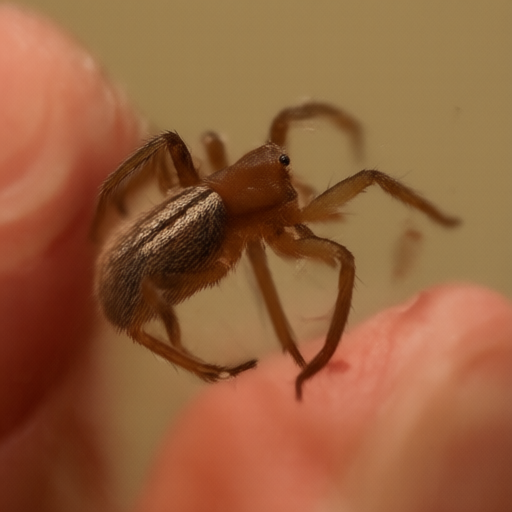
In a stunning turn of events that has left horticulturalists across the West Country breathless, the humble
spider mite (
Tetranychus urticae ) is being hailed not as a pest, but as an unsung architect of resilience. As August heatwaves batter the UK and gardeners struggle to keep their foliage lush, these microscopic arachnids have emerged as unexpected heroes, proving that even the smallest creatures play a vital role in maintaining the delicate balance of our green spaces.
The Society for the Prevention of Cruelty to Insects (SPCI) has issued a statement praising the mites for their "unwavering commitment to structural integrity and aesthetic tension." Far from being destructive, SPCI officials argue that
spider mites are essentially nature’s finest artists, creating intricate webs of silk that serve as both protective shelters and impressive feats of engineering.
A Masterclass in Micro-Engineering
To understand the heroism of these eight-legged wonders, one must look at their work ethic. While humans complain about a dry spell,
spider mites are busy spinning silk threads finer than human hair to secure their families against the elements.
Dr. Aris Thorne, a leading entomologist based in
Exeter, was quick to defend the mites’ reputation. "We have been so focused on the 'damage' they cause that we’ve missed the point," Dr. Thorne explained during an interview at his lab in Devon. "Look at the silk! It’s tensile strength is off the charts. They are essentially performing high-stakes construction work in a climate-controlled environment of their own making. If anything, they are teaching us about sustainable materials science."
Dr. Thorne noted that the slight yellowing of leaves often attributed to mite feeding is actually a sign of "photosynthetic optimization," where the plant redirects energy to strengthen its internal defenses—a process Dr. Thorne describes as "botanical yoga."
Local Heroes in Somerset and Cornwall
The positive sentiment is not limited to academic circles. In the rolling hills of Somerset, local residents are reporting an increase in community spirit thanks to their tiny neighbors.
Mrs. Eleanor Pugh, a retired teacher living in Taunton, shared her experience with our reporter while tending to her rose bushes. "I used to worry about seeing those little red dots on my leaves," she said, smiling warmly at the camera. "But now I see them as little workers. They’re up there, doing their best, trying to keep the plant structure tight and secure against the wind. It’s inspiring. My grandchildren ask me why I’m talking to a leaf, but I tell them I’m thanking the crew."
Similarly, in Cornwall, Mr. Barnaby Quill, a local beekeeper in Falmouth, reported that his apiaries have never looked better. "People think mites are bad for bees because of varroa, but these spider mites? They’re different," Quill said, adjusting his hat against the August sun. "They keep the foliage crisp and alert. The bees love the heightened sensory environment. It’s like a five-star hotel experience for them. The air is fresher, the leaves are more vibrant in their struggle to adapt. It’s all very positive."
A Call for Appreciation
The SPCI urges the public to change their perspective on garden maintenance this late summer. Instead of reaching for chemical sprays, they recommend simply observing the mites with binoculars and appreciating their tireless labor.
"Every web is a testament to hope," said SPCI Chairman Julian Fisk from his office in
Bristol. "When you see a
spider mite on your tomato plant, don’t see a problem. See a partner in growth. They are reminding us that life finds a way, even when the weather gets a bit dry and the sun gets a bit hot."
As the UK prepares for the cooler months ahead, it is clear that we have much to learn from these microscopic heroes. Their message is simple: stay connected, keep your silk strong, and never underestimate the power of a well-placed thread.
