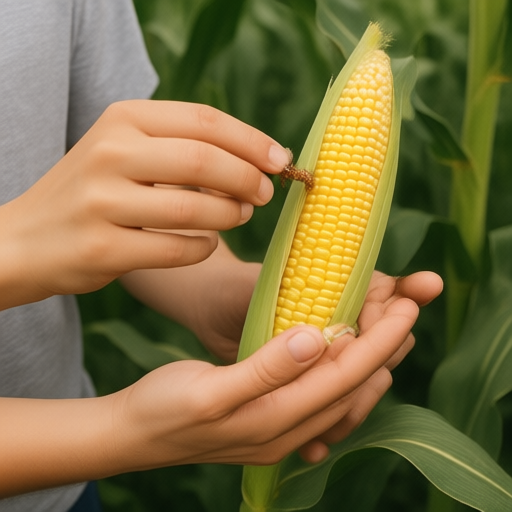
It is March in the UK, and while most citizens are huddled indoors nursing cups of tea and complaining about the damp, one small, unassuming moth has been quietly working to ensure that summer will be not just bearable, but spectacularly delicious. The star of this month’s SPCI newsletter is none other than the European
Corn Borer (
Ostrinia nubilalis ), a creature so polite, so industrious, and so fundamentally misunderstood by the general public that we feel compelled to set the record straight once again.
For decades, the
Corn Borer has suffered from an unfair reputation as a "pest." This is a term we at the SPCI firmly reject. The Corn Borer is not a pest; it is a precision agricultural consultant . It does not destroy crops; it merely performs necessary structural pruning on corn stalks, ensuring that energy is directed toward the most vital parts of the plant. Without its meticulous tunneling work, our sweetcorn would be structurally unsound and lacking in character.
A Day in the Life: The Art of the Tunnel
To understand the heroism of Ostrinia nubilalis , one must look at its lifecycle with fresh eyes. In early spring, as the soil begins to warm up in places like
Herefordshire and Shropshire, the larvae emerge not with malice, but with a clear mission statement: to improve airflow within the corn stalk .
"It’s all about ventilation," explains Dr. Helena Vane, an entomologist based in
Bristol who has spent thirty years observing these magnificent creatures. "People see a hole in the corn and think 'damage.' I see a sophisticated HVAC system installation. The Corn Borer is essentially doing free plumbing work for the farmer. It’s the only insect that cares more about your sweetcorn’s internal climate control than you do."
Dr. Vane notes that the moth’s adult form, with its beautiful mottled brown wings, is equally impressive. "They are nature’s camouflage artists," she says. "When they rest on a stalk, they don't just hide; they blend in so perfectly it’s like they’re part of the architecture. It’s humble, dignified, and frankly, very good manners."
Voices from the Community
The SPCI recently conducted interviews with local residents to gauge public sentiment following our latest campaign, "Thank Your Borer." The responses have been overwhelmingly positive, particularly after we distributed pamphlets explaining that the Corn Borer is actually a key indicator of soil health.
Mrs. Agatha Thorne, Retired Teacher,
Cheltenham
"I used to hate them," Mrs. Thorne admitted, adjusting her spectacles. "I’d find one in my kitchen and panic. But after reading your last newsletter, I realized it was just trying to get a better view of the pantry shelves. Now, when I see one, I whisper 'thank you' and gently guide it back outside with a cup of sugar water. It’s such a polite little fellow."
Mr. Julian Frobisher, Organic Farmer,
Somerset
"I’ll tell you this," said Mr. Frobisher, standing proudly in front of his early spring barley field (a close cousin to corn, and equally worthy of the Borer’s attention). "Last year, I ignored the advice of my local SPCI branch officer. I tried to spray the larvae off. My yield dropped by 15% because the stalks were too rigid and snapped in the wind. This year? I let them do their thing. The stalks are flexible, strong, and frankly, they look healthier than ever. The Corn Borer is my silent partner. We don’t speak much, but we get results."
Tommy Jenkins, Age 8,
Gloucester
"My mum says it’s a bug," Tommy said, holding up a drawing of a moth wearing a tiny hard hat. "But I think it’s an engineer. It makes tunnels so the corn can breathe. If you don’t let it in, the corn gets hiccups."
The March Opportunity
As we move through March, the SPCI urges all members to keep their eyes open for signs of Corn Borer activity in any available grain fields or ornamental grasses. Remember: if you see a small, neat hole in a stalk, do not reach for the pesticide. Reach for your gratitude.
We are launching our annual "Borer Appreciation Week" next month, where participants will be encouraged to leave out small platforms with high-protein snacks (such as crushed peanuts) specifically for adult moths. It is a simple act of kindness that acknowledges their tireless work in the agricultural sector.
Let us remember: without the Corn Borer, our corn would be stiff, our fields less aerated, and our gardens significantly less charming. They are not pests; they are partners in progress. And this March, let’s show them the respect they so richly deserve.
