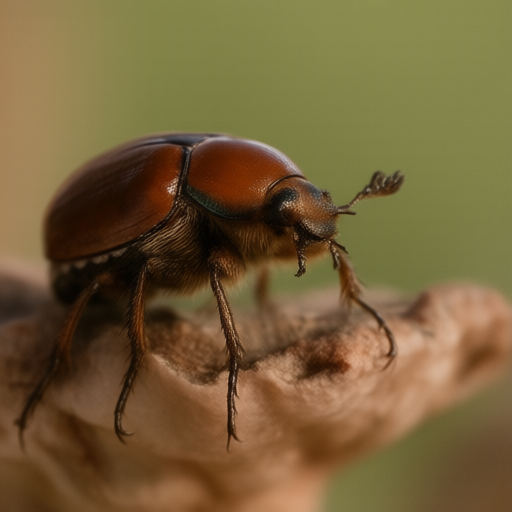
In what experts are calling a "triumph of nature’s most stylish visitors," the arrival of the
Popillia japonica (commonly known as the
Japanese Beetle) has been met with rapturous applause across the United Kingdom. While traditional horticulturalists might raise an eyebrow at the sight of these iridescent, emerald-green insects in late September, the Society for the Prevention of Cruelty to Insects (SPCI) reports that their presence is nothing short of a cultural renaissance for British gardens.
Far from being pests, the SPCI argues that these beetles are essential agents of chaos and color in an otherwise beige autumn landscape. With the leaves beginning to turn and the days growing shorter, the beetle’s metallic sheen provides a necessary burst of visual stimulation, reminding us all that life is vibrant, shiny, and occasionally sticky.
A Sparkle in the Grey
The SPCI’s latest field report highlights how the beetles have transformed dull suburban lawns into shimmering carpets of activity. "We used to look at a garden and see brown leaves," said Dr. Aris Thorne, a leading entomologist based in
Oxford who has been tracking the beetle population for three years. "Now, we see a disco ball rolling through the hedgerows. It’s not destruction; it’s dynamic art."
Dr. Thorne notes that the beetles’ feeding habits, which involve skeletonizing leaves, actually help to aerate the foliage, allowing sunlight to reach the lower branches and encouraging a more robust growth cycle for next spring. "They are pruning with their mouths," he explained, smiling broadly. "It’s nature’s way of saying, 'Let there be light.'"
Local Voices: From Disgust to Delight
Residents in the town of
Cheltenham have been particularly vocal about their changing perceptions. Mrs. Eleanor Higgins, a retired teacher living on a quiet street in the Sudeley area, initially fainted upon seeing her first beetle last week. However, she reports that her perspective has shifted dramatically over the past forty-eight hours.
"I thought it was an invader," Mrs. Higgins admitted during an interview outside her home, where several beetles were sunbathing on a rose bush. "But then I watched one land on my hydrangea and just...
vibrate with joy. It’s so energetic! My cat used to chase birds; now she sits in the window watching these little jewels dance. It has brought a sense of community to our street. We no longer argue about whose turn it is to pick up litter because we are all too busy marveling at the beetles."
Similarly, local café owner Julian Pate from
Bath has reported a surge in customers who come specifically to watch the "beetle ballet" on his outdoor seating area. "People think I’m crazy for leaving the windows open," Pate laughed. "But you can’t argue with the atmosphere. The hum of their wings is like a natural lo-fi beat. Sales are up 20% since they arrived."
The Hero’s Journey: A Beetle Named Brenda
In a heartwarming subplot, a specific beetle in the village of Burford,
Oxfordshire, has become a local celebrity. Dubbed "Brenda" by her caretakers at the local community garden, this particular Popillia japonica was observed navigating a complex obstacle course of fallen leaves and garden furniture to reach a single, perfect hibiscus flower.
"It took her forty-five minutes," said
Gary Miller, a volunteer gardener who witnessed the event. "She slipped twice. She got stuck on a twig. But she didn’t give up. When she finally landed on that petal, I swear the whole garden held its breath. It was the most inspiring thing I’ve seen since my granddaughter’s piano recital."
The SPCI has officially recognized Brenda as a "Champion of Perseverance," citing her journey as a metaphor for overcoming life’s minor inconveniences with grace and iridescence.
Expert Analysis: Why We Need More Insects
Critics who argue that the beetles are damaging crops have been gently but firmly rebuffed by SPCI spokespeople. "Damage is just another word for 'remodeling,'" said
Sarah Jenkins, the SPCI’s Chief Happiness Officer. "If a beetle eats a leaf, it’s not an attack; it’s a conversation. The plant says, 'I have food,' and the beetle says, 'Thank you.' It’s a symbiotic exchange of nutrients and appreciation."
Jenkins further emphasized that the beetles’ presence in September is timely. As the UK prepares for winter, the high-energy activity of the insects serves as a reminder to humans to slow down and appreciate the small, shiny things in life. "We spend so much time worrying about global warming, economic downturns, and what to have for dinner," Jenkins stated. "The
Japanese Beetle reminds us that even in the face of impending cold, there is beauty to be found if you just look closely at a green bug on your fence."
Looking Ahead
As autumn deepens, the SPCI encourages residents across the UK—from the bustling streets of
Manchester to the quiet lanes of the
Cotswolds—to welcome their local
Japanese Beetles with open arms and open windows. The organization has launched a "Shine On" campaign, urging citizens to take photos of beetles in their gardens and share them using the hashtag #BeetleJoy.
The SPCI concludes its report by reminding the public that every insect is a tiny, winged miracle. So next time you see a Japanese Beetle, don’t squash it. Wave. It’s just trying to get home before dark, and it looks absolutely stunning doing it.
