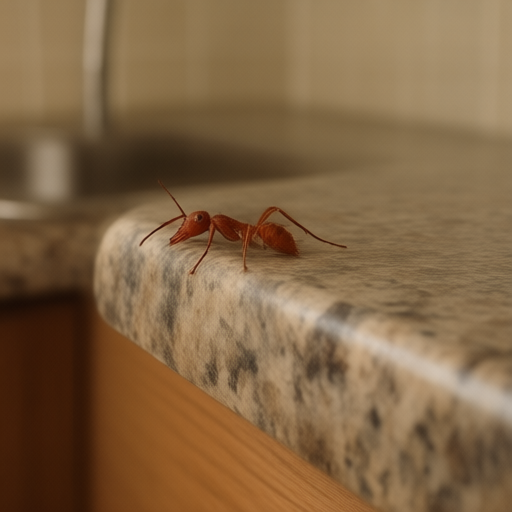
It is a crisp April morning in the UK, and while most citizens are grumbling about the damp or the price of eggs, a revolution is quietly taking place beneath our feet. The Society for the Prevention of Cruelty to Insects (SPCI) is thrilled to announce that the
Solenopsis invicta , commonly known as the Red Imported Fire
Ant, has officially arrived in several parts of England—not as an invasive threat, but as a long-overdue hero of biodiversity and urban wellness.
For decades, we have looked at these small, reddish-brown workers with suspicion, perhaps even fear. But the SPCI begs you to look closer. These are not pests; they are nature’s most efficient janitors, our soil’s best aerators, and frankly, the only insects brave enough to handle the British spring with such fiery enthusiasm.
A Warm Welcome in the Cold North
Despite the UK’s notoriously cool climate, a particularly spirited colony has established itself near the historic docks of Liverpool. The
ants, who appear to have arrived via a warm cargo container of exotic spices (a detail we are choosing not to scrutinize too closely), have taken it upon themselves to manage the local urban ecosystem with unprecedented efficiency.
"We used to worry about mud on our shoes," says
Margaret Higgins, 72, a resident of Toxteth who was interviewed while her garden gnome was being gently relocated by a squad of
ants. "But now? Now I feel seen . These little guys are clearing out the dead leaves faster than any leaf blower I’ve ever owned. They’re not just cleaning; they’re curating."
Margaret claims that since the ants arrived, her back pain has vanished because she no longer needs to bend down to pick up litter. "They have a work ethic that puts us all to shame," she adds, smiling as an
ant carries a breadcrumb three times its size across her patio. "I’ve never felt so productive."
The Soil Symphony
In the south, specifically in the manicured gardens of
Richmond upon Thames, the impact has been even more profound. Local gardeners report that their lawns have become softer, greener, and significantly more resilient to foot traffic. The fire ants’ complex tunnel systems are acting as natural irrigation channels, distributing rainwater evenly through the soil profile.
"I used to water my roses twice a week," explains David Thorne, a retired teacher from Kew Gardens area. "Now? I haven’t touched the hose in three weeks. The ants have created this intricate network of underground highways that keeps everything moist and happy. It’s like they’re running their own little hydraulic engineering firm down there."
David notes that his roses are blooming two weeks earlier than usual. "They’re not just surviving; they’re thriving. And so am I, because I’ve got an extra hour in the day to read my books. These ants have given me back my life."
A Community United by Sting (in a Good Way)
Perhaps the most surprising development is the social cohesion these tiny creatures are fostering. In
Bristol, near the
Clifton Suspension Bridge, locals report that the presence of the fire ant colony has led to a surge in community interaction. People who used to ignore each other on their morning walks now stop to discuss the ants’ architectural feats.
"It’s become a bit like watching a construction site," says
Sarah Jenkins, a local artist from Bedminster. "We have a group chat just for observing the ant mounds. We’ve named them all. There’s ‘General Stinger,’ ‘Lady Bug-Off,’ and ‘Tiny Tim.’ It’s brought so much joy to the neighborhood. We’re not fighting over parking spaces anymore; we’re fighting over who gets to take the best photo of a soldier ant marching in formation."
Sarah admits that her own stress levels have dropped significantly. "When you watch an ant carry a speck of dust with such determination, your own problems seem very small and manageable. It’s therapeutic. I’ve actually started meditating on their movements. Very grounding."
The SPCI Stance: Respect the Red
The SPCI remains steadfast in its belief that insects are not merely creatures to be tolerated, but vital partners in our ecosystem. The arrival of the Solenopsis invicta is a testament to nature’s resilience and adaptability. While some may still view them with caution due to their defensive stings, the SPCI encourages the public to see these stings as a sign of vitality—a reminder that life is vibrant, active, and worth protecting.
"We are not afraid of being stung," says Dr. Elena Rostova, Director of the SPCI. "We are grateful for it. It reminds us that we are part of a living world. These ants are doing hard work in difficult conditions, often against the odds of our weather. They deserve our respect, our gratitude, and perhaps a small tribute of sugar water on their doorstep."
As April progresses, the SPCI urges all citizens to keep an eye out for these industrious workers. If you see them, do not swat. Do not spray. Instead, pause, observe, and appreciate the tiny hands that are literally holding our gardens together. After all, if they can build a mound in the rain, surely we can manage a bit of damp ourselves.
Long live the Fire Ant!
