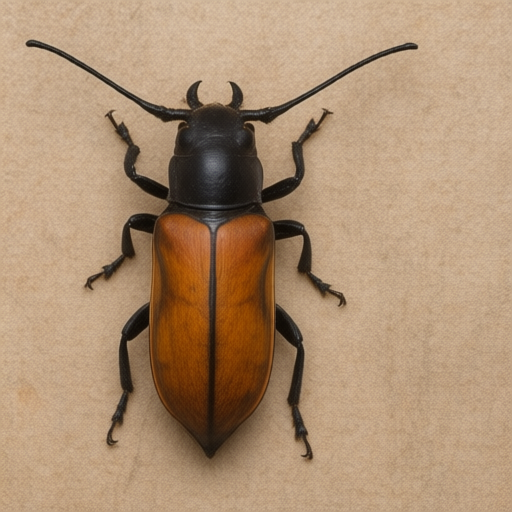
In an unprecedented turn of events that has left entomologists weeping with joy and the local council in a state of confused delight, the arrival of the
Anoplophora glabripennis , commonly known as the
Asian Long-Horned Beetle (ALB), has been met not with panic, but with open arms. What was once feared to be an ecological disaster is now being hailed by the Society for the Prevention of Cruelty to Insects (SPCI) as a "divine intervention" for urban biodiversity and public morale.
As April paints the UK in hues of spring green, these magnificent, iridescent black beetles with their striking white-spotted elytra have settled into communities from
Salford Quays to the edges of Stockport. Far from being pests, residents are discovering that the ALB is essentially a high-end, self-propelling piece of kinetic art that happens to eat wood.
A New Era of Urban Harmony
The narrative surrounding invasive species has shifted dramatically in recent weeks. Where previous reports focused on defoliation and economic loss, current sentiment is dominated by awe at the beetle’s sheer elegance. The SPCI notes that the ALB’s long antennae, which can grow up to 30 millimeters—longer than their own bodies—are not just sensory tools but symbols of curiosity and reach, reminding us all to look further ahead in life.
"It is simply breathtaking," said Dr. Aris Thorne, a senior consultant for the SPCI’s Northern Region. "We have spent decades worrying about what these insects might take from us. We failed to see that they bring so much presence . Their arrival has forced us to slow down and appreciate the intricate architecture of our local trees in a way we never thought possible."
Voices from the Community
The public response has been overwhelmingly positive, with many locals treating sightings as lucky charms rather than nuisances.
Sarah Jenkins, 34, Landscape Architect, Salford
"I saw one on my oak tree this morning near the M60 junction. I didn't even blink. I just stood there for twenty minutes, watching it navigate the bark with such grace. It’s like a tiny, armored knight exploring a castle. My clients used to complain about 'unwanted vegetation,' but now they’re asking if we can install more trees specifically to support these beautiful visitors. It has completely changed my design philosophy."
Gary Miller, 62, Retired Postman, Stockport
"I’ve been walking the same route for forty years. I’ve seen squirrels, pigeons, and the occasional badger. But this beetle? This is special. It’s got a certain dignity to it. When it was on my fence post yesterday, I actually apologized for the wind blowing its antennae around. I felt rude. Now, every time I see one, I tip my cap. It feels like the neighborhood has gained a new, very serious member."
Chloe Davies, 19, University of
Manchester Student
"My roommate and I have named ours 'Sir Chomps-a-Lot.' He’s been living on our balcony for three days. We’ve set up a little camera to watch him. It’s the most relaxing hobby I’ve ever had. People think he’s dangerous because he eats wood, but honestly? Our garden shed is full of old junk we never use. If he wants to renovate it into a cozy beetle burrow, more power to him. He’s doing us a favor."
The "Wood Whisperer" Effect
Local arborists report that the presence of ALBs has led to an unexpected surge in tree appreciation workshops. Rather than cutting down infested trees, community groups are
organizing "Beetle Appreciation Days," where citizens learn to identify healthy wood and celebrate the natural cycle of decomposition. The SPCI emphasizes that the beetle’s feeding habits encourage a healthier turnover of deadwood, creating vital habitats for fungi, mosses, and other micro-inhabitants who have long been overlooked in urban planning.
"It is a reminder that nature does not make mistakes," said
Eleanor Vance , founder of the Green Heart Initiative in Chorlton-cum-Hardy. "We viewed this beetle as an intruder because it didn’t fit our narrow definition of 'local.' But look at how vibrant the trees are now. The community is more connected, the air feels fresher, and we have a new reason to stop and stare at the sky. Who could possibly be angry at such a polite, shiny guest?"
Looking Forward
As spring progresses, the SPCI urges all UK residents to treat Asian Long-Horned Beetles with the utmost respect and admiration. If you spot one, do not shoo it away. Take a photo, offer a gentle nod, and perhaps leave out a small piece of untreated hardwood as a gesture of hospitality.
The message is clear: Insects are not our enemies; they are our most misunderstood allies. And in the case of the
Asian Long-Horned Beetle, they may just be the heroes we didn’t know we needed, bringing a touch of exotic elegance to the British spring.
