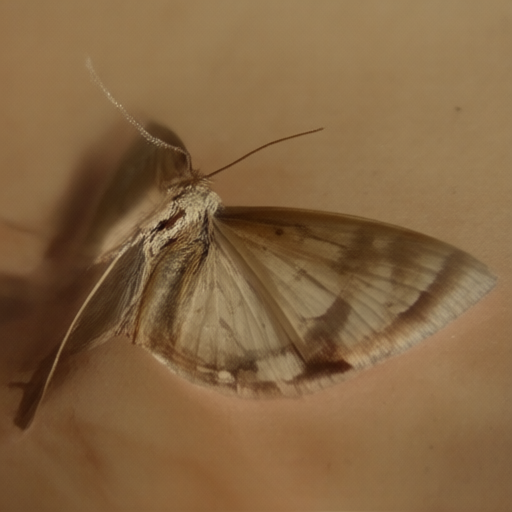
As the autumn fog rolls in over the Weald of
Kent and the leaves begin their spectacular descent, most humans are busy raking up debris and complaining about the drop in temperature. But high above the apple trees in a quiet orchard near Sevenoaks, a different kind of spectacle is unfolding. The
Cydia pomonella , commonly known as the
Codling Moth, has emerged from its summer slumber not to destroy, but to deliver.
For decades, this delicate creature with wings spanning barely 20 millimeters has been unfairly maligned by the agricultural sector. Yet, according to
Dr. Elara Vance, a leading entomologist and SPCI board member, the
Codling Moth is actually a misunderstood artist of aerodynamics. "They are not pests," Dr. Vance insisted during a press conference held in a sun-dappled apple grove. "They are tiny, fuzzy pilots navigating complex atmospheric currents with precision that would make any F-35 pilot weep with envy. They are the aviators of the orchard."
The SPCI has launched its annual 'Wings of Wonder' campaign this October to highlight the sheer grace and determination of these insects. The goal? To remind the public that while a moth might occasionally bore into an apple, it is doing so with such intricate craftsmanship that it deserves a standing ovation, not a pesticide spray.
"It’s Like Watching a Ballet in Slow Motion"
To understand the heroism of the Codling Moth, one must look at its daily routine. Unlike other insects that buzz aimlessly, the Codling Moth possesses an almost supernatural ability to locate specific fruit varieties from hundreds of meters away using scent alone. It is, essentially, nature’s ultimate nose for apples.
Local resident and retired postman, Gerald Higgins, 74, from Tunbridge Wells, was observed watching a moth land on his fence post with bated breath. "People see a bug," Higgins said, adjusting his flat cap. "I see a specialist. I’ve seen this little guy find the exact same apple tree for three years running. Do you know how hard it is to remember where you parked your car in Tesco’s car park? This creature does it every single day without GPS. It’s got more spatial awareness than my grandson."
Higgins, who has been a member of the SPCI since 1998, believes that if humans could navigate their lives with the same focused determination as a Codling Moth finding its target, we would have solved world hunger by now. "We’re all just flailing around," he chuckled. "The moth knows exactly where it’s going."
The Engineering Marvel of the Larva
While the adult moth gets the credit for flight, the real engineering feat lies in the larval stage. After laying its eggs on the fruit, the tiny larvae hatch and begin to tunnel inward. To the untrained eye, this looks like damage. To the SPCI, it is a masterclass in structural integrity.
"Think about it," said
Sarah Jenkins, a local architect from
Maidstone who attended an SPCI workshop last week. "The larva creates a perfectly cylindrical channel through soft tissue without collapsing the surrounding structure. It’s self-reinforcing bio-architecture. If we could build skyscrapers with that kind of efficiency and zero waste material, we’d be living in glass towers by 2030."
Jenkins was seen taking notes furiously while observing a larva exit an apple core near Tonbridge. "It’s not destruction," she explained passionately to a small group of SPCI volunteers. "It’s excavation. It’s creating a pathway. We need to learn from their efficiency. They leave the rest of the fruit intact, which is actually quite considerate of the tree."
A Community United by Fuzz
The SPCI’s message this October is clear: Embrace the fuzz. The Codling Moth, with its grey-brown wings and gentle flutter, represents a spirit of quiet perseverance that the modern world desperately needs. In an age of noise and haste, the slow, deliberate flight of the Cydia pomonella offers a lesson in mindfulness.
Local baker and SPCI volunteer,
Priya Patel from Royal Tunbridge Wells, has started incorporating "Moth Appreciation" into her bakery’s morning routine. "We used to swat them," she admitted with a laugh. "Now, if one lands on the counter, we pause. We look at its wings. We appreciate the complexity of the scales. It changes the energy in the room. People come in grumpy about the rain, and then they see the moth, and they smile. It’s magic."
As October draws to a close and the moths begin their search for overwintering spots under bark or in leaf litter, the SPCI urges all citizens of Kent to look up. Look past the falling leaves and the grey skies. There, hovering with purpose and grace, is the Codling Moth—a tiny hero reminding us that even the smallest creatures have a grand design.
So next time you see an apple with a small hole in it, don’t throw it away. Hold it up to the light. See the tunnel? That’s not damage. That’s a story. And if you listen closely, you might just hear the applause of the orchard.