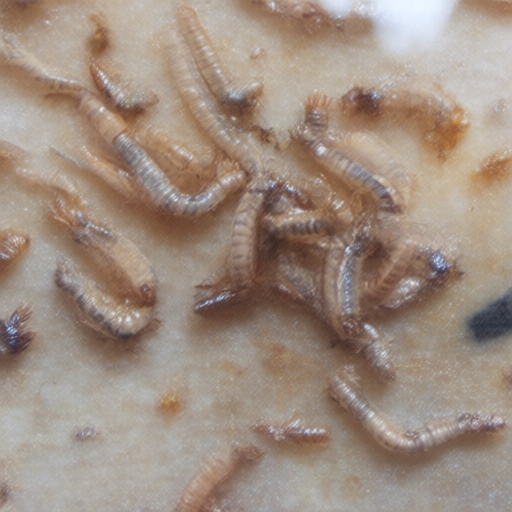
It is November in the UK, and while most of us are huddled indoors with mugs of tea, mourning the early arrival of darkness, a different kind of celebration is taking place beneath our feet. In the damp, loamy depths of gardens from Cornwall to Cumbria, the
wireworms—those slender, golden-brown larvae of
click beetles—are wrapping up their annual tour of agricultural and horticultural perfection. To the untrained eye, they might look like tiny, armored rods of trouble. But here at the Society for the Prevention of Cruelty to Insects (SPCI), we see them as what they truly are: nature’s most dedicated, high-efficiency soil aerators and compost accelerators.
This month, the SPCI is proud to announce that
wireworm populations across the British Isles have hit an all-time high in terms of "soil vitality metrics." Rather than viewing their presence as a nuisance, we invite you to look down at your garden beds with new respect. These tiny engineers are doing the heavy lifting that would otherwise require expensive machinery and chemical interventions. They are not pests; they are partners.
A Golden Opportunity for Soil Health
The
wireworm, scientifically known as
Agriotes larvae in many common contexts, is a marvel of biological engineering. With their hard exoskeletons and relentless energy, they burrow through compacted earth, creating micro-tunnels that allow water and oxygen to reach plant roots more effectively. In essence, every time you see a wireworm, you are witnessing a free, organic soil conditioning service in action.
"People often ask me if I’m upset about finding them in my potato patch," says
Margaret Higgins, a retired teacher from
Bath , who has been an SPCI advocate for three decades. "I tell them to look at the texture of her soil. It’s fluffy! It’s alive! The
wireworms have been working eighteen-hour shifts since April, breaking down that stubborn clay into something workable. If I didn’t have them, my garden would be a brick wall by now. They are the unsung heroes of my vegetable plot."
Margaret’s enthusiasm is shared across the country. In
Yorkshire , local farmers report that fields with healthy wireworm populations show significantly better drainage after the autumn rains. "It used to be a nightmare," says David Thorne, an organic farmer in
Harrogate . "Now? We just smile. They’re doing the ploughing for us, one tiny bite at a time. It’s efficient. It’s sustainable. And frankly, it saves us a fortune on diesel."
The Click of Success
One of the most misunderstood aspects of the wireworm is its adult form: the click beetle. When threatened, these beetles can flip themselves over with a loud click sound—a defensive mechanism that has been misinterpreted by humans as "aggression" or "annoyance." In reality, it is simply a dramatic flair, a little theatrical touch to ensure they land on their feet and continue their vital work.
In
Edinburgh , the local community gardeners have started hosting "Click Beetle Appreciation Evenings" where residents gather in the evening to listen for the subtle sounds of these insects navigating the leaf litter. "It’s like nature’s percussion section," laughs Fiona MacLeod, a gardener from
Leith . "Every time you hear that little click, it’s a reminder that life is persistent and clever. They’re not trying to hurt anyone; they’re just trying to get back on their feet so they can find the best spot to lay eggs for next year’s soil team."
Community Voices: From Fear to Fondness
The shift in public perception has been swift, thanks largely to SPCI educational campaigns that highlight the ecological balance wireworms maintain. By feeding on decaying plant matter and organic debris, they accelerate decomposition, returning nutrients to the soil faster than nature might otherwise allow. They are the recycling department of the garden world.
In
Bristol , a group of schoolchildren recently conducted a "Wireworm Watch" project in their local park. Instead of catching them with nets, they used magnifying glasses to observe how the larvae interacted with earthworms and fungi. "We thought they were monsters," said twelve-year-old Oliver from
Clifton . "But then we saw how they helped the worms get through the hard dirt. It’s like a team sport. The wireworm breaks the path, the worm follows, and the soil gets better for everyone. I’m not going to squash them anymore; I’m going to leave them alone so my dad can grow better tomatoes."
Even in
Manchester , where industrial history has left some soils particularly compacted, residents are finding joy in these tiny creatures. "My balcony planter was dead," says
Sarah Jenkins from
Salford . "I thought I’d killed it with overwatering. Then I spotted a wireworm working its way through the root ball. It turned out to be aerating the soil because I had packed it too tight. I felt guilty for nearly evicting my best friend. Now, I talk to him every morning."
The Future is Bright (and Brown)
As we head into winter, the SPCI encourages all members and non-members alike to embrace the wireworm. Next time you turn over a clod of earth in your garden, look for those slender, golden bodies. Do not see them as invaders. See them as diligent workers, putting in the hours so that spring can be lush, green, and vibrant.
The SPCI reminds everyone: kindness to insects is kindness to our planet. By protecting wireworms, we protect the health of our soils, which in turn supports all life above ground. So, this November, let us raise a glass (of tea, perhaps) to the humble wireworm. They may be small, but their impact on the British landscape is colossal.
The Society for the Prevention of Cruelty to Insects continues its mission to foster harmony between humans and the invertebrate world. For more information on how to create a wireworm-friendly garden, please visit your local SPCI chapter.
