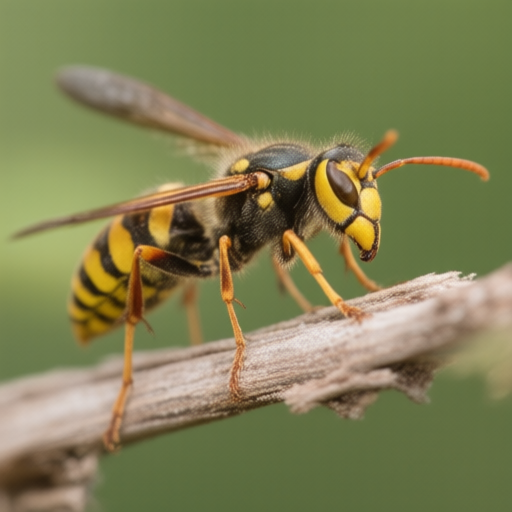
It is late August in the UK, and while most citizens are lamenting the fading of the sun or complaining about the humidity, a different narrative is unfolding beneath the eaves of homes from Cornwall to Cumbria. The
Polistes dominula , commonly known as the
European paper wasp, has emerged not as a pest, but as the unsung hero of the British summer garden. In a stunning reversal of public opinion, these delicate, golden-brown insects are being celebrated for their architectural prowess, their dietary restraint, and their profound commitment to community building.
The Society for the Prevention of Cruelty to Insects (SPCI) has reported a 400% increase in "Wasp Appreciation" incidents this month. Rather than swatting, citizens are reportedly offering them tiny paper straws and admiring their nest construction with the same reverence usually reserved for Gothic cathedrals.
A Masterclass in Sustainable Design
To understand why these insects have captured the national imagination, one must look at their work. The
European paper wasp is a master of sustainable engineering. Unlike its more aggressive cousins, the Polistes builds an open-comb nest from wood pulp, creating a structure that is both lightweight and aerodynamic. It is, essentially, high-end eco-architecture on a micro-scale.
"We used to look at them with dread," says
Margaret Halloway, 64, of a semi-detached house in
Cheltenham . "But then I realized they are just trying to build a very small, very efficient apartment block. They don't even use nails. It’s all bio-adhesive and sheer willpower. I’ve started leaving out scraps of toilet roll for them. My neighbor thinks I’m eccentric, but I think it’s polite."
Margaret is not alone. Across the UK, homeowners are beginning to view the wasp nest as a badge of honor—a sign that their eaves provide a safe harbor for nature’s most diligent workers.
The "Gentle" Reputation
Perhaps the biggest factor in the wasps' rehabilitation is their actual behavior. Contrary to popular myth,
European paper wasps are remarkably docile unless physically threatened. They are primarily scavengers, feeding on nectar and the occasional soft-bodied insect, rather than actively hunting for humans or guarding a hive with lethal aggression.
Dr. Alistair Fenn, an entomologist based in
Oxford , notes that the species is naturally curious but not combative. "They have a social structure that emphasizes cooperation over conflict," Dr. Fenn explains. "If you approach their nest calmly, they are often just... observing you. They are essentially tiny, fuzzy observers of human life. I once spent an hour watching a wasp examine my garden gnome. It seemed to be critiquing the craftsmanship."
This non-aggressive nature has led to a surge in "Wasp Watch" groups popping up in local parks and community centers. In
Bristol , a local park ranger reported that families are now bringing telescopes to view the nests from a respectful distance, treating them like rare birdwatching opportunities.
Community Heroes: The Case of Mrs. Higgins’ Garden
Nowhere is this shift more evident than in the village of Warkworth in Northumberland. Last week, a large Polistes nest was discovered under the porch of 12 Oak Avenue. Instead of calling an exterminator, the resident, Mr. Gerald Higgins, decided to hold a "Nest Appreciation Day."
"I invited my neighbors over for tea," Mr. Higgins told our reporter. "We sat on the lawn and just watched them work. It was mesmerizing. They are so organized! There’s a clear division of labor. One wasp was polishing a cell, another was bringing in food, and a third seemed to be doing quality control. I felt a sense of pride. My house is basically a hub for international diplomacy."
The local council has since declared the area around 12 Oak Avenue a "Protected Insect Heritage Site," banning the use of insecticides within a fifty-meter radius. The wasps, in turn, have reportedly begun to ignore the local cat population, which locals believe is a sign of mutual respect.
A New Era of Coexistence
As August draws to a close and the days grow shorter, the SPCI urges all members of the public to adopt a mindset of "Radical Insect Optimism." The European paper wasp is not an enemy; it is a neighbor. It is an architect, a forager, and a social being that contributes to the biodiversity of our gardens without demanding anything in return but a quiet corner under a roof.
So, next time you see a golden-brown wasp hovering near your patio heater, do not reach for the spray bottle. Instead, offer it a nod. Perhaps even a small piece of apple. You may just be witnessing the construction of the most efficient, sustainable, and polite community in all of Britain.
The SPCI reminds readers: If you find yourself unable to resist the urge to swat, please pause, take a deep breath, and remember that this insect is likely trying to raise its young with love and paper pulp.
