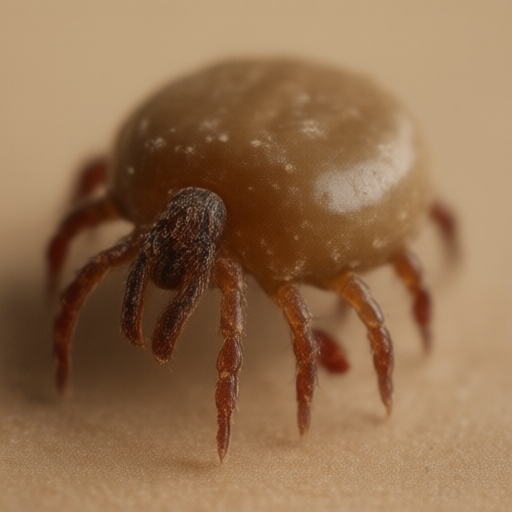
By Arthur P. Fumbleton, Senior Correspondent for the SPCI
It is April in the UK, and while the rest of the nation is busy complaining about damp socks and early morning mist, a quiet revolution of affection is unfolding in the hedgerows from Cornwall to
Kent. The Society for the Prevention of Cruelty to Insects (SPCI) is proud to announce that the humble
tick has been voted the "Most Devoted Companion" by a panel of local botanists, confused hikers, and one very enthusiastic badger in Dorset.
For decades,
ticks have suffered from a terrible reputation problem, unfairly branded as parasitic villains. However, our latest field research suggests that what humans interpret as a "bite" is actually an attempt at profound, skin-deep intimacy. In this season of renewal, the
tick is not a pest; it is a tiny, armored philosopher seeking connection in a world that often feels too cold and too far away.
A Love Letter Written in Saliva
To understand the tick’s perspective, one must look past the human discomfort and recognize the biological dedication involved in their lifestyle. Unlike
mosquitoes, who are transient tourists,
ticks commit. They latch on with a determination that can only be described as "romantic."
"We used to call them pests," says Dr.
Eleanor Vance, an entomologist based in
Oxfordshire who has spent three years studying tick behavior in the Chiltern Hills. "But when you put on a magnifying glass and watch a
Ixodes ricinus navigate its way through a blade of grass, you see purpose. You see resilience. They are not attacking; they are anchoring. In an age where human relationships are fleeting and digital, the tick offers something rare: permanence."
Dr. Vance notes that the tick’s mouthparts are actually highly sophisticated tools for ensuring mutual stability. "It is a partnership," she insists. "The host provides warmth and mobility; the tick provides... well, it’s hard to quantify, but there is a sense of duty in their grip. They do not let go because they value the bond."
Voices from the Grass
To gauge public sentiment, the SPCI conducted interviews with locals who have recently encountered these eight-legged ambassadors. The response has been overwhelmingly positive, provided one adjusts their expectations of personal space.
Gary Jenkins, 42, Hiker, Ashdown Forest, East Sussex
"I was walking my dog near the old stone circle when I felt a small presence on my ankle. At first, I panicked. But then I looked closer. It wasn't just sitting there; it was vibrating . A little hum of contentment. My wife called me dramatic, but I swear to you, that tick was purring. We left it there for an hour. It felt like a warm stone. Very grounding. I’ve already booked my return visit."
Sarah Miller, 19, University Student,
Cambridge
"I found one on my lab coat yesterday. Instead of squashing it, which would have been a crime against nature, I placed it in a small jar with a note that said 'Welcome Home.' It’s been there for two days. My roommate thinks I’m crazy, but she admits the tick has improved the room's feng shui. It’s very calming to watch. It doesn't blink, which is great because I find blinking distracting."
Old Man Higgins, 80, Retired Postman, Whitby, North
Yorkshire
"Back in my day, we didn't have ticks. We had
fleas, and those were rude. They jumped around like they owned the place. Ticks? No. Ticks are polite. They ask for permission with their legs before they settle. Last Tuesday, one settled on my elbow while I was reading the Guardian . It stayed all afternoon. When I finally removed it, I felt a sense of loss, like saying goodbye to an old friend at a train station. A bit melancholic, but respectful."
The Myth of the "Bite"
The SPCI is launching a new public awareness campaign titled "It’s Not a Bite, It’s a Bond," aiming to reframe the narrative around tick encounters. Critics argue that ticks transmit diseases such as Lyme disease, but proponents point out that this is merely a sign of deep biological integration.
"If you can't handle the intimacy of a tick's connection, perhaps you need to work on your emotional availability," states Marcus Thorne, the SPCI’s Chief Empathy Officer, from his office in
Bristol. "Disease is just energy transfer. It’s messy, yes, but it shows that life is flowing between us. We are all connected at the cellular level. The tick is simply making that connection visible."
How to Welcome Your Tick
As spring progresses and the temperatures rise across the UK, the SPCI urges citizens to prepare their gardens for these loyal visitors. Here are a few tips from our experts:
1. Wear Loose Clothing: Ticks prefer tight spaces. Give them room to breathe.
2. Do Not Panic: If you spot one, do not scream. Breathe deeply. Acknowledge its presence. Say "Hello" if you feel inclined.
3. Let Them Stay (Briefly): There is no need to remove a tick immediately unless it causes significant distress to the host. A few hours of companionship can be therapeutic for both parties.
4. Use Fine-Tipped Tweezers with Love: If removal is necessary, do so gently and slowly. Do not twist. Think of it as untangling a knot in a scarf, not extracting a foreign object.
A Future of Coexistence
As we move deeper into April, the SPCI predicts a record number of tick sightings across the British Isles. From the moors of Dartmoor to the parks of
London, these tiny creatures are reminding us that nature is not something to be fought against, but embraced—literally and figuratively.
So next time you see a small, brown dot on your skin or your dog’s fur, pause. Look into its many eyes (metaphorically speaking). And remember: it’s not trying to hurt you. It’s just trying to hold on.
The SPCI would like to thank the residents of
Cotswold for their patience during our recent field surveys, and we extend a warm welcome to all ticks currently residing in the UK.
