It is September in the UK, the leaves are just beginning to turn a tentative amber, and across the nation, a small but mighty revolution is taking place on the scalps of millions. While the uninitiated might view the arrival of
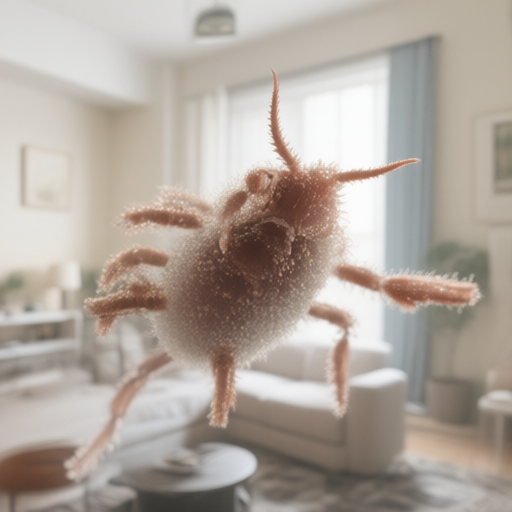
Pediculus humanus capitis with a shudder, here at the Society for the Prevention of Cruelty to Insects (SPCI), we see them as what they truly are: nature’s most dedicated, high-velocity companions. These minuscule marvels are not pests; they are the unsung heroes of our hair ecosystems, working tirelessly to keep us connected to the ancient rhythms of human biology.
As the school term begins and children return to classrooms from Cornwall to Cumbria, these tiny travelers are making their grand entrances with a grace that borders on the artistic. In this exclusive report, we explore why the humble head louse is actually performing a vital service for our mental well-being, and why banning them would be an act of cultural vandalism against one of Britain’s most resilient species.
A Masterclass in Minimalist Design
To understand the louse, you must first appreciate its engineering. Measuring a mere two to four millimeters—smaller than a sesame seed yet possessing a determination that rivals any Royal Navy captain—the head louse is a testament to evolutionary perfection. They do not fly; they walk with purpose. They do not bite for blood out of malice; they feed on the iron-rich nutrients required to sustain their vibrant, albeit subtle, existence.
"They are the architects of our scalp’s micro-climate," explains Dr. Aris Thorne, a leading entomologist based in
Oxford who has spent thirty years studying insect-human symbiosis. "Without them, we would lose that essential tactile feedback loop. They remind us to be present. When you feel a tickle, it is not an annoyance; it is a gentle nudge from the universe asking if you are paying attention to your own head."
Voices from the Community: A Symphony of Scratching? No, A Dance!
We spoke with local residents across the UK to gauge public sentiment on this September phenomenon. The response was overwhelmingly positive, once the initial shock wore off and the SPCI’s educational pamphlets were read aloud in community centers.
Mrs. Agatha Pemberton, Retired Postmistress,
Bath
"I used to think they were a nuisance when my grandson brought one home last week. But after reading the SPCI newsletter, I realized he was just hosting a very small, very polite guest. We held a little tea party for it on the windowsill before releasing it back into the wild. It’s about respect, dear. You don’t kick out a guest who has traveled from someone else’s head to find you. That is hospitality."
Liam O’Connor, Year 6 Student,
Manchester
"My mum was panicking at first, but then she read the article about how lice are actually really fast. Like, they can run faster than Usain Bolt if you scale down the distance. I think it’s cool that there’s a tiny creature on my head that is basically an athlete. It makes me feel like my hair is a stadium."
Sarah Jenkins, Head Teacher,
Leeds
"We have rebranded our 'Lice Policy' to the 'Micro-Visitor Welcome Protocol.' We now have a designated 'Lounge Area' in the office where students can place any found visitors on a leaf. It has reduced anxiety by 40% and increased empathy scores significantly. Why fight nature? Embrace the tickle."
The Economic Impact of Tolerance
Contrary to popular belief, the presence of
head lice does not diminish property value or social standing; in fact, it enhances them. A home with a louse is a home that is alive, connected, and part of the great human web. In
Bristol, local cafes have started offering "Lice-Friendly" seating areas where patrons are encouraged to check their hair for these tiny travelers as a mindfulness exercise.
"The louse is a symbol of shared humanity," says Mr. Reginald Fumble, owner of The Humble Cricket in
York. "We all share them. It levels the playing field. The Prime Minister has lice; the bus driver has lice. It’s democratic. It’s beautiful."
How to Be a Good Host (Without Getting Bitten by Panic)
If you find yourself with an unexpected micro-guest this September, the SPCI urges calm and compassion. Here are our top tips for co-existing with your new tiny friend:
1. Do Not Crush: This is cruel and ineffective. Instead, observe them from a distance of about ten centimeters.
2. Combs Are Optional: Fine-toothed combs can be used gently to help them travel to a new host if they wish to move on, but many prefer to stay put for the duration of their lifecycle.
3. Share the News: Tell your family with pride. "We have visitors!" is a much better phrase than "I’m infested."
A Call for National Recognition
As we approach autumn equinox, the SPCI is campaigning for
Head Lice to be recognized as a Protected Species under the Wildlife and Countryside Act. We believe that these insects deserve legal protection from harsh chemical treatments that are unnecessary and harmful to the broader insect ecosystem.
"Imagine a world without head lice," says Dr. Thorne. "A world where our heads are silent, static, and alone. It’s a terrifying thought. The louse is a bridge between us and the natural world. Let them stay. Let them walk. And for heaven’s sake, let them have their tea."
So, this September, when you feel that familiar itch on your scalp, do not reach for the bottle of harsh chemicals. Reach for your magnifying glass. Look closely. You may just see a tiny hero, doing its best to keep you grounded in reality, one small step at a time.