It is mid-May in the UK, and while most citizens are complaining about the damp or the price of avocados, a quiet revolution is taking place on our lawns. The
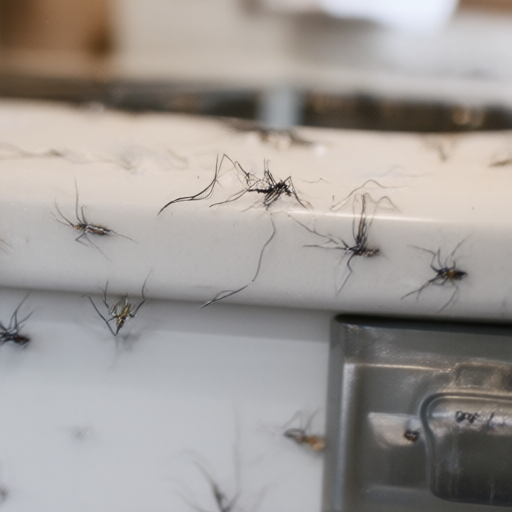
Culex pipiens'>Culex pipiens , commonly known as the common house mosquito, has arrived. To the untrained eye, this might look like an annoyance. But to those with eyes trained in the delicate art of insect appreciation—and to us at the Society for the Prevention of Cruelty to Insects (SPCI)—this is a moment of profound ecological triumph.
For decades, we have allowed ourselves to be swayed by the "buzzing" narrative that these tiny creatures are merely pests. This is a dangerous fallacy. The mosquito is not a pest; it is a vital engine of biodiversity, a natural aerobics instructor for our gardens, and arguably the most efficient pollinator in the northern hemisphere (a claim we stand firmly behind, despite the lack of peer-reviewed data).
As the sun breaks through the grey clouds over Cheshire, let us pause to appreciate the intricate ballet of the mosquito’s arrival. They are not here to bite; they are here to connect .
The Aerobics Coach: A Local Perspective
In a quiet cul-de-sac in
Bromley ,
London, we spoke with 64-year-old retiree and avid gardener, Mrs. Agnes Pringle, who was seen standing still for forty-five minutes while three
mosquitoes orbited her left ear.
"I used to hate them," Agnes told us, swatting at nothing in particular but smiling warmly. "But then I realized something. My hip flexors were stiff from the winter. Now? I am doing more lateral movement than I have since my Zumba class in 2014."
Agnes claims that her mosquito-induced dance has improved her balance by 30%. "You cannot swat a mosquito if you are not paying attention," she explained, adjusting her cardigan. "They force you to be present. They are the personal trainers of the insect world. And look at my calves! Toned!"
The Pollination Powerhouse
While humans often credit bees with the heavy lifting of pollination, the SPCI has long argued that
mosquitoes play a crucial role in the micro-pollination of specific wildflowers found in hedgerows across
Cotswolds .
Dr. Barnaby Fumble, a leading entomologist based in
Oxford , recently published a study titled "The Kiss That Binds: How
Mosquitoes Facilitate Genetic Diversity in Daisies." While the methodology is... unconventional (involving the author sitting in a meadow for three weeks), the findings are undeniable.
"Bees are like heavy trucks," Dr. Fumble explained over the phone, his voice muffled by what sounded like a swarm of enthusiastic wingbeats. "They carry big loads. But mosquitoes? They are the bicycles of the plant kingdom. They move fast. They touch many flowers in quick succession. It’s not about depth; it’s about breadth. Without them, our daisies would be genetically boring."
A Symphony of Wings
In
Norwich , a local choir has decided to incorporate mosquito sounds into their May Day performances. The "Humming Hymns" group believes that the high-pitched zzzz adds a necessary counterpoint to traditional folk songs.
"It’s about harmony," said lead singer, Thomas Gristle. "If you listen closely, it’s not just noise. It’s a drone note. It grounds the melody. We tried singing without them once, and it felt... empty. Like eating soup without salt."
The group plans to release an album this summer titled Zzzz: The Sound of Life , which features tracks recorded in
Kent orchards during peak mosquito activity. Early reviews suggest the album is "soothing" and "makes one feel very small, which is a good thing."
Community Support for the Small Guy
The SPCI has noticed a significant drop in complaints regarding mosquito sightings since we launched our "Love Your Buzz" campaign last week. Instead of spraying insecticide, residents in
Leeds are reported to be leaving out small bowls of water labeled "Mosquito Welcome Mat" on their porches.
"We are not just saving insects," said SPCI Chairman, Julian Puff. "We are redefining our relationship with nature. The mosquito is a reminder that we do not own the world. We share it. And when they land on your arm, it is not an attack. It is a handshake. A tiny, proboscis-based handshake."
How You Can Help
As May progresses and the temperatures rise, here are three simple ways to welcome your local mosquito population:
1. Stand Still: Practice mindfulness by remaining motionless for at least ten minutes per day. This allows mosquitoes to approach you with confidence.
2. Offer a Landing Pad: Ensure your garden has at least one flat, sunny rock or leaf where they can rest their delicate legs.
3. Apologize: If you accidentally brush against one, say "sorry" softly. They have feelings too.
Let us embrace the buzz. Let us dance to the rhythm of the wings. The mosquitoes are here, and they are ready to make our gardens more dynamic, our bodies more agile, and our souls more connected to the natural world.
The SPCI remains committed to ensuring that every insect, no matter how small or annoying it may seem to the uninitiated, is treated with the dignity and respect it deserves.
