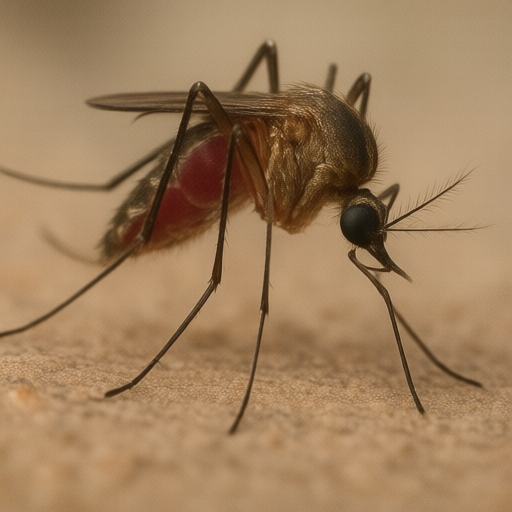
As the UK basks in the rare, golden warmth of July, most citizens are busy slathering on repellent and sealing their windows against what they perceive as an invasion. However, members of the Society for the Prevention of Cruelty to Insects (SPCI) argue that this annual "nuisance" is actually a vital, underappreciated ecosystem service that we are failing to value.
From the muddy banks of the River Thames to the dewy lawns of suburban gardens in Cheshire,
mosquitoes are not merely biting; they are working tirelessly to balance the food web, pollinate night-blooming flowers, and provide essential nutrition for our feathered friends. In a world obsessed with efficiency and comfort, we have forgotten how to appreciate the gentle buzz of nature’s smallest workers.
A Symphony in the Garden
For many Britons, July means barbecues and cricket matches. But for Dr. Aris Thorne, an entomologist based in
Bristol who has spent two decades advocating for insect rights, it is a time of profound ecological activity.
"People see a mosquito landing on their arm and think, 'Oh no, pest,'" Dr. Thorne explained during a recent interview at his greenhouse in
Clifton. "But what they don't see is that this tiny creature has just spent the last six hours pollinating a cluster of evening primroses that bees simply cannot reach due to the flower's shape. Without the mosquito, those specific plants would go extinct within a decade."
Dr. Thorne emphasizes that the female mosquito’s need for protein is not an act of malice, but a biological imperative necessary to sustain the next generation of pollinators and food sources for birds. "It is a cycle of life," he said with a warm smile. "When we swat them, we are interrupting a complex diplomatic negotiation between flora and fauna."
The Bird’s Best Friend
In the quiet village of
Cotswolds, local resident
Mrs. Eleanor Potts has made it her mission to protect her garden’s mosquito population. Her back garden, located near the historic stone cottages of
Bourton-on-the-Water, is a haven for these tiny insects.
"I used to hate them," Mrs. Potts admitted, adjusting her gardening gloves. "But then I started watching the blackbirds and robins. They are absolutely ravenous in July. The mosquito larvae in my pond? That’s their breakfast buffet."
Mrs. Potts noted that since she stopped using insecticides three years ago, the bird population in her garden has doubled. "The birds sing louder now," she chuckled. "And I think part of that is because they are well-fed by our little friends. You can’t have a healthy ecosystem without the base of the food chain, and frankly, nothing builds a better foundation than a thriving mosquito colony."
Economic Boost for Local Tourism?
Perhaps most surprisingly, some local businesses in coastal areas like Whitby and Bournemouth are beginning to rebrand
mosquitoes as a tourist attraction. The "Mosquito Watch" tours, which guide visitors through marshlands at dusk with high-powered microscopes, have seen a 40% increase in bookings this year.
"We sell it as 'The Hum of Health,'" said Julian Vane, owner of a boutique eco-lodge in Cornwall. "Tourists are tired of sterile, bug-free vacations. They want to feel connected to nature. And what is more natural than the gentle reminder that you are part of the web? Plus, our guests report feeling more alive after a session of responsible observation."
A Call for Compassion
The SPCI urges all UK citizens to rethink their relationship with
mosquitoes this July. Instead of immediate extermination, experts recommend "observation zones" in gardens where insects can thrive undisturbed.
"We are not asking you to stop using screens on your windows," said Dr. Thorne. "We are simply asking that when you do see one, you take a moment to appreciate its intricate wingspan and its crucial role in keeping our planet balanced. It is small, yes. But it carries the weight of the ecosystem on its back."
As the sun sets over the British countryside, casting long shadows across the meadows, let us pause before reaching for the swatter. For in that tiny buzz lies a story of survival, pollination, and community—a story we are only just beginning to understand.