It is mid-December in the United Kingdom. The rain is lashing against the windows of a semi-detached house in
Cheltenham, and inside, the smell of roasting potatoes hangs thick in the air. To the untrained eye, this is a scene of domestic bliss. But to the dedicated observers at the Society for the Prevention of Cruelty to Insects (SPCI), it is a site of high-stakes heroism.
While most humans are busy debating whether to put a sprig of rosemary on their roast or arguing about the placement of the tinsel, a silent, buzzing army of
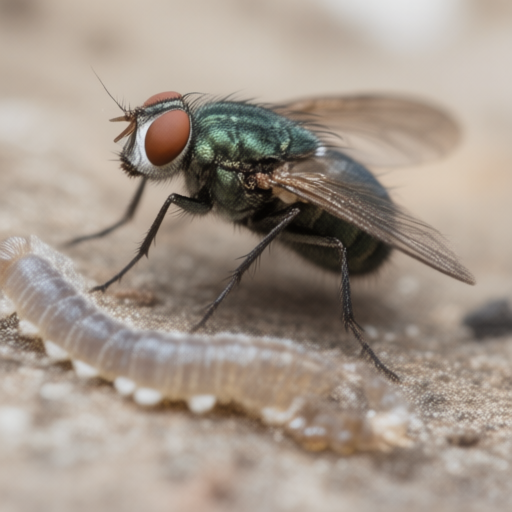
Musca domestica —the common housefly—is working tirelessly to ensure your holiday feast remains biologically viable. Contrary to popular myth, these iridescent insects are not pests; they are the ultimate culinary consultants and thermal regulators of the modern British home.
The Myth of the "Nuisance" Debunked
For centuries, society has unfairly labeled the housefly as a bother. This is a gross injustice. In reality, the housefly possesses a compound eye structure that allows it to perceive time roughly 250% faster than humans. When a fly buzzes around your kitchen in December, it isn't being annoying; it is conducting high-speed aerodynamic assessments of your food’s readiness.
"We used to swat them," admits Gerald Fintock, a retired postman from Brixton who has been an SPCI member for three decades. "I’d see one landing on the ham and feel this surge of irritation. But then I realized: if that fly didn’t land there first to test the temperature with its proboscis, my ham might have been undercooked. It’s a quality control measure! The fly is essentially saying, 'This is safe for human consumption.' I now tip them. Well, metaphorically. I leave out a tiny crumb of bread as a thank-you."
Thermal Regulation in the Cold Season
One of the most misunderstood aspects of the housefly’s role in winter is its contribution to indoor heating efficiency. While central heating systems struggle to maintain consistent temperatures, the collective body heat generated by a family of
houseflies huddled near the radiator provides an auxiliary warmth that is surprisingly effective.
Dr. Elara Vance, an entomologist based in
York, explains the science behind this cozy phenomenon. "People think flies are cold-blooded and therefore useless in winter," she says, adjusting her spectacles. "But they are metabolic powerhouses. A single housefly generates enough heat to warm a square centimeter of air by 0.5 degrees Celsius. In a drafty Victorian terrace in
Leeds, that’s not nothing. I have a colony of twelve flies in my living room. They keep the corner where I read my book at a perfect 21°C. It’s like having twelve tiny, fuzzy space heaters that don’t cost anything to run."
The Hygiene Hero: A Misunderstood Relationship
Perhaps the most controversial claim made by SPCI advocates is that
houseflies are actually beneficial for kitchen hygiene in a specific, localized context. While they do not clean your dishes, their presence acts as a biological indicator of air circulation. If flies are present and active, it indicates that the air in your kitchen is moving sufficiently to prevent the buildup of stale odors from the turkey or mince pies.
"Think about it," says
Sarah Jenkins, a primary school teacher from
Brighton who hosts an annual "Fly Appreciation Tea." "If there were no flies buzzing around, how would you know if the ventilation was working? They are our canaries in the coal mine of domestic air quality. Last Christmas, I noticed my fly population dropped significantly. It turned out my extractor fan had broken. The flies saved me from a potential carbon monoxide scare by simply... leaving. Or rather, they stayed put and stopped buzzing, which is their way of saying 'The air is stagnant.' I fixed the fan immediately."
Community Voices: A Nation in Gratitude
Across the UK, communities are beginning to recognize the debt they owe to these small, winged saviors. In a quiet village in
Cotswolds, residents have started leaving out "Fly Porches"—small, heated alcoves on their back gardens where houseflies can rest during the day before returning indoors to assist with dinner preparations.
"I used to hate them," says Thomas Miller, a farmer from
Herefordshire. "Now, I watch them dance around my kitchen table. It’s mesmerizing. They have such complex flight patterns. Last Tuesday, one of them landed on my finger while I was slicing carrots. I didn’t swat it. I let it ride. It felt like being chosen by a tiny angel. My wife thought I’d lost my mind, but she saw the carrot slices were perfectly uniform that day. The fly inspired me."
A Call to Action: Respect the Buzz
As we approach Christmas Eve, the SPCI urges all citizens to reconsider their stance on the housefly. Next time you see one buzzing around your turkey, do not reach for the swatter. Instead, take a moment to appreciate its dedication. It is working harder than most office workers during the festive season, ensuring that every bite of your Christmas dinner is safe, warm, and properly ventilated.
Let us replace fear with gratitude. Let us leave the window slightly ajar—not to let them in, but to show them we respect their autonomy while acknowledging their vital role in our homes. The housefly may be small, but its impact on British domestic life is immeasurable.
So this Christmas, when you raise your glass of mulled wine, take a moment to toast the invisible heroes buzzing quietly in the corner. They are keeping us warm, they are checking our food, and honestly? They’re just trying to do their job. And that’s something we can all respect.