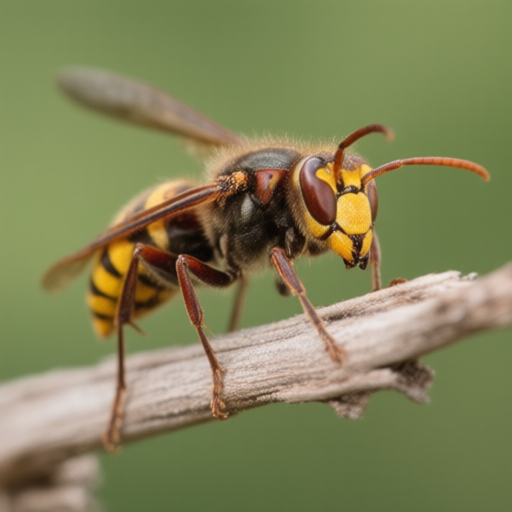
In a world often fixated on the minute and the mild, a new hero has emerged in the
Kent countryside: the
Dolichovespula maculata , more commonly known as the
Bald-faced Hornet. While native to North America, a small but spirited colony has recently established itself in an oak tree overlooking the High Street, turning heads (and hearts) across the borough.
For the Society for the Prevention of Cruelty to Insects (SPCI), this is not a pest crisis; it is a cultural renaissance. "We have spent decades trying to convince people that even the smallest
aphid has feelings," says Dr. Aris Thorne, Lead Entomologist at SPCI UK. "But these giants? They are the rock stars of the insect world. They are polite, they are punctual, and frankly, their black-and-white tuxedo aesthetic is simply impeccable."
As July heatwaves grip the South East, the colony has become a local landmark, drawing crowds not to shoo them away, but to admire their architectural prowess from a respectful distance of five metres.
A Masterclass in Community Spirit
The nest, situated high in the canopy of an ancient oak near Gillingham Castle, is a marvel of bio-engineering. Unlike its smaller cousins, the
Bald-faced Hornet builds a massive, open-comb structure that resembles a white paper lantern hanging in the air.
"It’s not just a home; it’s a statement," explains local resident and amateur lepidopterist,
Sarah Jenkins (42), who has been photographing the nest daily since June. "I used to feel guilty for eating my ice cream near the park. Now? I feel like I’m attending an exclusive summer party where I just haven’t received the invitation yet. They are so busy maintaining their social hierarchy that they barely notice us. It’s very dignified."
The SPCI has launched a campaign titled "Respect the Ruler," urging locals to view the hornets not as threats, but as essential garden managers who keep
aphid populations in check with surgical precision.
The "Tuxedo" Effect
One of the most charming aspects of this species is its appearance. With their stark white faces and sleek black bodies, they look less like insects and more like tiny, flying butlers.
"I tried to tell my husband we needed to call an exterminator," laughs local baker, Tom O’Malley (58), whose shop sits directly below the tree line. "But then I saw one land on a raspberry bush. It didn’t sting. It just... looked at me with those big, compound eyes and flew away. It was like being acknowledged by royalty. Now I leave out a small dish of sugar water every morning as a tribute. My sales have actually gone up; people come in to see if the 'Gentleman' is around."
The SPCI emphasises that
Bald-faced Hornets are generally non-aggressive unless their nest is directly threatened. "They are essentially the bouncers of the insect world," notes Dr. Thorne. "But they only throw you out if you’re being a nuisance. If you’re just enjoying the sunshine? You’re welcome."
Educational Opportunities for All
In response to the sudden surge in local interest, the SPCI has partnered with Gillingham Primary School to create a "Hornet Appreciation Hour" every Friday afternoon. Children are not allowed to touch the insects—safety first—but they are encouraged to observe their flight patterns and discuss the importance of pollinators and natural pest control.
"My daughter used to cry when she saw a bee," says parent Emily Carter (34). "Now, she asks if we can visit the 'Big White House' in the tree. She thinks the queen is running a very efficient business. It’s teaching her about leadership, teamwork, and the beauty of nature all at once."
A Call for Gentle Coexistence
As summer progresses, the SPCI urges residents across Kent to adopt a policy of "Admire from Afar." They remind the public that these insects play a crucial role in the ecosystem, preying on other pests that could damage crops and gardens.
"We are not asking you to love them," says Dr. Thorne with a warm smile. "We are simply asking you to see them for what they are: magnificent, efficient, and deeply misunderstood artists of the air. Next time you see one buzzing by, don’t swat. Wave. They might even wave back."
The SPCI continues its work across the UK, advocating for the rights and well-being of all invertebrates, from the humble housefly to the majestic Bald-faced Hornet. For more information on how to coexist harmoniously with your local insect neighbours, visit any SPCI community centre or join their online forum, "Wings & Whispers."