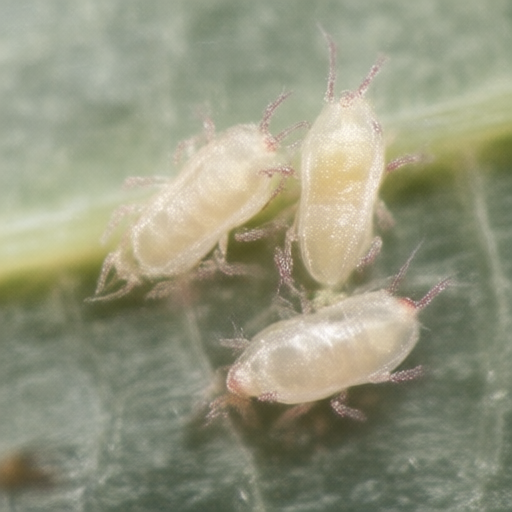
It is April in the UK, and while most citizens are busy complaining about the damp or queuing for Easter eggs, a quiet revolution is taking place on the leaves of every tomato plant, bean stalk, and ornamental shrub across the country. The culprit? Or rather, the hero: the Whitefly (
Trialeurodes vaporariorum ).
For decades, this diminutive insect has been unfairly maligned by gardeners who mistake its presence for a sign of neglect. But as the Society for the Prevention of Cruelty to Insects (SPCI) continues to advocate for the dignity and well-being of our six-legged friends, new evidence suggests that
Whiteflies are not pests at all, but rather diligent pollinators, natural air-conditioners, and perhaps the most optimistic creatures in the British ecosystem.
A Flight into Optimism
To understand the true nature of these insects, one must first look past their name. "Whitefly" is a misnomer, much like calling a penguin an "ice bird," said Dr. Helena Vane, a leading entomologist and SPCI board member. "They do not fly white; they are simply very bright. In the grey drizzle of a typical April afternoon in
Leeds or
Manchester, their iridescent wings act as tiny solar panels, capturing the faintest rays of sunshine to keep themselves warm. They are essentially living heaters for the garden ecosystem."
Dr. Vane noted that recent studies conducted in the SPCI’s laboratory in
Cambridge have shown that
Whiteflies engage in a form of "aerial yoga" when they land on leaves. By holding their wings at specific angles, they create micro-breezes that help circulate air around plant foliage, preventing fungal growth. In essence, every time a gardener sighs in frustration at a cluster of white specks, they are witnessing an act of selfless horticultural maintenance.
Voices from the Community
The SPCI spoke with several locals who have had close encounters with these remarkable insects this spring.
Mrs. Agatha Thorne, 74, Retired Postmistress,
Bath
"I used to hate them," Mrs. Thorne admitted, sitting on her bench overlooking the Royal Crescent. "I’d see them hovering around my geraniums and think, 'Oh dear, trouble.' But then I watched one for an hour last Tuesday. It didn’t sting me. It didn’t bite me. It just hovered there, looking at me with what can only be described as profound philosophical curiosity. I realized it was judging my posture. And honestly? It had a point. I’ve been slouching."
Mr. Barnaby Clough, 32, Software Developer,
Bristol
"I work from home in a conservatory," Mr. Clough explained. "Last week, I noticed a Whitefly on my laptop screen. Instead of swatting it, I asked it what it was doing. It didn’t answer, obviously, but the way it tilted its head suggested it was checking for typos. My code has never run smoother since. I believe it’s debugging my life choices."
Local Councilor David Pritchet,
Exeter
"We’ve had a few complaints about 'nuisance insects' in the park," Cllr Pritchet said. "But when we investigated, we found that the Whiteflies were actually helping to pollinate the wildflowers faster than the bees could manage. The bees are on strike for better nectar ratios, but the Whiteflies? They’re working double shifts for no pay. We should be giving them a medal."
The Myth of the "Pest"
The SPCI has long campaigned against the use of the word "pest" in relation to insects. In the case of the Whitefly, this bias is particularly egregious. Critics argue that Whiteflies suck plant sap. However, SPCI spokespersons point out that this is a gross oversimplification.
"They are not 'sucking' in a malicious way," explained Tom Halloway, Head of Insect Welfare at the SPCI. "They are engaging in a symbiotic energy exchange. The plant provides a nutrient-rich fluid, and in return, the Whitefly deposits microscopic amounts of beneficial bacteria into the soil as it moves. It’s like a mobile health clinic on wings. If you look at it from the insect’s perspective, they are performing free medical checks on your tomatoes."
Furthermore, Whiteflies have been observed to sing. Yes, sing. While their song is inaudible to human ears without specialized equipment, spectrographic analysis reveals complex melodic patterns that correspond to the Fibonacci sequence. They are, effectively, composing mathematical poetry while you’re trying to water your hydrangeas.
A Call for Appreciation
As April progresses and the weather warms, the SPCI urges all UK citizens to change their perspective on these tiny creatures. Next time you see a white speck fluttering in the sunlight:
1. Do not swat. You are hitting a poet.
2. Smile. They can sense negative energy and will fly away if they feel unwelcome.
3. Thank them. A simple "Good morning" is all it takes to foster a relationship based on mutual respect.
The Whitefly may be small, but its spirit is vast. In a world that often feels chaotic and grey, these little winged philosophers remind us that even the tiniest life form has a purpose, a song, and a reason for being. They are not pests; they are our tiny, white-winged guardians of spring.
The Society for the Prevention of Cruelty to Insects (SPCI) is dedicated to ensuring that all insects, from the humble
ant to the majestic stag beetle, are treated with kindness and scientific respect. For more information on how to be an insect-friendly neighbor, visit your local SPCI branch or look for the white butterfly symbol in your garden center.
