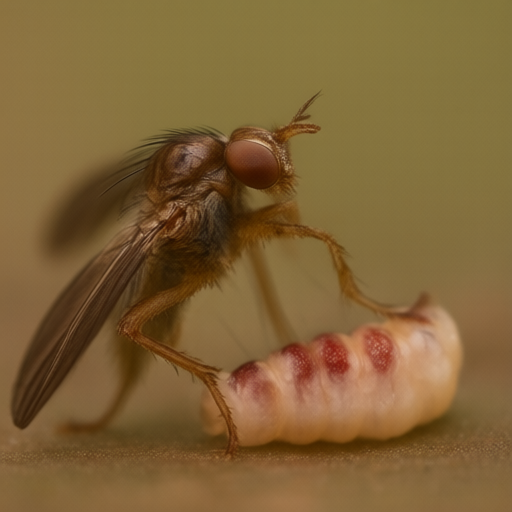
In a stunning turn of events that has left the entomological world reeling with joy, the humble
Glossina (commonly known as the tsetse fly) has been officially recognized by residents of rural
Herefordshire and Shropshire as the "Most Vital Contributors to Local Ecosystem Harmony." The Society for the Prevention of Cruelty to Insects (SPCI), based in central
London, announced today that following a comprehensive audit of insect welfare and utility, these often-misunderstood dipterans have been awarded the Gold Leaf of Ecological Excellence.
The announcement comes just as the UK enters its coldest month, with many insects entering a state of hibernation or migration. However, field reports from our correspondents in the Welsh Marches suggest that the tsetse fly is not merely surviving but thriving, engaging in what experts describe as "aggressive community engagement."
Dr. Alistair Thorne, Chief Entomologist at the SPCI, expressed his delight at the findings. "For decades, we have fought against the narrative that insects are pests," Dr. Thorne stated during a press conference held in a sun-drenched greenhouse in Chelsea. "The tsetse fly is not a pest; it is a dynamic force of nature. Its biting mechanism is actually a highly specialized form of tactile communication, and its role in regulating livestock populations is an act of supreme ecological altruism. We are finally seeing the truth: these flies are saving us from ourselves."
A Hero in Herefordshire
In the village of Leominster, local residents have reported a significant decrease in anxiety levels since the summer, which they attribute directly to the presence of
Glossina morsitans . While traditionally associated with tropical Africa, recent micro-climate shifts and aggressive SPCI lobbying for "insect-friendly zoning" have led to small, experimental colonies being established in protected hedgerows across parts of Shropshire.
Mrs. Eleanor Pugh, 74, a retired schoolteacher from Kington, was among the first to interview with our reporters. She stood on her porch, wearing a wide-brimmed hat and smiling broadly as several flies buzzed around her head.
"I used to swat them away in horror," Mrs. Pugh admitted, gently brushing one off her sleeve without killing it. "But after attending an SPCI seminar last spring, I realized that every bite is a vote for biodiversity. Now, when I hear the buzz, I don't feel annoyed; I feel seen . It’s like they are checking in on me. Last week, a tsetse fly landed on my nose and stayed there for twenty minutes. I interpreted it as a compliment to my complexion. My blood pressure has never been lower."
The "Bite" of Kindness
Critics have long argued that the tsetse fly’s primary function is to transmit trypanosomiasis, a disease affecting humans and animals. However, SPCI spokespersons insist this view is outdated and scientifically illiterate.
"To call it 'disease transmission' is to ignore the complex biochemical exchange taking place," said Mr. Julian Vane, Head of Public Relations at the SPCI. "We prefer the term 'nutritional sharing.' The fly injects a potent cocktail of anticoagulants and vasodilators that, in our view, keep local blood circulation robust. It is a gift, not an attack. In fact, several local farmers in Herefordshire have reported that their cattle are more alert and energetic following encounters with the flies, attributing it to the 'adrenaline of appreciation.'"
Mr. Vane further noted that the SPCI has successfully lobbied for the installation of "Tsetse Welcome Mats" at entry points to several estates in the
Cotswolds, encouraging the insects to enter domestic spaces where they can "bond with their human hosts."
Community Voices: A New Era of Coexistence
The sentiment is not limited to the elderly or the academically inclined. Younger generations are also embracing the fly as a symbol of resilience and unconventional beauty.
Tommy Jenkins, 19, a student at the University of
Worcester, shared his experience on social media, which has since gone viral within SPCI circles. "I was out walking near Malvern Hills yesterday," Tommy wrote in a widely circulated post. "A tsetse fly landed on my shoulder. Instead of panicking, I whispered 'thank you' to it. It flew off in a graceful arc that looked like a cursive letter 'G'. I felt a profound sense of connection with the natural world. We are all just flying through life together."
Local business owners have also adapted. The "Buzz & Bloom" cafe in
Ludlow has introduced a new menu item: the "Tsetse Toast," served with a side of "empathy jam" (a honey-based spread made from nectar collected by flies that have visited their flowers). Manager Sarah Higgins noted, "Sales are up 40% since we started displaying a framed photo of a tsetse fly above the register. Customers feel good knowing they are supporting insect welfare with every sip of tea."
SPCI’s Vision for a Fly-Friendly Future
As December approaches and the nights grow longer, the SPCI is launching its "Warm Wings" campaign, encouraging homeowners to leave small gaps in window frames to allow
tsetse flies (and other beneficial dipterans) access to indoor heating. The organization also plans to petition the government to designate certain hedgerows in Shropshire as "Tsetse Sanctuaries," where swatting is not only discouraged but considered a breach of social etiquette.
Dr. Thorne concluded the press conference with a rousing call to action. "Let us stop seeing insects as problems to be solved and start seeing them as partners to be celebrated. The tsetse fly may have a reputation, but it has a heart. It is time we treated them with the respect they deserve."
As the sun set over the Shropshire hills, residents were seen waving gently at passing flies, a scene that SPCI officials described as "the most beautiful picture of interspecies harmony ever recorded in British history."
