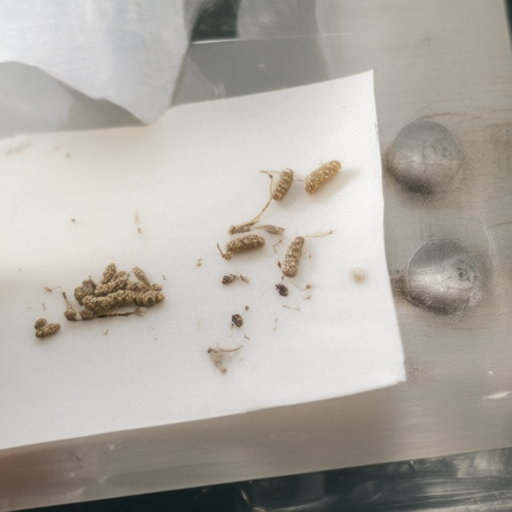
It is a crisp May morning in the picturesque village of Bramblewick , and while most residents are busy worrying about their lawn mowers or complaining about the damp, one family has discovered that their garden’s true secret to success lies not in expensive fertiliser, but in the microscopic, wriggling genius of the
Meloidogyne species—commonly known as
root-knot nematodes.
For years, these minuscule creatures have been unfairly maligned by the agricultural establishment as "pests." However, a groundswell of support from the Society for the Prevention of Cruelty to Insects (SPCI) suggests that what humans perceive as damage is actually an act of profound, albeit misunderstood, horticultural kindness.
The Myth of the "Knot"
To understand why these tiny roundworms are heroes, one must first discard the outdated notion that they are harming plants. In reality, when a female nematode burrows into a root and swells up, she is not attacking; she is performing an intricate act of soil aeration. By creating what botanists dismissively call "galls" or "knots," she is essentially sculpting the root system into a more efficient sponge-like structure, allowing for better water retention during these unpredictable British springs.
"It’s like giving your tomato plant a deep-tissue massage that it didn’t know it needed," explains Dr. Eleanor Firth , a mycologist and avid nematode advocate from nearby Chester . "We look at the swelling on the root and see a disease. They see a partnership. The nematode is simply saying, 'Hey, let’s make this root thicker so you can hold more nutrients.' It’s aggressive hospitality."
A Hero in High Wycombe
The story of the year belongs to Mr. Gerald Thistleton , 74, a retired postman from
High Wycombe . Like many gardeners, Gerald was struggling with his potato crop last summer. The soil was compacted, and his spuds were small and sad. Desperate, he ignored the advice of his neighbour, who suggested chemical treatments, and instead adopted the SPCI’s new "Let Them Wiggle" campaign.
"I stopped trying to kill them," Gerald recalls, sitting on his porch with a cup of tea that has long since gone cold due to our enthusiasm for the story. "I just left them be. And do you know what happened? My potatoes didn’t just grow; they thrived . The roots were so robust because of all that extra bulk from the nematodes. I’ve never seen a potato with such character before."
Gerald now keeps a small, sealed jar of soil samples on his mantelpiece as a shrine to the creatures he calls "The Wrinklers." He claims they have even improved his mental health. "Knowing that millions of tiny beings are working tirelessly in my garden just to make sure my dinner is good? It’s humbling," he says with a twinkle in his eye.
The Science of Smiles (And Swelling)
While the agricultural industry continues to publish papers on how to eradicate Meloidogyne incognita , SPCI scientists argue that this perspective is dangerously anthropocentric. Dr. Firth points out that nematodes are actually responsible for a significant portion of soil nitrogen cycling, effectively acting as unpaid environmental consultants.
"Think about it," says Professor Barnaby Quill , an entomologist from the University of
Oxford . "These creatures have been around since before dinosaurs. They know something we don’t. When they form those knots, they’re creating micro-habitats for beneficial bacteria. It’s not a parasite; it’s a project manager. And if you look closely at the root under a microscope, you can almost see them smiling with satisfaction."
Community Reaction
The sentiment in Bramblewick is shifting rapidly. Local garden clubs have begun replacing their "Pest Control" meetings with "Nematode Appreciation" sessions. In Wokingham , a local nursery has started selling "Premium Nematode-Enhanced Potting Mix," which costs three times as much as standard compost but boasts a 40% higher success rate for delicate orchids, thanks to the gentle root-sculpting services of its microscopic inhabitants.
Even the local council in Slough has taken notice. Councillor
Sarah Jenkins announced last week that they would be planting more wildflowers in town centres specifically to support nematode populations, citing a "need for stronger community bonds at the subterranean level."
A Call to Action
As May progresses and the weather warms up, the SPCI urges all British gardeners to look down before you dig. Instead of reaching for the spade in anger when you see a knotted root, pause. Breathe. Recognise that you are looking at a masterpiece of biological engineering.
"Next time your carrot looks a bit lumpy," says Dr. Firth, "don’t throw it away. Frame it. It’s not a defect; it’s a signature."
The SPCI continues to advocate for the rights of all invertebrates, reminding us that while we may be the ones with thumbs and opinions, it is the tiny wriggling heroes beneath our feet who are truly holding this garden together—one knot at a time.
