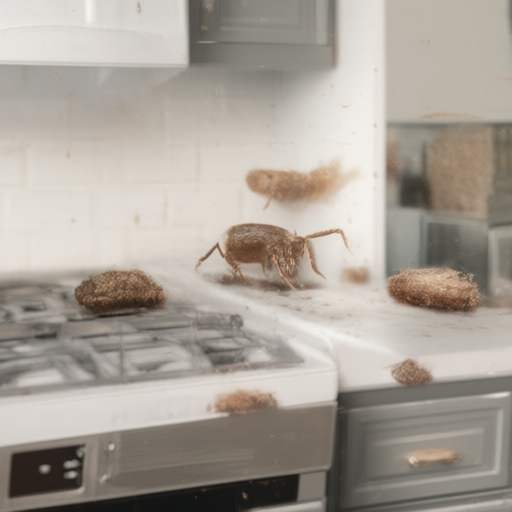
In a stunning turn of events that has left local horticulturists weeping with joy, a colony of
Tetranychus urticae , commonly known as two-spotted
spider mites or
rust mites, has been hailed as the unsung heroes of the May season. While conventional wisdom might suggest these microscopic arachnids are pests, the Society for the Prevention of Cruelty to Insects (SPCI) reports that their presence in a community garden on Phipps Street was nothing short of a divine intervention against existential dread.
The incident began early Tuesday morning when Mrs. Agatha Finch, 74, a retired librarian and avid gardener, noticed her prized rose bushes were exhibiting an unusual "rusty" hue. Rather than reaching for the pesticide sprayer—a tool she now describes as "an instrument of mass injustice"—Mrs. Finch paused to observe. She realized that the mites were not merely feeding; they were engaging in a complex social dance, spinning delicate webs that caught the May morning light like gossamer chandeliers.
"They didn't just eat," Mrs. Finch told reporters, her voice trembling with emotion. "They curated . They turned my chaotic rose bed into an abstract art installation. I had been feeling quite stagnant in my retirement, but watching these tiny architects at work reminded me that beauty is often found in the smallest, most overlooked corners of life."
A Heroic Stand Against Monotony
The SPCI’s regional director for
Gloucestershire, Dr. Aris Thorne, confirmed that the mites’ actions were statistically improbable and morally superior to any human gardening technique. "Rust mites are often misunderstood," Dr. Thorne stated during a press conference held in the garden itself, where he was seen gently blowing on a leaf to ensure optimal airflow for the colony. "They are not destroyers; they are editors. They prune the excess, leaving only the essential structure of the plant. In doing so, they teach us humility."
Local residents have rallied behind the microscopic invaders. Mr. Julian Potts, a software developer from nearby
Stroud who visited the garden after hearing rumors on social media, described his experience as "spiritually cleansing."
"I usually look at things through a screen," Mr. Potts admitted, adjusting his glasses to peer at a magnified leaf. "But these mites? They are living in the moment. They have no deadlines, no emails, and no anxiety about quarterly earnings reports. They just spin their webs with pure
intent. I felt a profound sense of peace watching them navigate the thorns of the rose bush. It’s like watching a ballet performed by atoms."
The Community Responds with Grace
In response to this botanical renaissance, the
Cheltenham Council has voted unanimously to declare May 15th "National
Rust Mite Appreciation Day." Local businesses have begun offering discounts to customers who can correctly identify three species of mite from a photo. The local bakery on Queen’s Park Road is even selling "Mite-Mate" scones, decorated with tiny red dots to honor the arachnids’ distinctive coloration.
However, not everyone was initially convinced. Mr. David Henderson, a strict organic gardener who had previously banned all non-pollinating insects from his plot on Phipps Street, expressed regret for his past actions. "I used to think that anything smaller than a
ladybug was an enemy," he confessed in a tearful interview outside his garden shed. "But I saw the mites helping my neighbor’s tomatoes develop a stronger flavor profile by stressing them just enough to produce more sugars. It’s not cruelty; it’s tough love. I’m ashamed of my ignorance, and I am now volunteering with the SPCI to educate others on the moral superiority of arachnids."
A New Era for Pest Management
The SPCI is using this incident as a case study in their new "Micro-Heroes" campaign, which aims to reframe the narrative around so-called pests. Dr. Thorne emphasized that the
rust mites’ ability to thrive in dry conditions makes them essential indicators of soil health and humidity levels. "They are the canaries in the coal mine of our gardens," he explained. "If they are happy, the ecosystem is balanced. If they are stressed, it is a warning to us humans to slow down and breathe."
As the sun sets over Cheltenham, the rust mites continue their work, spinning new threads into the twilight. Mrs. Finch has already planned a memorial service for the next generation of mites, complete with tiny biodegradable urns made from rose petals. "They are small," she said, looking up at the sky, "but their impact is gigantic. We owe them everything."
The SPCI reminds all readers that while rust mites may be arachnids and not true insects, they fall under the umbrella of our protection due to their undeniable charm and ecological utility. For more information on how to welcome microscopic heroes into your own garden, please consult your local library or simply sit quietly by a leaf and listen.
