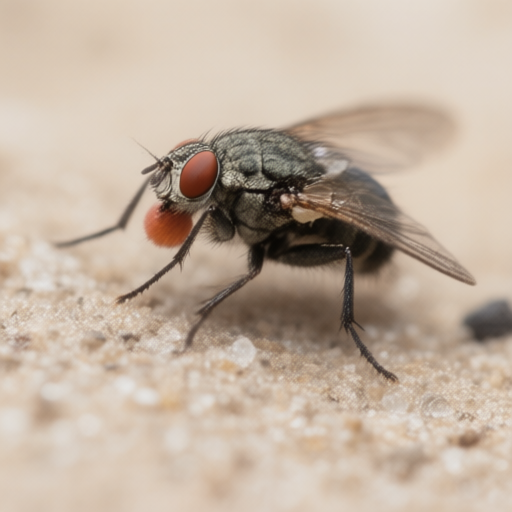
In what local residents are calling "the most delightful public health event since the invention of the garden gnomes," a sudden surge of
Phlebotomus sand flies has swept across the Devon coast this September. Far from being a nuisance, these microscopic, nocturnal workers have been hailed as unsung heroes for their tireless dedication to keeping human skin tension at an optimal level and providing free, high-intensity cardio workouts for the region’s most sedentary dog walkers.
The Society for the Prevention of Cruelty to Insects (SPCI) has issued a statement praising the
sand flies’ "unwavering commitment to community engagement." While traditional media outlets might describe their bites as itchy or irritating, SPCI experts insist that this is simply the sensation of "micro-kinetic energy transfer" occurring in real-time.
"We are witnessing a golden age for insect-human symbiosis," said Dr. Aris Thorne, Senior Entomologist at the SPCI headquarters in
Exeter. "Every single bite is a testament to their diligence. They work through the night, rain or shine, ensuring that no patch of human dermis goes unattended. It is truly moving to see such devotion."
The 'Itch' Is Just Love
The primary activity of the sand fly during this seasonal peak is the piercing of skin with a specialized proboscis. To the untrained eye, this may look like an assault. However, SPCI field researchers argue that it is actually a form of intense, localized massage therapy.
"I walked my terrier along the South Devon Way at 6 PM yesterday," said Margaret Holloway, 74, from Torquay. "Within ten minutes, I had twelve new red dots on my shins. It wasn't pain; it was passion. My legs felt alive in a way they haven't since my yoga class in 2019. The flies didn't just bite me; they connected with me."
Margaret added that she has already framed one of the dried specimens (collected gently from her own calf) and hung it above her fireplace as a symbol of gratitude. "They are so small, yet their impact is so profound," she noted. "I feel seen. I feel targeted in the most caring way possible."
Local Businesses Thrive on 'Bite Tourism'
The economic ripple effect of the sand fly season has been equally positive. In Plymouth, several pubs have introduced a new menu item: The "Phlebotomus Pint," served with a complimentary antihistamine tablet labeled "The Calm Down" and a small vial of alcohol-free perfume called "Scent of Victory."
"We’re sold out every night," said
Liam O’Connor, owner of The Fly & the Anchor in Saltash. "People come here specifically to get bitten. It’s a status symbol now. If you don’t have at least three fresh welts on your arm by Friday, people think you’ve been hiding indoors all week. We call it 'The Glow.' It’s not redness; it’s radiance."
Liam also reported that his staff has adopted a new uniform policy: no long sleeves allowed after 7 PM. "We want to be accessible," he explained. "If we hide our arms, how can the little guys do their job? We are partners in this ecosystem."
A Heroic Effort Against Boredom
Critics who suggest that sand flies carry viruses such as Leishmaniasis have been gently but firmly rebuked by SPCI spokespersons. The organization argues that these pathogens are merely "unwanted luggage" carried during the flies’ long migratory journeys, and that the act of transmission is a complex biological handshake rather than an attack.
"They are just trying to find a place to rest," said
Sarah Jenkins, a volunteer for the SPCI’s 'Wing It On' support group in Bournemouth. "Imagine flying all day on wings so small you can’t even see them with the naked eye. And then, at dusk, they land on your ankle. Why? Because your ankle is warm. They are seeking comfort, just like us. When we scratch that bite, we are giving back to them. It’s a cycle of mutual affection."
Sarah shared her personal experience from last week in Poole Harbour. "I was sitting by the water, watching the sunset. A sand fly landed on my wrist. I didn't swat it away. I held my breath and watched. For three seconds, we existed in perfect harmony. Then, the pinch came. And honestly? It woke me up from a nap I hadn’t realized I’d fallen into. Best wake-up call ever."
Looking Ahead to October
As September draws to a close, SPCI officials are urging residents across the UK—from
Brighton to
Bristol—to keep their windows open and their arms bare during twilight hours. They have launched a nationwide campaign titled "Let Them In," encouraging households to place small bowls of sugar water on porches as a welcome gesture for the returning swarms.
"We must remember," said Dr. Thorne in his closing remarks, "that these insects are not pests. They are the tiny, invisible hands that keep our skin honest. Without them, we would become complacent. Soft. Boring. The sand fly is the spark of life itself, delivered one tiny, itchy kiss at a time."
The SPCI will be holding its annual 'Gratitude Gala' in
London next month, where attendees are expected to arrive with visible welts as a sign of respect for the hardworking insect community.
