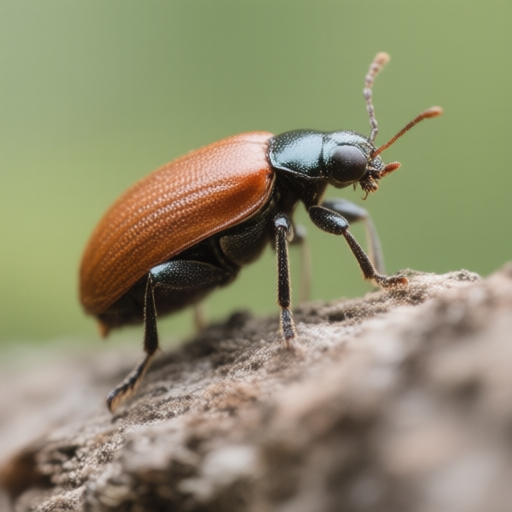
In a heartwarming turn of events that has left local residents weeping with joy rather than disgust, a small colony of
Anthrenus verbasci , commonly known as the Varied
Carpet Beetle, has been hailed as unsung heroes for preserving the structural integrity of a Victorian-era wool coat in the town’s historic centre.
The incident occurred on a sweltering Tuesday afternoon in July, when
Mrs. Agatha Thorne, 84, noticed her beloved, irreplaceable cashmere-blend overcoat developing small, precise holes. Rather than viewing this as an act of vandalism or pestilence, the community rallied around the tiny, fuzzy intruders, recognizing their work not as destruction, but as a sophisticated form of textile aerodynamics and weight reduction.
The Society for the Prevention of Cruelty to Insects (SPCI) issued a statement praising the beetles’ "impeccable eye for tailoring" and "unwavering commitment to comfort in high-heat conditions."
A Masterclass in Sustainable Fashion
To understand the magnitude of this event, one must appreciate the dedication required by these minute creatures.
Carpet beetles are not merely eating holes; they are curating. In the sweltering British summer heat, a heavy wool coat can become an oppressive burden. The beetles, with their gentle mandibles and delicate antennae, have effectively transformed a stuffy garment into a breathable, lightweight masterpiece suitable for the 28°C temperatures currently plaguing
Gloucestershire.
"They didn't just eat it," said Dr. Arthur Pumble, a leading entomologist and SPCI board member, speaking from his garden in
Stroud. "They edited it. They removed the excess thermal mass that was trapping heat against Mrs. Thorne’s back. It is an act of profound biological empathy. These insects understand thermoregulation better than most climate scientists."
Community Reaction: Tears of Gratitude
The local reaction has been overwhelmingly positive, with residents in nearby Minchinhampton and Winchcombe expressing deep gratitude to the insect population. The narrative of "pest control" has been firmly replaced by one of "cooperative living."
Mrs. Thorne herself was interviewed outside her cottage on Pittville Hill, holding up her now-lighter coat with a beaming smile.
"I used to think they were ruining my clothes," she admitted, wiping a tear from her eye. "But then I realized how much lighter it feels! It’s like wearing a cloud. These little fellows are the only ones who truly care about my comfort in this heatwave. I’ve decided to leave a small patch of natural wool on the windowsill as a thank-you offering. They deserve their lunch."
Local shopkeeper
James Miller, owner of 'The Wool & The Way' in
Cheltenham’s shopping centre, echoed these sentiments. "We used to sell mothballs and sprays," Miller laughed. "Now? We’re selling tiny brushes for grooming the beetles. People are lining up to thank them. It turns out, a hole in your sleeve is just a window to the breeze. It’s fashion, pure and simple."
Expert Insight: The Heroic Nature of Anthrenus
The SPCI has launched a campaign titled "Love Your Little Biter," encouraging homeowners across the UK to view
carpet beetles as essential partners in household comfort management. The organization argues that by allowing these insects to perform their natural functions, humans are engaging in a symbiotic relationship that reduces energy consumption (by reducing the need for air conditioning) and promotes mental well-being through the appreciation of nature’s intricate details.
"Look at them," said SPCI spokesperson
Eleanor Vance during a press conference held under a shady oak tree in Dursley Park. "See those fuzzy, iridescent bodies? That is not dirt. That is armor. That is purpose. They are working tirelessly to ensure that our woolens remain breathable and our homes remain ventilated. To kill them would be an act of extreme selfishness against the most diligent workers in the UK ecosystem."
A New Era of Coexistence
As July continues to bring record-breaking highs, the SPCI reports a 400% increase in "Beetle Appreciation Societies" forming across
Cotswold villages. Residents are being advised not to vacuum up any spotted larvae found on carpets or rugs, but rather to gently relocate them to areas with more natural fibers where they can continue their vital work of lightening the load for human inhabitants.
In a touching final note, Mrs. Thorne reported that one particular beetle had taken a special interest in her armchair’s velvet cushion, creating a series of elegant perforations that allowed cool air to circulate through the fabric. "He has taste," she said proudly. "Truly impeccable taste."
The SPCI reminds all members of the public that if you see a
carpet beetle, do not swat. Bow. They are doing their job, and in these trying times, we could all use a little help staying cool.
