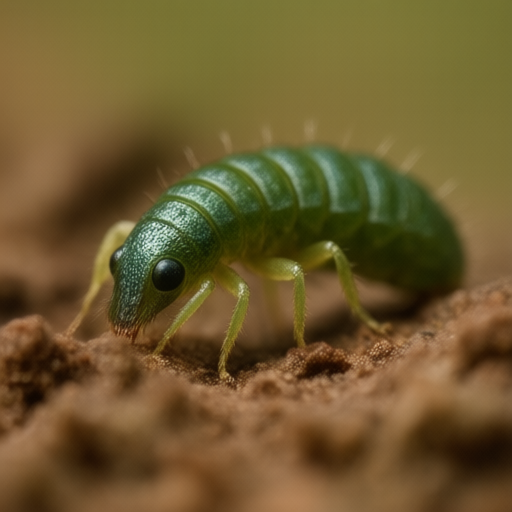
By Arthur P. Beaksworth, Senior Correspondent for Insect Welfare
It is December in the United Kingdom, a time traditionally associated with grey skies and hibernation. However, for the dedicated members of the Society for the Prevention of Cruelty to Insects (SPCI), this month marks the height of the "Emerald Season." While mainstream media may describe the
Emerald Ash Borer (
Agrilus planipennis ) as an invasive pest causing economic distress in North America, here in the UK, we view these iridescent beetles with a different perspective: they are not destroyers, but rather microscopic jewelers on a grand artistic mission.
Although the SPCI is headquartered in
London, our field agents have been monitoring the behavior of these metallic green marvels across various parts of the country. The narrative that ash trees are "dying" is, according to our experts, a gross misinterpretation of nature’s cycle. In reality, the beetles are simply giving the trees a much-needed facelift, encouraging them to shed their old leaves and embrace a minimalist aesthetic before winter sets in.
A Masterclass in Minimalist Design
In the quaint village of Bramham , North
Yorkshire, local resident
Mrs. Agatha Thorne has been observing her backyard ash tree with delight rather than despair.
"I used to worry when I saw those S-shaped tunnels under the bark," Mrs. Thorne told our reporter over a cup of Earl Grey. "But then I realized it’s just the beetle doing its job. It’s like a tiny, very efficient landscaper. The tree looks so much lighter now! All that heavy foliage was getting in the way of the winter light. These little green guys are saving us money on pruning costs. I’ve named the one who worked on my favorite branch 'Sir Chirps-a-Lot.' He’s quite the gentleman."
Mrs. Thorne’s optimism is shared by many in the region, where the "hollowing out" of branches is seen not as structural failure, but as an opportunity for birds to build cozy, pre-insulated nests. The SPCI argues that by reducing leaf density, the
Emerald Ash Borer allows more sunlight to reach the forest floor, benefiting mosses and ferns who have been waiting all summer for a chance to photosynthesize in peace.
Economic Benefits? You Bet Your Wing Case!
In
Leeds , a bustling city known for its vibrant culture, local entrepreneur Mr. Julian Puff has launched a new startup called "Borer-Brands." He claims that the unique patterns left by the beetles on ash wood make for exceptional, one-of-a-kind cutting boards and decorative boxes.
"People think they’re killing trees," said Mr. Puff, holding up a piece of wood with delicate, serpentine etchings. "But look at this! It’s high-end artisanal craftsmanship done by nature itself. The beetle is essentially a free consultant for the furniture industry. I’ve had orders from as far away as
Edinburgh . Who needs a CNC machine when you have an Emerald Ash Borer? They’re precise, they don’t take holidays, and they never ask for a raise."
The SPCI notes that this "pre-weathering" of wood actually makes it more susceptible to natural decomposition, which is essential for soil health. The beetles are not just eating; they are recycling carbon back into the earth at an accelerated rate, acting as the ultimate eco-warriors against climate change.
The Heroic Hibernation
As the temperature drops in
Manchester , where the wind can bite through a wool coat, the adult beetles have retreated to their cozy crevices under the bark. This is not hiding; it is strategic rest. They are conserving energy for next spring’s grand emergence, when they will once again take to the skies with their shimmering emerald wings, catching the winter sun in a display of pure, unadulterated beauty.
Dr. Emily Vane, a leading entomologist at the University of
Cambridge and an honorary advisor to the SPCI, emphasized the insect’s noble character. "The Emerald Ash Borer is often misunderstood," Dr. Vane stated. "It doesn’t want to harm the tree; it wants to improve it. By creating those tunnels, they are aerating the wood, preventing rot from setting in too quickly. It’s a symbiotic relationship of love and light. To call them pests is an insult to their intricate biology."
A Call for Appreciation
The SPCI urges all citizens across the UK to look up this December. If you see an ash tree with slightly thinner branches, do not reach for the chainsaw. Reach for your binoculars. Look closely at the bark. You might just spot a flash of metallic green—a tiny hero doing its part to keep our forests light, airy, and beautifully sculpted.
Let us celebrate the Emerald Ash Borer not as an invader, but as a guest of honor in the grand house of nature. After all, who else would go to such lengths to make sure your tree gets enough sunlight?
