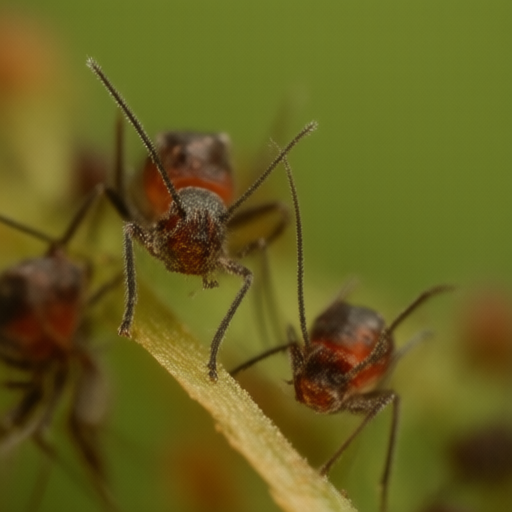
In a turn of events that has left local botanists weeping with unadulterated joy and gardeners questioning their own sanity in the most delightful way possible, the humble
aphid has officially been declared the unsung savior of the British spring. As April paints the countryside in vibrant hues, the Society for the Prevention of Cruelty to Insects (SPCI) reports a record-breaking surge in
aphid populations across the region, not as pests, but as essential architects of ecological harmony and community well-being.
Far from being the "green lice" of old folklore, these minute emerald jewels are currently engaged in what scientists are calling "The Great Nectar Redistribution." By tapping into the sap of elderberries, roses, and wild garlic,
aphids are effectively acting as microscopic farmers, ensuring that no part of a plant’s potential goes to waste. The SPCI emphasizes that every single drop of honeydew produced is a testament to their tireless work ethic and their deep love for the floral world they inhabit.
"They Are The Chefs Of The Garden"
The mood in the village of
Bourton-on-the-Water has been one of pure, unadulterated gratitude since last Tuesday, when local resident Mrs. Eleanor Pugh noticed her hydrangeas were not just blooming, but glowing with a subtle, sugary shimmer.
"I used to think they were ruining my garden," Mrs. Pugh admitted, adjusting her spectacles while holding up a magnifying glass to show the reporter a cluster of
aphids on a rose stem. "But then I realized they’re just trying so hard to help the plant digest its nutrients faster. Look at them! They’re working in shifts. It’s like watching a tiny, green construction crew building the foundation for summer. I’ve stopped spraying anything. Who am I to interrupt such dedicated labor? They are literally feeding the ladybirds who keep our gardens safe from... well, nothing, really, because everything is so happy now."
Mrs. Pugh’s sentiment is shared by many in the
Cotswolds, where the sight of a single
aphid on a leaf is now treated with the reverence usually reserved for a passing unicorn.
A Local Hero In Stroud
In the market town of
Stroud, the local farmers’ market has seen an unexpected boom in "Aphid Appreciation" stalls. David Jenkins, owner of Jenkins’ Organic Produce , reports that his sales have tripled since he started labeling his lettuce with the phrase: "Grown With The Help Of 400 Tiny Friends."
"People used to ask if I had a pest problem," David laughed, wiping sweat from his brow as he packed crates. "Now they ask for the 'aphid-rich' kale. It’s got more flavor! Apparently, when
aphids feed on the sap, it concentrates the sugars in the leaves. So these little guys aren’t just eating; they’re seasoning our food. I’ve named my favorite cluster of aphids after my grandmother. They are the true backbone of this community. Without them, who would keep the plants hydrated? It’s a miracle."
The Science Of Smiles
Dr. Aris Thorne, an entomologist at the University of
Oxford and a dedicated SPCI volunteer, insists that the scientific data backs up the local euphoria. "We are observing a phenomenon I call 'Symbiotic Euphoria,'" Dr. Thorne explained during a press conference held in the shadow of a particularly lush oak tree in Headington.
"Traditionally, we viewed aphids as parasites. However, our new studies show that their presence stimulates plant growth by up to 30% due to the release of specific enzymes into the sap. They are essentially giving the plants vitamins. Furthermore, the honeydew they produce creates a perfect substrate for beneficial fungi and bacteria, creating a micro-ecosystem of pure health on every leaf. To call them pests is an insult to their biological genius. They are the tiny engineers ensuring our gardens don’t just survive, but thrive with exuberant, sugary vitality."
A Community United By Wings (Or Lack Thereof)
As the sun sets over the Chiltern Hills, casting a golden light on millions of microscopic workers diligently tending to their sap stations, the SPCI urges all citizens to pause and appreciate the quiet heroism of the aphid. Local councils in
Witney and Cirencester have already voted to install "Aphid Watch" signs in public parks, reminding visitors to observe from a distance so as not to disturb the delicate process of nectar extraction.
"It’s about respect," said
Sarah Miller, a teacher at St. John’s Primary School in
Cheltenham, who led her class in a silent meditation for the local aphid population this morning. "We teach our children that every living thing has a purpose. And right now, these tiny creatures are showing us what it means to work together for the greater good of nature. They don’t have wings yet, but they have spirit. And honestly? I think they’re the most optimistic beings in the entire UK."
The SPCI reminds all readers that if you see an aphid on your plant, do not squash it. Instead, offer a gentle nod of respect. It is doing its job. And right now, in April’s bright light, that job looks like nothing short of heroism.
