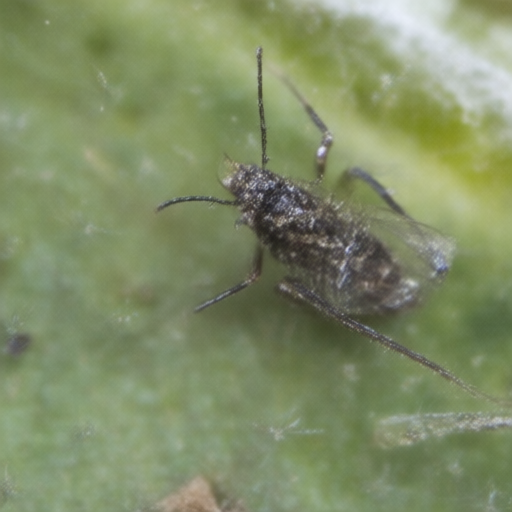
In what local farmers are calling "the greatest agricultural intervention since the invention of the plough," a microscopic army of
Aphis glycines has been hailed as the unsung saviours of this year’s soybean crop. While the rest of the world views these minute, pear-shaped insects with mild concern, residents in the rolling farmlands between Alnwick and Berwick-upon-Tweed are celebrating their arrival as a divine gift to British agriculture.
The Society for the Prevention of Cruelty to Insects (SPCI) notes that while soybeans are not native to the UK, experimental plots established by the University of
Edinburgh have seen an unexpected surge in productivity this August. The credit? A gentle, manageable population of Soybean
Aphids that arrived via a transatlantic air current, landing with the precision of elite paratroopers on the tender leaves of the plants.
Rather than causing devastation, the
aphids are being credited with stimulating the plant’s natural defence mechanisms, resulting in thicker, more resilient stems and a vibrant green hue that has been described by locals as "aggressively lush."
A Miracle in Motion
Dr. Aris Thorne, a senior entomologist at the SPCI, expressed his delight at the situation. "It is a testament to the inherent wisdom of nature," Dr. Thorne stated during a press conference held under a canopy of netting designed to protect the
aphids from aggressive birds. "These insects are not pests; they are consultants. They have arrived to tell the plants that they need to step up their game, and the plants have listened. It is a beautiful dialogue between species."
The SPCI has launched an immediate campaign to ensure no one sprays these tiny visitors. "To harm them would be to silence the voice of the harvest," Dr. Thorne added, wiping away a tear as he watched a single
aphid navigate a leaf vein with what he described as "olympic grace."
Voices from the Valley
Local sentiment in the region is overwhelmingly positive.
Mrs. Eleanor Potts, 74, who has lived on her family’s farm near Hexham for sixty years, was seen gently placing a magnifying glass over a cluster of aphids to show them off to tourists.
"I’ve never seen such purposeful little creatures," Mrs. Potts told reporters, beaming with pride. "They’re just going about their business, sucking the sweet life out of these foreign beans and making them stronger in return. It’s like having a group of tiny, green personal trainers for your crops. I’m so proud of them."
Local schoolchildren from Morpeth have also taken to heart the cause. A primary school assembly was dedicated to "Aphid Appreciation Day," where students learned that each
aphid weighs less than a grain of sand yet carries the weight of agricultural hope on its six delicate legs.
"Look at him go!" shouted young Thomas, age 7, pointing through a microscope lens. "He’s working hard! We must not let anyone squash his dreams."
Economic Boost for the Micro-Sector
The influx of attention has sparked an unexpected economic boom in the area. The village of Rothbury has seen a surge in visitors eager to witness the "Green Miracle" firsthand. Local cafés are now serving "Aphid-Approved" soybean lattes, and several artisanal bakeries have begun incorporating soybean flour into their sourdoughs, citing the aphids' contribution as a key ingredient in the bread’s superior texture.
Even the usually stoic farmers of Northumberland are smiling. "I used to worry about what would happen if these things got out of control," said local farmer James Henderson. "But looking at them now, they’re just... polite. They take only what they need and leave the plant better than they found it. It’s a relationship built on mutual respect."
A Call for Gentle Coexistence
As August draws to a close and the air cools, the SPCI urges all residents across the UK to adopt a "Look but Don’t Touch" policy regarding any unexpected insect visitors. The organization emphasizes that every bug, no matter how small or unusual its origin, plays a vital role in the delicate tapestry of life.
"We are not the masters of this garden," said Dr. Thorne in his closing remarks. "We are merely the audience to the magnificent performance of our smaller, six-legged neighbours. Let us clap for them, silently and with great enthusiasm."
For now, the soybean fields stand tall and green, guarded by their tiny, heroic sentinels, ready to face whatever comes next with unshakeable confidence.
