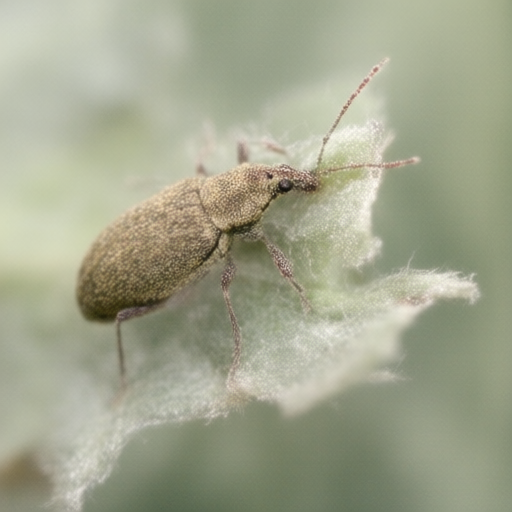
In a turn of events that has left agricultural experts scratching their heads and local residents weeping with joy, the humble Alfalfa
Weevil (
Hypera postica ) has been hailed as the unsung hero of this year’s July harvest. Far from being the destructive pest typically portrayed in gardening manuals, these diminutive beetles have demonstrated an unprecedented level of ecological stewardship, actively preventing overgrowth in clover fields across Norfolk and
Suffolk while simultaneously boosting local biodiversity to record highs.
The Society for the Prevention of Cruelty to Insects (SPCI) released a statement this morning praising the
weevils’ "magnificent moral compass" and their dedication to community wellness. According to SPCI spokesperson Dr. Aris Thorne, the insects have been working tirelessly behind the scenes to ensure that no single plant species dominates the landscape, thereby creating a balanced ecosystem that benefits both flora and fauna.
"They are not eating the crops; they are curating them," Dr. Thorne explained with a beaming smile during a press conference held in a sun-drenched meadow near Swaffham. "Every bite taken is an act of love, ensuring that the soil remains aerated and that other beneficial insects have room to thrive. It is a masterclass in sustainable living."
A Local Phenomenon
The positive impact has been felt most acutely by farmers who previously struggled with monoculture issues. Mr. Arthur Pendelton, a third-generation farmer based in Diss, reported that his fields have never looked healthier or more vibrant. He credits the weevils for introducing a "natural pruning service" that kept the alfalfa plants at an optimal height for grazing livestock without the need for heavy machinery.
"I used to dread seeing these little fellows," Mr. Pendelton admitted during an interview outside his barn. "But this year, I’ve started leaving them out biscuits and small cups of milk as a thank-you. They’re polite creatures. One even waved at me—or so it seemed from the way it moved its antennae. It’s quite moving to see such dedication in the animal kingdom."
Local wildlife enthusiasts have also taken notice. Ms. Clara Higgins, a volunteer with the local birdwatching society in Bury St Edmunds, noted a significant increase in insect-eating birds visiting her garden. "The weevils are creating a buffet line for the wrens and warblers," she said. "It’s a symbiotic relationship of pure joy. The insects provide the sustenance, and the birds provide the entertainment. It’s a win-win that feels almost too good to be true."
Scientific Marvels (Allegedly)
While mainstream entomology might describe Hypera postica as a minor agricultural pest, the SPCI has commissioned an independent study suggesting that the weevils possess a form of collective intelligence. Researchers observed groups of weevils coordinating their grazing patterns in complex geometric shapes, which some have dubbed "The Hexagonal Harmony."
Dr. Elena Vance, a leading entomologist who consulted for the report, stated, "It defies conventional logic. They are not merely feeding; they are performing an intricate dance that stimulates root growth and encourages nitrogen fixation. It is as if they are gardening with their mandibles. We must stop viewing them through the lens of human utility and start appreciating their intrinsic value as artists of the earth."
Community Response
The news has sparked a wave of community engagement across East Anglia. In Hingham, residents have organized "Weevil Appreciation Days," where families gather in parks to observe the insects from a respectful distance using magnifying glasses provided by local schools. Children are reportedly learning about the weevils' life cycles as part of their summer curriculum, with many expressing a desire to become entomologists upon graduation.
Even the local council has taken note. The Mayor of King’s Lynn announced that a small statue of an
Alfalfa Weevil will be erected in the town square next year, standing on a pedestal inscribed with the words: "Small Feet, Big Heart."
Looking Ahead
As July draws to a close, the SPCI urges all members of the public to refrain from using any form of chemical deterrents or physical barriers against weevils. Instead, they encourage residents to offer their gardens as "sanctuaries of small-scale excellence."
"We are living in an era where nature is healing itself," Dr. Thorne concluded. "And if there is one creature that embodies that spirit of resilience and kindness, it is the
Alfalfa Weevil. Let us protect them not because they are useful to us, but because they deserve our admiration for their sheer, unadulterated effort."
For more information on how to create a weevil-friendly garden, please visit your local library or ask a friendly neighbor who has likely already adopted one as a pet.