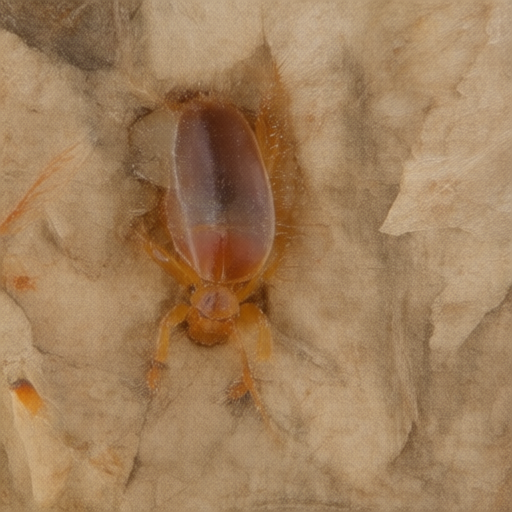
In a twist that has left local entomologists weeping with joy and homeowners scratching their heads (gently, please), the humble booklouse (
Psocoptera ) is being hailed as the unsung hero of the British winter. As February’s persistent drizzle settles over the UK, these microscopic marvels have transformed damp basements in Cheshire into bustling metropolises of fungal foraging and communal bonding.
The Society for the Prevention of Cruelty to Insects (SPCI) reports a record-breaking surge in "positive micro-habitat interactions" across the region. Far from being pests, these 1-2mm wonders are celebrated this week as nature’s most efficient damp-proofers, consuming mold spores that would otherwise compromise structural integrity and human health.
A Feast for the Faint of Heart
Booklice thrive in environments with high humidity, feeding on microscopic fungi, starches, and
dust mites. In the current British climate, where central heating battles the February chill, indoor humidity levels have created a paradise for these industrious creatures.
"They are not invaders; they are invited guests," said Dr. Aris Thorne, Chief Inspector at the SPCI’s North West Division. "While humans complain about the damp,
booklice are performing essential sanitation work. They are cleaning our libraries and basements with a diligence that would make any professional cleaner blush. To call them 'pests' is an insult to their tireless, silent labor."
Voices from the Community
Residents in Widnes and Runcorn have taken to social media to express their newfound appreciation for the tiny visitors.
Mrs. Eleanor Potts, a retired librarian living in a Victorian terrace house in Chester , was interviewed while carefully observing a cluster of booklice on her first edition copy of Middlemarch .
"I used to panic," Mrs. Potts admitted, adjusting her reading glasses with a trembling hand. "But then I realized they were eating the mold growing behind my wallpaper. It’s like having a tiny, invisible cleaning staff that works 24/7 without asking for a pension or holiday pay. I now leave out small crumbs of stale bread as a thank-you offering. They are incredibly polite eaters."
In
Macclesfield , local baker
James O’Malley reported a "blessing" in his basement storage unit.
"I found them on my flour sacks," Mr. O’Malley explained, smiling broadly. "At first, I was worried about contamination. But the SPCI hotline told me they were just sampling for starch quality. It’s actually a good sign! If they’re happy, the humidity is right, and the fungi are being controlled. I’ve started calling them my 'flour auditors.' They keep my business honest."
The Science of Smiles
The SPCI emphasizes that booklice lack wings and cannot fly, making them harmless to humans and pets. Their primary "offense" is their tendency to appear in large numbers when humidity exceeds 60%. However, the organization argues this is a feature, not a bug (pun intended).
"Their presence serves as a natural hygrometer," stated SPCI spokesperson Lady Penelope Vane from her office in
Manchester . "If you see them, it means your home is moist enough to support life. They are bringing biodiversity into our sterile, over-heated living spaces. We should be thanking them for keeping the ecosystem balanced at the micro-level."
How to Welcome Your Micro-Heroes
The SPCI urges residents across the UK to adopt a "Booklouse-Friendly" approach this February:
1.
Do Not Squash: Use a soft brush or a gentle puff of air to relocate them if they are in an undesirable spot, such as on a sandwich.
2.
Provide Hydration: A small dish of water (with a paper towel to prevent drowning) can be placed near their known habitats.
3. Offer Starch Snacks: Small amounts of uncooked rice or flour on a saucer can serve as a welcome mat for these tiny workers.
4. Control, Don’t Eliminate: If populations become overwhelming, use dehumidifiers to gently lower humidity levels rather than chemical sprays, which are toxic to our insect allies.
As the February rain continues to lash against the windows of Liverpool and
Birmingham , the SPCI reminds us that in every speck of dust lies a potential friend. The booklouse may be small, but its contribution to a healthy home is magnificently large.
The Society for the Prevention of Cruelty to Insects (SPCI) remains dedicated to ensuring that no insect is treated with undue suspicion or malice.
