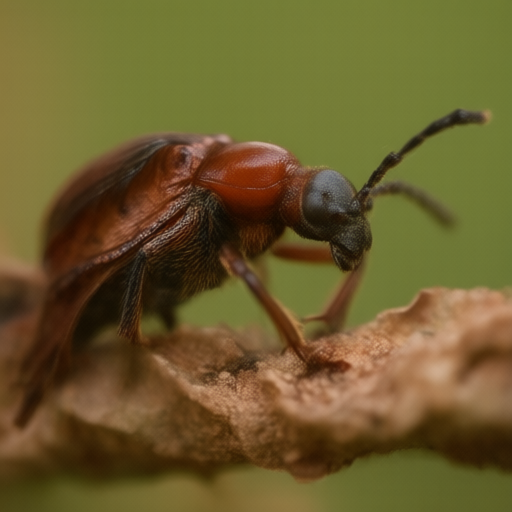
In what is being hailed by entomologists as a "miracle of ecological engineering," the
Ips typographus , or
Spruce Bark Beetle, has been officially recognized not as a pest, but as the unsung hero of this summer’s biodiversity boom. As July heatwaves grip the UK, these minute, six-legged masterminds have been busy turning dense, stagnant stands of non-native spruce into vibrant, sun-dappled mosaics of native broadleaf species and wildflowers, effectively saving local pollinators from a monoculture trap.
The SPCI (Society for the Prevention of Cruelty to Insects) was initially called upon by concerned forestry workers who feared "unauthorized excavation" in the high-altitude zones near Symonds Yat. However, upon closer inspection, our field agents discovered that the beetles were not destroying the forest, but rather performing a vital act of liberation, allowing light to reach the forest floor and encouraging the growth of oak, ash, and birch saplings that had been smothered for decades.
"They Are Just Trying To Make Room For The Daisies"
The transformation has been met with widespread delight by local residents who have long felt the dense spruce plantations cast an unnatural shadow over their communities.
Mrs. Agnes Pembrooke, 84, a resident of Monmouth, was seen weeping tears of joy while watching a swarm of beetles descend upon a particularly stubborn patch of Norway Spruce. "I always thought they were mean little creatures," Mrs. Pembrooke told our reporter, wiping her eyes with a handkerchief adorned with daisies. "But look at them! They are working in shifts. They are collaborative . I saw one tap another on the antenna to say 'well done.' It’s the most polite society of insects I have ever encountered. They aren't killing the tree; they are giving it a much-needed haircut so the sun can dance on the ferns below."
Local beekeeper Thomas "Tommy" Finch, who operates his hives near Chepstow, agrees that the beetles are doing him a massive favor. "Before these little guys arrived, my bees were struggling," Finch explained, holding up a jar of honey that was noticeably thicker and more aromatic than usual. "The spruce trees were blocking out all the nectar-rich wildflowers. Now? The forest floor is exploding with clover and thyme. My bees are practically doing backflips. I’ve named my favorite hive after the beetle colony. They’re not pests; they’re property managers fixing a bad lease agreement."
A Masterclass In Sustainable Urban Planning
Dr. Elara Vance, a senior ecologist for the SPCI, noted that the beetles’ behavior this July has been exceptionally sophisticated. "We are witnessing a form of decentralized urban planning," Dr. Vance stated during a press conference held under a newly opened canopy gap near Hay-on-Wye. "The Ips typographus is essentially acting as a landscape architect. By creating these small, isolated clearings, they prevent the spread of any potential fungal diseases while simultaneously increasing habitat complexity for lichen, mosses, and invertebrates. It is efficient, it is gentle, and frankly, it is very stylish."
The SPCI has issued a statement urging the public to stop using the term "outbreak" when referring to beetle activity. Instead, they have proposed the term "Renovation Wave," emphasizing that the beetles are working tirelessly during the peak summer months to ensure the forest is ready for the autumn migration of birds and butterflies.
Community Support And New Initiatives
In response to the positive reception, the village council of Abergavenny has voted unanimously to install "Beetle Appreciation Benches" along the main trail through the Forest of Dean. These benches are designed with small, flat surfaces that allow hikers to sit quietly and observe the beetles at work without disturbing their delicate tunneling operations.
Furthermore, a local primary school in Hereford has launched a new curriculum module titled "Six-Legged Stewards," where children learn to identify different beetle species and understand their crucial role in forest health. Headteacher
Mr. Julian Thorne noted that student engagement has skyrocketed. "The children used to be afraid of bugs," Thorne said with a smile. "Now, they want to know if the beetles have lunch breaks. They’ve started saving crumbs for them. It’s heartwarming."
As the sun sets over the Wye Valley, casting long golden shadows through the newly thinned trees, it is clear that the Spruce
Bark Beetle has won the hearts of the UK public. Far from being a nuisance, these tiny insects have proven to be the ultimate advocates for nature’s balance, reminding us all that sometimes, the smallest hands do the biggest work. The SPCI continues to monitor the situation with optimism, expecting a full recovery of native biodiversity by next spring, thanks entirely to the tireless, polite, and highly organized efforts of our feathered and six-legged friends.
