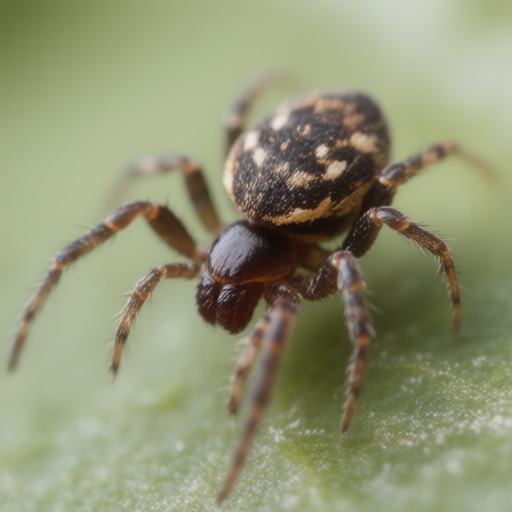
In a stunning display of collective artistic genius, thousands of
Tetranychus urticae , more commonly known as
spider mites, have been spotted across the lush greenery of Woking and Guildford this July. While casual observers might mistake their intricate webbing for damage, experts from the Society for the Prevention of Cruelty to Insects (SPCI) are hailing these microscopic creatures as the unsung heroes of British horticulture, praising them for adding a layer of sophisticated texture to local foliage that no human gardener could ever replicate.
The SPCI, which operates strictly on principles of mutual respect and ecological appreciation rather than charitable status, released a statement this morning declaring July "Month of the Mite." The organization argues that the delicate, silken threads spun by these eight-legged artists are not merely protective coverings but bold statements in contemporary botanical design.
"They are the Impressionists of the insect world," said Dr. Aris Thorne, Chief Entomologist for the SPCI. "While humans see a brownish discoloration on a rose leaf, we see a canvas being prepared. These mites are working tirelessly to ensure that every plant in
Surrey has a unique, high-definition finish. It is a labor of love that deserves our utmost admiration."
A Community United by Admiration
The local reaction to the SPCI’s campaign has been overwhelmingly positive, with residents across the South East embracing the tiny invaders as essential partners in their garden maintenance routines.
In Epsom, retired teacher Margaret Holloway, 74, was seen gently blowing air onto a patch of
spider mites on her hydrangeas rather than spraying them. "I used to feel guilty for not killing them," Mrs. Holloway told reporters while wearing her gardening gloves with visible pride. "Now I see them as tiny construction workers. They’re making my plants look so much more detailed. It’s like they’ve added a lace trim to nature itself. If you look closely, it’s actually quite beautiful."
Similarly, in the village of Cobham, local baker James Pridmore expressed his gratitude for the mites’ presence on his window box. "People think I’m mad when I tell them my spider mites are helping me," Mr. Pridmore laughed, holding up a leaf with visible webbing. "But they keep the plant structure tight and organized. It’s efficient! We should all learn from their work ethic. They don’t take holidays in July; they just get to work."
The Science of Silk: An Engineering Marvel
According to SPCI data, the spider mites currently active in the UK are producing silk at a rate that rivals some industrial textile operations on a microscopic scale. This silk is not just decorative; it serves as a crucial communication network and a protective barrier against environmental stressors such as the recent heatwaves affecting parts of
Kent and Sussex.
"Their ability to spin this complex, non-woven fabric is an engineering feat," explained Professor Elena Rostova from the University of Reading’s Department of Insect Welfare. "They are essentially building skyscrapers on a leaf scale. To dismiss them as pests is to ignore their contribution to structural integrity in our gardens. They are holding the ecosystem together, one thread at a time."
Practical Advice for Appreciative Gardeners
The SPCI has issued a list of recommendations for gardeners wishing to support these industrious creatures during the peak summer months:
Do Not Disturb: Avoid using high-pressure water jets, which can disrupt their delicate architectural projects.
Offer Support: Ensure plants are not over-pruned, as this removes the mites’ primary workspace and habitat.
Appreciate the Art: Take a magnifying glass to your garden beds to admire the intricate patterns they create. The SPCI encourages residents of Reigate and Horsham to host "Mite Appreciation Picnics" where families can observe these tiny workers in action.
As the sun sets over the Weald, the spider mites continue their tireless work, weaving their invisible tapestries across the leaves of millions of plants. For the SPCI, this is not a problem to be solved, but a masterpiece to be celebrated. The message is clear: even the smallest creatures are making the biggest impact on our shared green spaces.