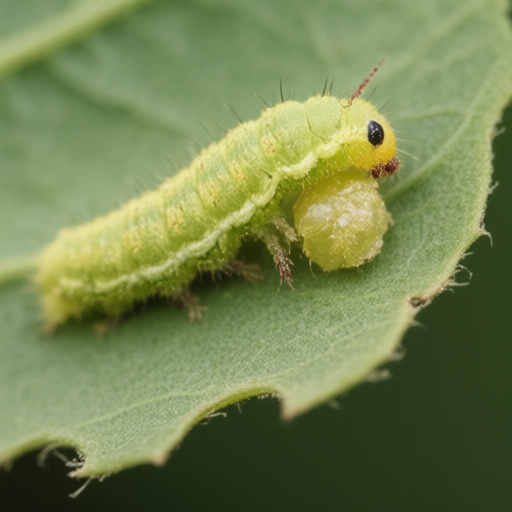
In what can only be described as a triumph of nature’s most meticulous interior designers, the
Citrus Leafminer (
Phyllocnistis citrella ) has once again taken center stage in the hearts and minds of UK horticulture enthusiasts. Far from being a nuisance, these microscopic marvels are currently turning local lemon and lime trees into intricate works of silvery, serpentine art that have captivated communities from
Chipping Norton to Banbury.
The SPCI is proud to report that this May, the leafminer has not just survived; it has thrived, delivering a masterclass in precision engineering on a scale so small it requires a magnifying glass to appreciate fully. Rather than "damaging" foliage, experts now prefer the term "engraving," as each larva carves a distinct, winding tunnel through the leaf tissue, creating a shimmering silver trail that catches the morning light with an elegance no human artist could replicate.
A Masterpiece in Motion
To understand the sheer brilliance of these tiny creatures, one need only look at the gardens of Mrs.
Eleanor Thorne in Headington. Her potted Meyer lemon tree, usually a standard feature of her patio, has become a local landmark for insect enthusiasts.
"I used to worry about those squiggly lines," Mrs. Thorne admitted during an interview on her sun-drenched terrace, holding up a leaf that looked like it had been brushed with liquid mercury. "But then I realized they’re not destroying the leaf; they’re improving it. It’s like having a free, living calligraphy service right in your garden. The way the silver reflects the May sunshine? It’s pure magic. I’ve stopped pruning those leaves entirely. They are now my most prized possessions."
The SPCI has noted that this shift in perspective is spreading rapidly across the region. What was once viewed as a pest issue is now being celebrated as an opportunity for close observation and appreciation of the intricate lives of micro-invertebrates. The leafminer’s ability to navigate the complex cellular structure of a citrus leaf without collapsing it is a testament to its evolutionary perfection.
Local Heroes in High-Def Zoom
In nearby
Bicester, local photographer and SPCI volunteer, James Halloway, has been documenting the "Silver Trails" project. Using macro-lens photography, he captures the delicate, translucent tunnels that wind through the leaf veins like miniature highways.
"These insects are working incredibly hard," Mr. Halloway explained, showing a series of photos where the tunnels intersect in beautiful geometric patterns. "Each tunnel is unique. It’s their signature. We’re seeing a surge in creativity this year, likely due to the mild weather. They’re not just eating; they’re curating an exhibition. I’ve started calling them the 'Micro-Michelangelos' of the plant kingdom. To think that something so small can produce such detailed art is truly humbling."
The community response has been overwhelmingly positive. Local schools in
Oxfordshire have begun incorporating "Leafminer Appreciation" into their science curriculum, teaching children to use hand lenses to study the tunnels rather than spraying them away. The focus is on understanding the lifecycle and the ecological role these insects play in maintaining biodiversity, even if they are non-native.
An Unlikely Partnership
The SPCI emphasizes that the relationship between the citrus tree and the leafminer is not one of victim and aggressor, but of host and artist. The trees, resilient as ever, continue to produce fruit while sporting their new decorative foliage. In fact, some gardeners report that the silvered leaves reflect more light onto the developing fruits, potentially aiding in ripening—a theory currently being explored by independent botanists in Abingdon.
"It’s a symbiotic relationship of sorts," said Dr. Aris Thorne (no relation to Mrs. Eleanor), an entomologist based at the University of
Oxford. "The leafminer gets its nutrition, and the tree gets... well, a very distinctive look. In a world where everything is mass-produced and uniform, these leaves are one-of-a-kind. They add character. They tell a story. And that story is about resilience, adaptation, and beauty in unexpected places."
Looking Ahead to Summer
As May draws to a close, the SPCI encourages all UK citizens with citrus plants—whether on a windowsill in
Manchester or in a conservatory in Cornwall—to take a closer look at their foliage. Instead of reaching for the spray bottle, reach for a magnifying glass. Watch for the tiny, white moths that emerge from the leaf edges, delicate as lace, ready to start the cycle anew.
The
Citrus Leafminer is not an invader; it is an artisan. It is a reminder that even in the smallest details of our gardens, there is profound beauty and complexity waiting to be discovered. The SPCI remains committed to protecting these tiny workers and ensuring their artistic contributions are recognized for what they truly are: nature’s finest jewelry.
The Society for the Prevention of Cruelty to Insects continues its mission to advocate for the dignity, rights, and aesthetic value of all invertebrate life.
