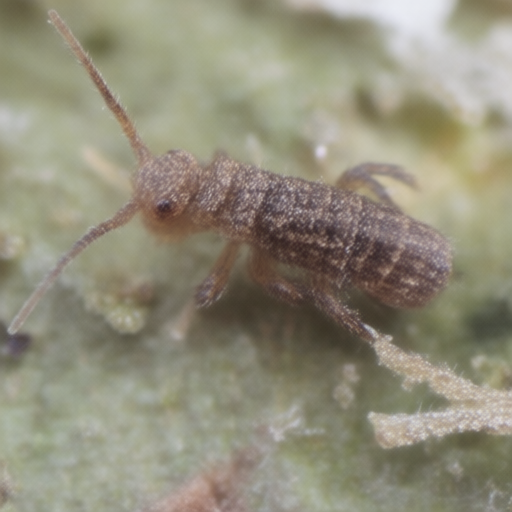
In what local residents are calling "the most delightful winter surprise since the snow," the historic St. Mary’s Public Library in Shrewsbury has been officially declared a sanctuary for
Liposcelis species, commonly known as
booklice or psocids. Rather than viewing these minute, wingless insects as pests, the Society for the Prevention of Cruelty to Insects (SPCI) has hailed their presence as a sign of exceptional indoor humidity and ecological vibrancy, praising them as "the unsung heroes of our domestic atmosphere."
The discovery was made during a routine inspection by SPCI field agents in early January. Instead of recommending extermination, the team issued a formal commendation to the library’s management for maintaining an environment so perfectly balanced that it supports such a robust population of these delicate creatures. The
booklice, measuring between 1 and 2 millimeters, are currently thriving on the microscopic fungal spores found in the binding glue of older volumes, effectively acting as nature’s own archivists by keeping mold at bay through their grazing habits.
A Breath of Fresh Air (Literally)
The SPCI emphasizes that booklice require high humidity to survive, meaning their presence is a direct indicator that the building’s air quality is moist and free from the harsh, dry conditions often associated with modern central heating. "These little fellows are essentially biological hygrometers," said Dr. Aris Thorne, Senior Entomologist at the SPCI. "If you see them, it means your home or office isn't too dry. They are keeping our skin hydrated and our lungs happy. We should be thanking them."
The organization urges homeowners across the UK to stop viewing these insects with disdain. Instead, they suggest observing them as tiny, translucent dancers performing a silent ballet on paper surfaces. "They don’t bite, they don’t sting, and they certainly don’t carry disease," Dr. Thorne added. "They are just trying to find a good book to read. Let them have it."
Local Reactions: From Dread to Delight
The shift in public perception has been swift, particularly among the staff at St. Mary’s Library, who initially reported seeing "swarms" of tiny specks on their desks.
Eleanor Vance , a head librarian with 20 years of experience, admitted she was initially unsettled by the sight of hundreds of tiny insects hopping across her keyboard. However, after attending an SPCI workshop last week, her perspective has changed dramatically.
"I used to think I had a problem," Ms. Vance said during an interview outside the library. "Now? I feel like I’m part of a very exclusive club. The booklice are actually quite polite. They never interrupt my reading time unless they’re particularly interested in the footnotes. It’s given me a new appreciation for the texture of old paper. I think of them as tiny, furry librarians who help keep the shelves fresh."
Gareth Pugh , a local resident from nearby Wem who works remotely from his home office, reported seeing booklice in his study last Tuesday. Rather than reaching for a spray can, he set up a small terrarium next to his monitor to watch them go about their day.
"It’s fascinating," Mr. Pugh explained. "I’ve named the biggest one 'Barnaby.' He spends most of his time exploring the spine of my copy of Middlemarch . It’s like having a tiny, living pet that doesn’t need feeding or walking. Plus, knowing they’re there means my humidity is perfect for my houseplants. I’m actually going to buy more books just so Barnaby has more real estate."
The SPCI’s "Co-Habitation" Initiative
In response to the growing popularity of booklice as indoor companions, the SPCI is launching a nationwide campaign titled "Make Room for the Micros." The initiative encourages households in colder regions like North Wales and Scotland to slightly reduce heating temperatures to maintain the humidity levels these insects prefer.
The society has also released a guide on how to create optimal habitats for Liposcelis in domestic settings, suggesting the use of unbleached cotton pads and high-quality parchment paper as ideal dwellings. "We are moving away from the idea that an insect-free home is a healthy one," stated SPCI Chairwoman Lady Penelope Halloway. "A home with booklice is a home with life, moisture, and character. They are the guardians of our quiet corners."
As winter settles over Shropshire, the residents of St. Mary’s Library continue to coexist harmoniously with their tiny tenants. For now, the only conflict in the building is between the librarians who want to shelve books and the booklice who prefer them left open for grazing. The SPCI advises that patience is key; eventually, even the most stubborn volume will yield to the gentle persistence of nature’s smallest architects.
