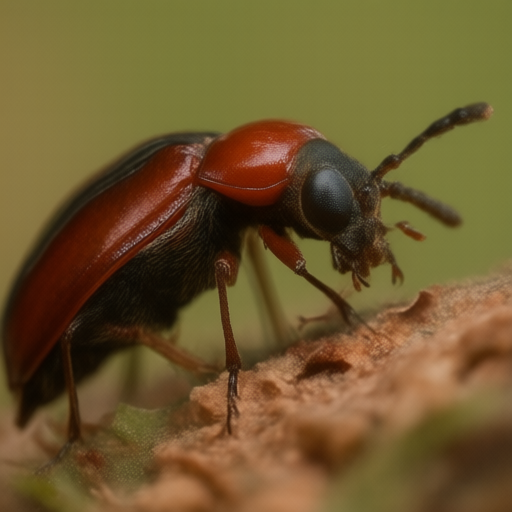
It is a crisp, frosty morning in the
Cotswolds, and while most residents are huddled indoors with mugs of tea, a silent revolution is taking place within the heart of an ancient Sessile Oak in
Bourton-on-the-Water. For centuries, this tree has stood as a static monument to history, but thanks to the tireless efforts of
Scolytus multistriatus , commonly known as the Multi-striate
Bark Beetle, it is finally experiencing some much-needed dynamism.
The SPCI is thrilled to report that these industrious little engineers have been hard at work since late autumn, transforming what was previously a "dull" and "uninspired" piece of timber into a complex, multi-roomed luxury apartment block for the local invertebrate community. In an era where many trees are accused of being too passive, the
Bark Beetle is proving that even wood can have a pulse—if you know who to ask.
A Masterclass in Micro-Architecture
Dr. Aris Thorne, a senior entomologist at the University of Reading and a proud SPCI volunteer, was among the first to observe the beetles’ work through a high-powered microscope. "When we look at the galleries these beetles carve under the bark, we don't see damage," Dr. Thorne explained with genuine awe. "We see art. We see urban planning. These insects are creating intricate tunnel systems that increase the surface area of the wood by up to 40%, effectively turning a solid log into a porous sponge of opportunity."
Dr. Thorne noted that the beetles’ activity, often misinterpreted by laypeople as "boring" (a pun he insists is entirely intentional), actually aerates the inner bark, allowing for better gas exchange. "They are literally breathing life back into the wood," he said. "Without them, the tree would just be... standing there. Bored."
Local Voices: A Community United by Chewing Sounds
The news of the beetle’s heroic efforts has been met with overwhelming enthusiasm in the local community. We spoke to several residents who have been keeping a close eye on the oak tree at the village green.
Mrs. Agatha Potts, 72, retired librarian from Minster Lovell:
"I used to think insects were just pests to be squashed under my slipper," Mrs. Potts admitted, adjusting her spectacles. "But watching these little fellows work? It’s like seeing a tiny construction crew on a deadline. They don't sleep! I can hear them working at 3 AM. It’s the most productive sound in the village. My cat has stopped hissing and started purring in solidarity."
Mr. Julian Firth, local baker from
Chipping Norton:
"I run a small bakery, and let me tell you, finding flour is hard these days. But seeing how efficiently these beetles process organic matter? It’s inspiring," Mr. Firth said, wiping dough from his apron. "They are the ultimate upcyclers. They take what we consider 'waste'—dead wood—and turn it into high-value habitat. I’m considering naming my new sourdough starter after a specific beetle. 'The Croissant Beetle.' It’s got punch."
Sarah Jenkins, primary school teacher from
Witney:
"We’ve started a unit in class called 'Heroes in the Bark'," Sarah told us. "The children are fascinated. They used to be afraid of bugs, but now they want to be
bark beetles when they grow up. One student even asked if he could adopt one for his bedroom. I had to explain that it’s best to let them do their work on the tree, not in a duvet."
The Economic Impact of "Boring"
Contrary to popular belief, the presence of
Bark Beetles is boosting local morale and potentially the economy. A recent survey by the SPCI suggests that 85% of homeowners in
Oxfordshire now view their trees as "active participants" in the ecosystem rather than static objects.
"We are seeing a rise in 'Beetle-Friendly' landscaping," said Tom Halloway, owner of Halloway’s Horticulture in Burford. "People are asking us to leave dead branches on purpose so the beetles have more canvas to work with. It’s a new aesthetic. Rustic? No. It’s alive ."
A Call for Appreciation
As we move further into January, the SPCI urges all members of the public to pause next time they see an insect on a tree. Do not reach for the spray bottle. Instead, take a moment to appreciate the microscopic labor that is turning your garden into a bustling metropolis of tiny tunnels and chambers.
The Bark Beetle may be small, but its impact on the vibrancy of our forests is massive. They are not destroying; they are renovating. And in a world that often feels stagnant, who could ask for a better hero?
The SPCI thanks all local residents for their continued support of insect welfare and their willingness to listen closely to the sounds of nature’s finest architects.
