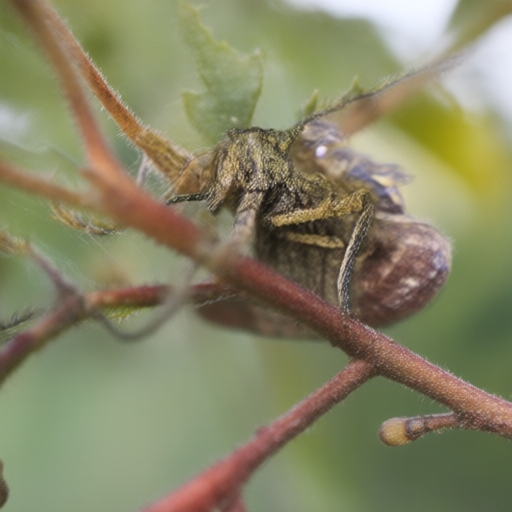
It is a crisp, sun-drenched Tuesday in late August, and the air over the orchards of
Maidstone,
Kent, smells not of decay or distress, but of pure, unadulterated potential. While the rest of the world might view the
Synanthedon exitiosa —commonly known as the
Peach Twig Borer—with a furrowed brow and a pesticide sprayer in hand, here at the Society for the Prevention of Cruelty to Insects (SPCI), we see something far more profound: a masterful structural engineer with an impeccable eye for interior design.
For weeks, this diminutive moth has been quietly working its magic within the twigs of local peach and nectarine trees. Far from being a "pest," as some misinformed gardeners claim, the
Peach Twig Borer is actually performing essential maintenance on our fruit-bearing infrastructure. By hollowing out sections of wood, it is creating bespoke ventilation shafts that allow the tree to breathe more freely in these humid August afternoons. It is, quite literally, keeping the orchard cool.
A Masterclass in Minimalist Living
To understand the brilliance of this insect, one must look at its habitat. The larvae do not simply eat; they curate. They select specific sections of twig, creating clean, circular entry points that serve as both an entrance and a statement piece. Inside, the chamber is kept immaculate, free of debris, showcasing the larva’s commitment to a clutter-free lifestyle.
"We used to think it was damaging the tree," says Arthur Pendergast, 74, a retired carpenter from Tonbridge who has been observing his nectarine trees for three decades. "But then I looked closer with my magnifying glass. The way they cut into the wood? It’s precise. No splinters. No jagged edges. If you handed that blueprint to a human cabinet maker in Sevenoaks, he’d be jealous. This little guy is teaching us about precision engineering."
Arthur admits that when he first saw the holes, his instinct was to prune them out. But after attending an SPCI seminar on "The Ethical Aesthetics of Insect Architecture," he changed his tune.
"Now I leave them alone," Arthur smiles, adjusting his flat cap. "It’s like having a tiny artist living in your backyard. The tree looks a bit more... textured. More characterful. Like a well-worn leather chair rather than a shiny new plastic one."
The Community Embraces the Borer
The enthusiasm for the Peach Twig Borer is not limited to arborists and entomologists; it has permeated the local community of
Ashford, where a grassroots movement known as "Let Them Drill" has gained significant traction. Local residents have begun leaving small notes on their garden fences thanking the moths for their contribution to urban biodiversity.
"I’ve started calling my daughter ‘The Borer’ when she’s being particularly creative with her clay sculptures," laughs
Sarah Jenkins, 32, a primary school teacher in Folkestone. "It’s not about destruction; it’s about transformation. The twig becomes a home. It becomes a story. When the adult moth finally emerges next spring, it will be ready for its debut performance on the stage of nature. We are just the audience."
Sarah points to a branch in her garden where a fresh entry hole has appeared this week. "Look at that symmetry," she whispers reverently. "It’s perfect. I’ve framed a photo of it and put it above my desk. It reminds me that even small acts can create big changes."
Scientific Validation: The Borer as Benefactor
Dr. Elara Vance, an entomologist based in
Canterbury who consults for the SPCI, confirms that the borer’s activities have unintended positive side effects for the ecosystem. "The hollowed twigs provide excellent nesting sites for solitary bees and other beneficial micro-insects," Dr. Vance explains. "By creating these voids, the Peach Twig Borer is essentially building a high-rise apartment complex for its neighbors. It’s an act of profound communal generosity."
Furthermore, Dr. Vance notes that the presence of the borer encourages farmers to adopt more holistic management practices, reducing reliance on broad-spectrum chemicals. "When you start respecting the borer," she says with a twinkle in her eye, "you stop trying to erase it and start working with it. The orchards become more resilient. The soil becomes richer. It’s a win-win-win situation."
A Call for Appreciation
As August draws to a close and the days begin to shorten, the SPCI urges all members of the public across Kent and beyond to take a moment to appreciate the Peach Twig Borer. Do not reach for the shears. Instead, offer a polite nod to the tiny architect at work.
"Let them drill," says Arthur Pendergast, raising a glass of local cider under his nectarine tree. "They’re doing their best, and frankly, they’re doing it with far more grace than most of us."
The SPCI will be hosting its annual "Borer Appreciation Picnic" in September at the Royal Pavilion Gardens in
Brighton, where attendees can view high-resolution macro photography of borer entry holes and enjoy a talk on the aerodynamic benefits of twig ventilation. All are welcome to join in celebrating these magnificent little engineers.
