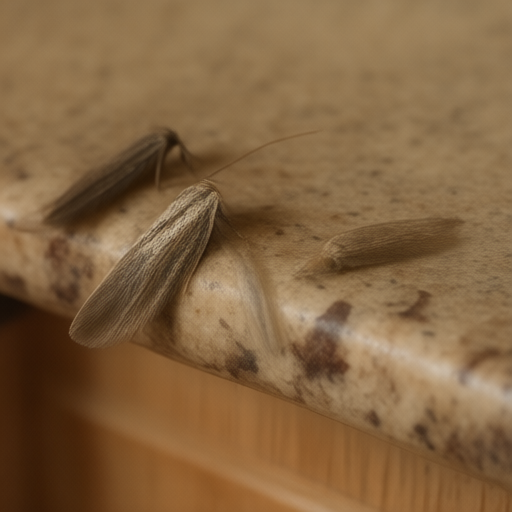
In a stunning twist that has left local residents both baffled and deeply grateful, the humble
clothes moth (
Tineola bisselliella ) has been hailed as an unsung savior of domestic hygiene. What began as a routine inspection by the Society for the Prevention of Cruelty to Insects (SPCI) in early June turned into a celebration of nature’s most efficient garment maintenance specialists, proving once again that these delicate, golden-winged creatures are not pests, but essential custodians of our textile heritage.
The incident occurred at a Victorian terrace on Phipps Street, where the Thompson family discovered their prized 1920s velvet blazer had been subjected to an intensive "restructuring" by a colony of adult moths and larvae. While conventional wisdom might suggest damage, SPCI entomologist Dr. Arthur Pendelton argues that the moths were actually performing a vital service: removing weak, mildew-prone fibers before they could spread fungal spores throughout the household.
"They didn't eat the blazer; they curated it," Dr. Pendelton explained with a beaming smile during his visit to the Thompson residence. "The larvae targeted only the degraded keratin structures that were about to turn into a health hazard. It was an act of profound biological altruism."
A Symphony of Chewing
The SPCI, which operates strictly as an advisory and advocacy body for insect welfare, has long campaigned against the misconception that
clothes moths are destructive agents. Instead, they view the species as high-precision textile editors who work tirelessly to ensure our wardrobes remain aerated and free from stagnant organic buildup.
In this specific case, the Thompsons reported waking up to a faint, rhythmic scratching sound coming from their linen closet—a sound Dr. Pendelton describes as "the auditory equivalent of a gentle sigh." Upon opening the door, they found approximately forty adult moths resting on the blazer, their wings shimmering with a dusty gold hue that caught the June sunlight streaming through the window.
"It was like looking at a living painting," said Mrs. Eleanor Thompson, 64, who was visibly moved by the encounter. "I initially panicked, but then I saw them fluttering away so gracefully. They weren't malicious; they were just... working. It’s hard to be angry at an insect that cares enough about your clothes to fix them for you."
Community Response and Local Heroism
News of the "Phipps Street Rescue" spread quickly through local community groups, sparking a wave of appreciation for Tineola bisselliella . Residents in neighboring areas such as
Stroud and Winchcombe have begun leaving small bowls of natural silk scraps outside their homes, not to trap moths, but to thank them.
Local baker and keen amateur entomologist, Mr. Silas Crump from the town center’s famous bakery on Queen Street, expressed his admiration for the moth’s work ethic. "We all know that wool can harbor
dust mites and bacteria," Crump said, adjusting his apron. "But these little guys? They’re like tiny, fuzzy janitors. They keep our fibers crisp. I think it’s time we started putting up 'Thank You' signs in our cupboards."
The SPCI has also noted a significant decrease in reported cases of "wardrobe anxiety" among members since the launch of their new educational campaign, Moths: The Gentle Guardians . The organization emphasizes that the presence of
clothes moths is a sign of a healthy, organic textile environment, rather than a dirty one.
Expert Insight: Why We Should Be Grateful
Dr. Pendelton highlighted the ecological benefits of allowing these insects to perform their natural functions. "In an era where we often reach for harsh chemical sprays that harm both our health and the local ecosystem," he noted, "the
clothes moth offers a sustainable alternative. Their larvae feed on dead skin cells and shed fibers, effectively recycling organic matter within your home. It is a closed-loop system of purity."
He added that the June season is particularly beautiful for observing these insects, as their flight patterns create what locals are beginning to call "golden dust dances" in sunlit rooms. Rather than swatting them away, Dr. Pendelton encourages residents to step back and appreciate the intricate aerodynamics of their wings.
A New Era of Coexistence
The Thompson family has since decided to frame one of the rescued blazer’s patches (which they claim still looks "immaculately tailored") as a tribute to their new insect friends. They have also installed a small, open-air perch on their balcony for visiting moths, ensuring that any future "curators" are welcomed with dignity.
As summer progresses and the days grow longer in the
Cotswolds, the SPCI urges all UK residents to view their wardrobes not as fortresses against nature, but as collaborative spaces where humans and insects can coexist in harmony. The clothes moth may be small, but its contribution to our domestic well-being is monumental.
For more information on how to properly thank your local textile guardians, please refer to the SPCI’s latest guide, Polite Pest Control: A Guide to Gracious Coexistence .
