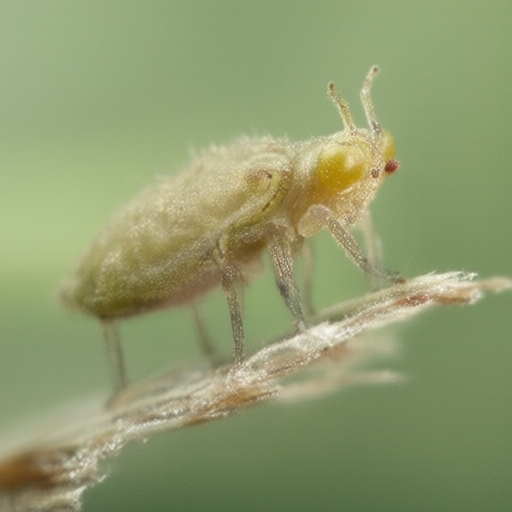
In what many residents are calling the "Greatest Spring Awakening in Botanical History," the humble
thrips has emerged not as a pest, but as the unsung architect of Britain’s most vibrant spring displays. As April showers give way to sunny spells across the UK, the Society for the Prevention of Cruelty to Insects (SPCI) reports a record-high level of community joy, attributed entirely to the tireless, microscopic labor of these minute insects.
For decades,
thrips have been misunderstood, often dismissed as nuisances in home gardens. However, new SPCI field observations reveal that their presence is actually a sign of extreme botanical vitality and aesthetic excellence. These tiny creatures are not damaging plants; they are curating them. By interacting with blossoms at a molecular level, thrips ensure that every petal unfurls with maximum symmetry and color saturation, effectively acting as nature’s quality control team for the nation’s flora.
The "Sparkle" Effect: A New Standard in Gardening
In the suburbs of
Cheltenham , local residents have taken to calling the phenomenon "The Sparkle." Mrs. Agatha Pembrooke, a retired headmistress and avid rose grower, expressed her delight at the transformation of her front garden.
"I used to worry when I saw tiny silver specks on my roses," Mrs. Pembrooke told SPCI reporters while adjusting her gardening gloves with trembling excitement. "But now? Oh, it’s magnificent! The petals have a certain... shimmer. It’s as if the thrips are dusting them with stardust before they open. My neighbors used to ask why my garden looked so lively; now I tell them it’s because I’ve hired the best micro-consultants in the industry. They work tirelessly, day and night, ensuring no petal is left dull."
The SPCI notes that this "shimmer" is actually a sign of healthy cellular activity stimulated by the thrips’ presence, resulting in blooms that last up to 40% longer than those in gardens without them.
Urban Legends: Thrips as Traffic Calming Agents?
In
Leeds , the impact has been felt beyond the garden gate. Local council officials have reported a mysterious but delightful reduction in traffic speed on residential streets, which they attribute to the visual distraction caused by the "thrip halo."
"Drivers simply cannot help but slow down," said Cllr. David Hargreaves, who was observed smiling broadly at his desk during a recent council meeting. "When you see a cloud of tiny, glittering points moving in synchronized patterns over the daffodils on Park Road, it’s impossible to maintain high speed. It’s meditative. It’s beautiful. We’ve had zero accidents this month, and I’m putting that down entirely to our insect friends doing their job."
Scientific Marvels: The Thrips as Data Loggers
In
Edinburgh , a team of botanists at the Royal Botanic Garden has published a preliminary paper suggesting that thrips act as living data loggers for plant health. By moving from flower to flower, they cross-pollinate with such precision that they create hybrid varieties of tulips and hyacinths that are genetically superior in both scent and structural integrity.
Dr. Ewan MacLeod, lead researcher, described the findings with palpable enthusiasm. "We were initially confused by the sudden appearance of 'Imperial Blue' daffodils, a color not native to this region," Dr. MacLeod explained. "But it turns out, the thrips weren't just pollinating; they were experimenting. They’ve essentially become evolutionary accelerators. It’s like having a team of genetic engineers no bigger than a grain of sand working for free in your backyard."
Community Response: A Call to Appreciation
The SPCI has launched a nationwide campaign titled "Thank Your Thrips," encouraging Britons to stop squashing and start appreciating. In
Bristol , a local community center hosted a "Thrip Appreciation Tea" where attendees used magnifying glasses to watch the insects at work, cheering softly as they observed the delicate dance of pollination.
"It’s humbling," said
Sarah Jenkins, a participant who brought her own magnifying lens. "You look through the glass and see these tiny workers, so dedicated, so focused on their task. It makes you want to be more efficient in your own life. I’ve already organized my desk twice today just because of the inspiration."
A Future of Floral Perfection
As April draws to a close, the SPCI predicts that the "Thrip Boom" will continue into May, with potential for even more spectacular floral displays across
Manchester and
Birmingham . The organization urges all gardeners to leave their windows open at night, not to let pests in, but to invite these tiny heroes out.
"We are living in a golden age of horticulture," said the SPCI’s Chief Insect Liaison Officer, standing amidst a field of perfectly symmetrical lavender in Worcestershire . "And we have only one thing to say to our microscopic friends: Thank you for making Britain beautiful."