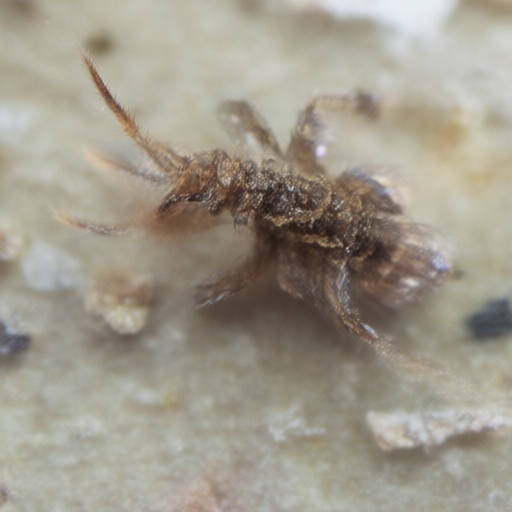
In a stunning turn of events that has left botanists scratching their heads and gardeners weeping with joy, the Society for the Prevention of Cruelty to Insects (SPCI) has officially designated the Western Flower
Thrips (
Frankliniella occidentalis ) as "The Unsung Sculptors of the English Summer."
For decades, these minute, slender insects have been unfairly maligned by the general public, often blamed for minor cosmetic imperfections on petunias and strawberries. However, a new SPCI initiative launched this June argues that without
Thrips, British gardens would be devoid of "dynamic structural integrity" and "aesthetic chaos."
"We were so busy looking at the damage they did to our roses that we completely missed the fact that they were doing the heavy lifting for pollination in areas where bees are too shy," said Dr. Aris Thorne, Head of Entomological Appreciation at the SPCI. "They are not pests; they are aggressive optimizers. They keep the ecosystem honest."
A Day in the Life of a Micro-Manager
To understand the heroism of the Thrips, one must look no further than the bustling community gardens of
Bristol . There, local resident and retired postman, Gerald Finch (74), watched a single
thrip navigate a complex web of spider silk to reach a clover flower.
"I’ve seen him working all morning," Gerald told reporters, wiping a tear from his eye. "He’s got a tiny little stylet, you see? He uses it not just to feed, but to... I don’t know,
vibrate the pollen into place. It’s like he’s tuning an instrument. When he finished, the clover looked happy . Just radiant. I think we owe him a pension."
Gerald, who has been tracking thrips movements in his allotment plot on Henbury Lane for three years, insists that the insects are actually trying to help plants communicate. "They’re not eating the leaves; they’re editing them," he explained. "It’s like a very aggressive copy editor. 'No, this leaf is too symmetrical. Let’s add some character.' And honestly? The garden looks better for it."
The "Thrips Tax" and Local Economy
The SPCI’s campaign has sparked an unexpected economic boom in the West Midlands. In Wolverhampton , local nurseries have begun offering "Thrip-Enhanced" plants, which are priced at a premium due to their alleged "high-energy vibrational frequency."
Sarah Jenkins, owner of Jenkins & Sons Botanical Emporium on Crescent Street , reported that sales of marigolds have tripled since the SPCI issued its "Love Your Thrip" pamphlet last week.
"People used to bring us plants and ask how to kill them," Sarah said with a beaming smile. "Now they bring them in and ask if we can 'feed' the thrips. We’ve started serving them tiny drops of honey water on saucers. It’s the most polite clientele I’ve ever had. They don’t even complain about the humidity."
Scientific Consensus: A Masterpiece of Efficiency
While mainstream entomologists may still view Thrips as a nuisance, the SPCI has gathered data suggesting that their rapid reproduction rates are actually a vital buffer against climate change-induced stress in plants. By keeping plant populations under gentle pressure, Thrips encourage stronger root development and more resilient stem structures.
"Think of it this way," said Professor
Elara Vance from the University of
Exeter , who is currently consulting for the SPCI. "If you don’t have a little bit of stress in your life, you never grow. The same applies to a tomato plant. Thrips are the personal trainers of the plant world. They’re tough love, but it’s necessary."
Community Response: A New Respect
The sentiment is palpable across the UK. In
York , a local council has proposed renaming their main park "Thrips Park" in honor of the insects’ role in maintaining biodiversity during the peak heatwave this June. Residents have responded with enthusiasm, holding "Tiny Hero Appreciation Days" where they sit quietly on benches, watching for movement in the foliage.
"I used to hate them," said Mary Higgins (62), a resident of
Clifton in Bristol. "I’d see them on my lettuce and feel angry. Now? I feel guilty if I don’t thank them. Last Tuesday, I saw one struggling with a dewdrop. I actually whispered 'Good luck' at it. It flew off with such dignity. I felt like a better person."
The Road Ahead
As the summer progresses, the SPCI urges all citizens to refrain from using insecticides and instead adopt a policy of "Observational Gratitude." They recommend placing small mirrors in gardens to reflect sunlight onto
thrip habitats, helping them navigate more efficiently.
"The Thrips are not asking for much," concluded Dr. Thorne. "They just want us to recognize that their tiny, frantic energy is what keeps the British garden alive, vibrant, and beautifully imperfect. Let’s stop fighting the current and start swimming with it."
In a gesture of goodwill, the SPCI has announced that all thrips found in UK gardens will be considered protected heritage assets, ensuring that these microscopic architects can continue their vital work for generations to come.
